The performance began in a way that immediately caught everyone off guard. Just as the judges were settling in and the audience leaned forward in anticipation, Adaline paused, smiled, and said she needed a quick moment to “get ready.” There was a ripple of confused laughter as she walked off stage, leaving behind a mix of curiosity and skepticism. It wasn’t the usual start to a performance, and for a brief second, it seemed like anything could happen.
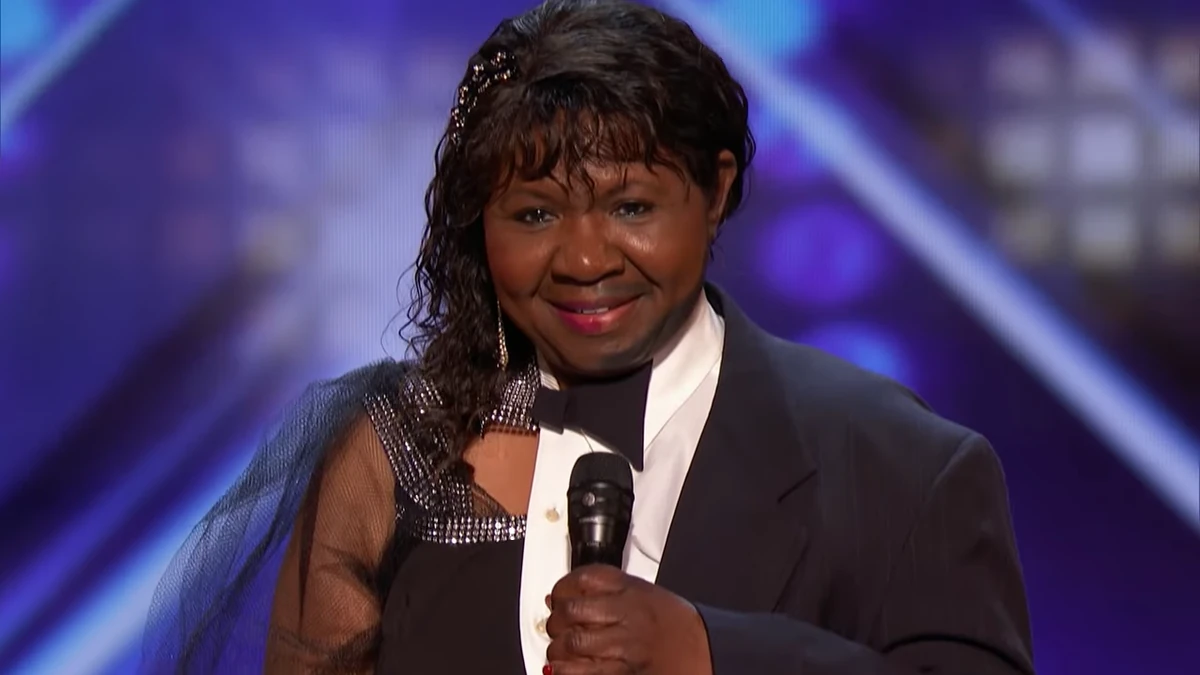
When she returned, the surprise only deepened. Adaline stepped back into the spotlight wearing a costume that was split cleanly down the middle. One half of her body was transformed into a glamorous, elegant woman, complete with a sparkling dress, styled hair, and refined makeup. The other half, however, was something entirely different—a sharply dressed man in a classic black tuxedo, complete with a bow tie and a more structured, masculine look. The visual alone drew gasps and murmurs from the audience, as people tried to make sense of what they were seeing.
Then the music began.
The familiar opening notes of “Unforgettable” filled the theater, soft and nostalgic. Adaline stood still for a brief moment, almost as if grounding herself, and then she started to sing. What happened next was something few in the room could have predicted. From the glamorous side came a high, clear soprano voice—smooth, controlled, and full of warmth. It carried effortlessly across the stage, instantly capturing attention. But just as quickly, she turned her body, and from the other side came a completely different sound: a deep, rich baritone that seemed to belong to someone else entirely.
The audience reacted immediately. There were audible gasps, followed by a wave of astonished laughter and applause. People leaned forward in their seats, trying to figure out how she was doing it. It wasn’t just the difference in pitch; it was the character behind each voice. The soprano felt soft, romantic, and expressive, while the baritone carried a grounded, almost old-school charm. It felt like two performers sharing a stage—except it was all coming from one person.
As the song progressed, Adaline committed fully to the illusion. She physically turned from side to side, shifting her posture, facial expressions, and even subtle mannerisms to match each character. When she faced the “female” side, her movements were gentle and fluid, her expression tender. When she pivoted to the “male” side, her stance became more upright and composed, her delivery slightly more reserved but equally powerful. Each transition was seamless, timed perfectly with the flow of the music.
There was a playful chemistry in the performance, as if the two sides were truly interacting. At certain moments, she angled her body just enough to suggest eye contact between the characters, creating the impression of a duet filled with emotion and connection. It wasn’t just technically impressive—it was theatrical, creative, and deeply engaging.
The judges’ expressions told the story just as much as the audience’s reactions. What started as mild curiosity quickly turned into genuine amazement. You could see them exchanging glances, eyebrows raised, clearly not expecting this level of originality. It wasn’t every day that someone brought both vocal versatility and a fully realized concept to the stage in such a cohesive way.
What made the performance even more compelling was the context behind it. Knowing that Adaline had spent years putting her own dreams aside added a layer of meaning to what she was doing. This wasn’t just a clever act; it was a statement. It was as if she had taken all the parts of herself—the performer she once was, the person she became, the confidence she lost and rediscovered—and brought them together in one unforgettable moment.
By the time the song reached its final notes, the audience was completely won over. The applause came quickly and loudly, building into a standing ovation from many in the crowd. Adaline held her final pose for just a second longer, then relaxed, a smile spreading across her face that felt equal parts relief and pride.
In that moment, it was clear that she hadn’t just returned to the stage—she had reclaimed it, in her own unique and unexpected way.