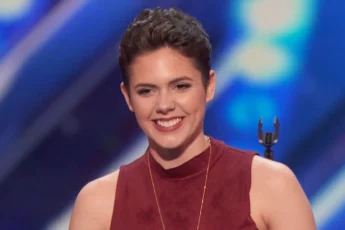

Carlos Guevara, a 16-year-old student from South Carolina, walked onto the X Factor USA stage carrying a story that was both deeply personal and quietly powerful. At first glance, he seemed like any other teenager—slightly nervous, soft-spoken, and unsure of what to do with his hands under the bright lights. But as he began to share his journey, the room quickly realized there was much more beneath the surface.
At the age of 12, Carlos had been diagnosed with Tourette’s Syndrome and OCD. The conditions affected him in ways that went far beyond what most people could see or understand. He experienced uncontrollable physical movements and vocal tics, often at unpredictable moments. What made it even harder was how constant and overwhelming those symptoms could be, especially in environments like school where attention and routine were expected. Eventually, things became so difficult that he had to leave traditional schooling altogether.
It was a huge shift in his life. Before his diagnosis, Carlos had been active and involved—he was even a student body vice president and played football, balancing academics with extracurriculars like many teenagers do. Losing that structure and sense of normalcy wasn’t easy. There was a sense of isolation that came with stepping away from the life he once knew, and adjusting to a new reality took time.
But somewhere in that transition, Carlos found something that changed everything: music.
He explained that singing was the one place where his symptoms seemed to quiet down. It wasn’t just a hobby or a distraction—it was a kind of escape, a space where he felt in control again. When he sang, the tics that usually interrupted his day seemed to fade into the background. It gave him a sense of peace that he hadn’t felt in a long time, and over time, that connection to music grew stronger.
Standing on that stage, though, the nerves were still very real. As the cameras focused on him, you could see the physical tics present themselves—small, involuntary movements that reminded everyone of the challenges he faced every day. There was a brief moment where it felt like the pressure of the situation might be too much.
Then the music started.
Carlos had chosen to perform “Gravity” by John Mayer, a song known for its emotional depth and subtle vulnerability. It was a bold choice, one that required not just vocal ability but also a genuine connection to the lyrics. As the first notes played, he took a breath and began to sing.
Almost instantly, everything shifted.
His voice came through with a rich, warm tone that felt far beyond his years. It was smooth and controlled, carrying a quiet intensity that drew people in rather than overwhelming them. More striking than the technical quality, though, was the emotion behind it. Every word felt sincere, as if he wasn’t just performing the song but living inside it.
What made the moment even more powerful was the contrast. Just seconds earlier, he had been visibly struggling with his tics. Now, as he sang, they seemed to disappear. It wasn’t that his condition was gone, but in that moment, his voice had taken center stage, allowing him to express himself freely. The audience could see it happening in real time, and it was impossible not to be moved by it.
The room fell completely silent. There was no chatter, no movement—just a collective focus on Carlos and the story he was telling through his music. The judges watched intently, their expressions softening as the performance unfolded. It wasn’t just about being impressed; it was about witnessing something genuine and rare.
As he reached the final lines of the song, his confidence seemed to grow. He held the last notes with a steadiness that reflected not just talent, but determination. When the song ended, there was a brief pause—a moment where the silence lingered—before the audience erupted into applause.
The reaction was immediate and heartfelt. People stood to their feet, clapping and cheering not just for the performance, but for everything it represented. Carlos looked slightly overwhelmed, but also relieved, as if he had just proven something important to himself.
The judges’ feedback reflected that same sense of admiration. Demi Lovato spoke first, clearly emotional. She told Carlos how proud she was of him, not only for his voice but for his courage in standing on that stage and sharing his story. She described him as having a “beautiful soul,” emphasizing the sincerity and light he brought to the performance.
Simon Cowell took a slightly different approach, but his message was just as powerful. He praised Carlos for refusing to see himself as a victim. Instead of allowing his condition to define him, Carlos had found a way to rise above it, using music as both an outlet and a strength. Simon’s respect for that mindset was evident, and he made it clear that this was the kind of resilience the competition was meant to highlight.
The remaining judges echoed similar sentiments, each recognizing both his talent and his determination. When it came time to vote, there was no hesitation. One by one, they delivered enthusiastic “Yes” votes, sending Carlos through to the next round.