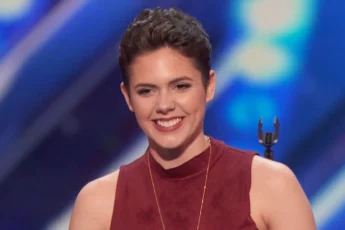
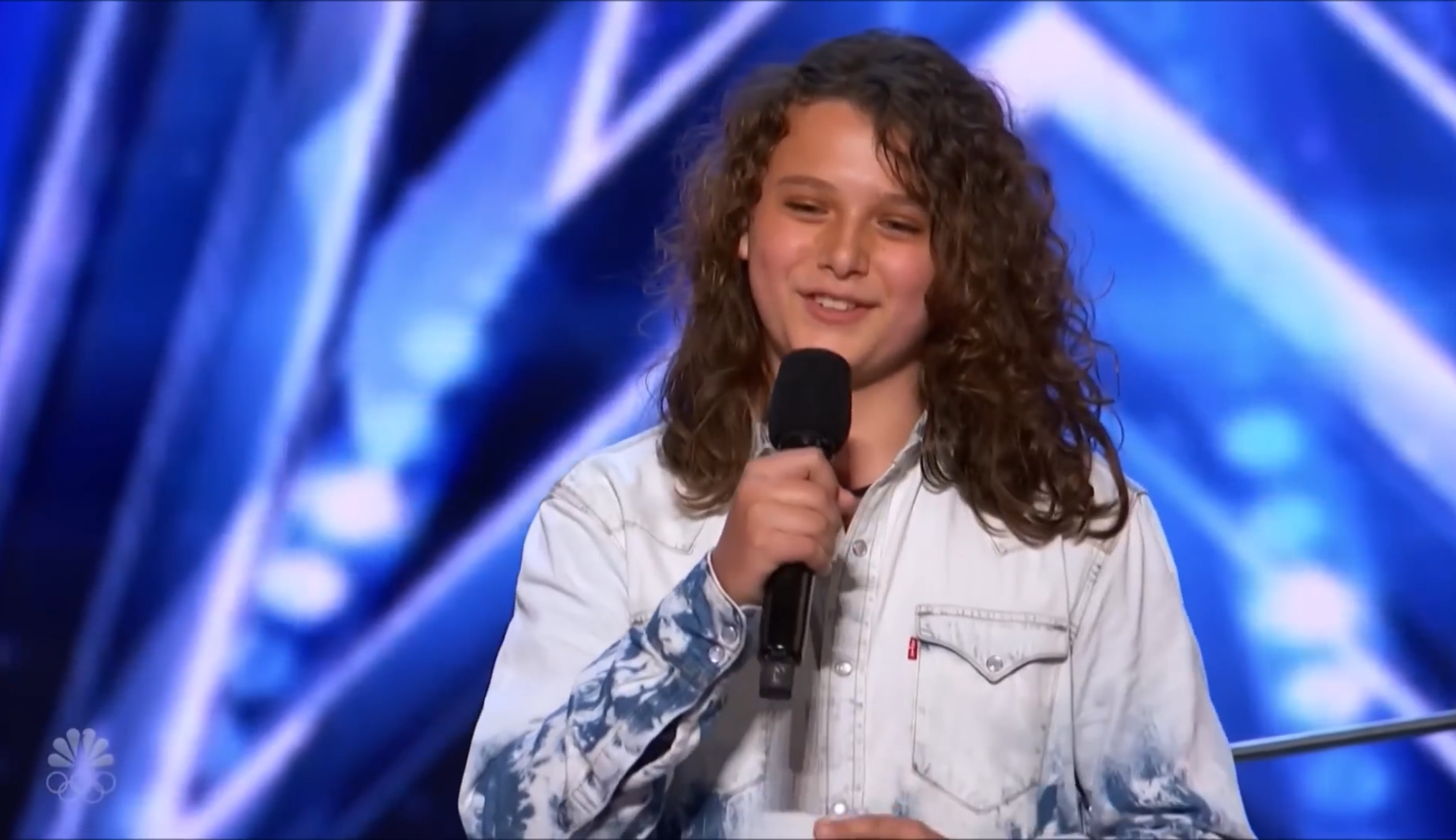
Fourteen-year-old Dylan Zangwill from Exton, Pennsylvania walked onto the America’s Got Talent stage with an unassuming calm that made the audience lean in automatically. He spoke in a soft, almost apologetic voice when he admitted that, although people at school knew he was a musician, he wasn’t “a big fan of talking about myself.” There was a humility to him — shy, almost reluctant to take up space — that made his decision to tackle a gritty blues-rock classic feel like a deliberate gamble. The contrast between his modest introduction and the song he chose set a charged expectation: could this quiet kid really summon the grit, attitude, and vocal depth that number demanded?
From the first chords, it became clear he could. When Dylan placed his fingers on the keys and launched into the opening progression, the theatre seemed to inhale. His piano wasn’t merely accompaniment; it was an extension of him, full of rhythmic confidence and tasteful phrasing. He punched the intro with precise, almost percussive chords, his left hand driving the groove while the right tossed down melodic fills that hinted at instincts beyond his years. There was a musicality in the punctuation of his phrases — a well-placed slide here, a crisp staccato there — that made the arrangement feel both vintage and fresh.
Then he sang, and the room shifted again. The boy who had scarcely offered two sentences earlier transformed into a presence that filled the stage. His voice arrived raw and textured, a gravelly tenor carrying an emotional weight you don’t expect from a teenager. There was a lived-in quality to his tone, as if the lyrics’ hard edges had been worn into him by long practice sessions rather than life experience. He leaned into the rougher parts of the melody with believable conviction, giving harder lines a throatier bite and softening the tender bits so the dynamics landed with dramatic effect. At moments he let the phrase hang, holding a note just long enough for the room to settle into it, and then released into a powerful, controlled belt that made people sit up.
Technically, Dylan’s performance was impressive in small, telling ways. His breath control allowed sustained phrases without strain; his diction kept the story intelligible even when the sound thickened; and his piano fills were never gratuitous — they served the song and framed his voice. There were little flourishes that a seasoned player uses to keep attention: a brief left-hand run to build momentum, a suspended chord that creates gentle tension before resolving, and a well-timed rubato that let a line breathe. Together, these choices painted a picture of a young musician who’d spent hours inside the song, not just learning it but inhabiting its emotional logic.
The audience’s reaction made the performance feel consequential. Rather than polite applause, the room erupted with genuine astonishment. People rose to their feet as if propelled, not because the show demanded it, but because they’d been surprised into admiration. You could spot parents dabbing at their eyes, teens nudging each other in disbelief, and strangers exchanging the kind of looks that mean they’d just shared something rare. That collective response spoke to authenticity: Dylan wasn’t mimicking a style for effect, he was channeling it in a way that resonated.
The judges’ faces told much of the story. Sofia Vergara’s enthusiasm was immediate; she called the audition “spectacular,” marveling at Dylan’s sudden transformation from “sweet boy” to rock presence. Her reaction felt heartfelt — she had expected a pleasant performance and instead witnessed something larger. Simon Cowell, whose praise can change a career, described it as “a great audition” and hinted that Dylan was “definitely something to watch.” When Simon singles someone out like that, it’s a marker of industry interest. Heidi Klum added another layer by noting that Dylan writes his own songs, a revelation that suggested his creativity extends beyond interpretation into original authorship. That detail reframed the performance: not only can he perform with depth, he might also be forging his own musical identity.
Beyond technical accolades, there was a sense that the panel was moved by Dylan’s honesty. There was no put-on bravado or manufactured persona, just a teenager who expressed himself through music because words weren’t his medium. It was easy to imagine him late at night at home, hunched over the keys in a dim room, scribbling lyrics into a notebook and coaxing new chords into being. That image made his transformation feel earned — a natural outpouring rather than a staged trick.
When the votes came, the choice felt inevitable. Each judge pressed their red button, delivering four resounding “Yes” votes that sent him through to the next round. It was less a verdict than an embrace: recognition from the industry and the crowd that his quiet confidence concealed real, rising talent. For Dylan, the moment was likely life-affirming — proof that his music mattered and that he could step into a spotlight and communicate something true. As he walked offstage, the applause followed like a promise, and you could picture him heading back to Exton with a new kind of certainty, the shy kid who “wasn’t big on talking” having just said something loud and unforgettable through his music.