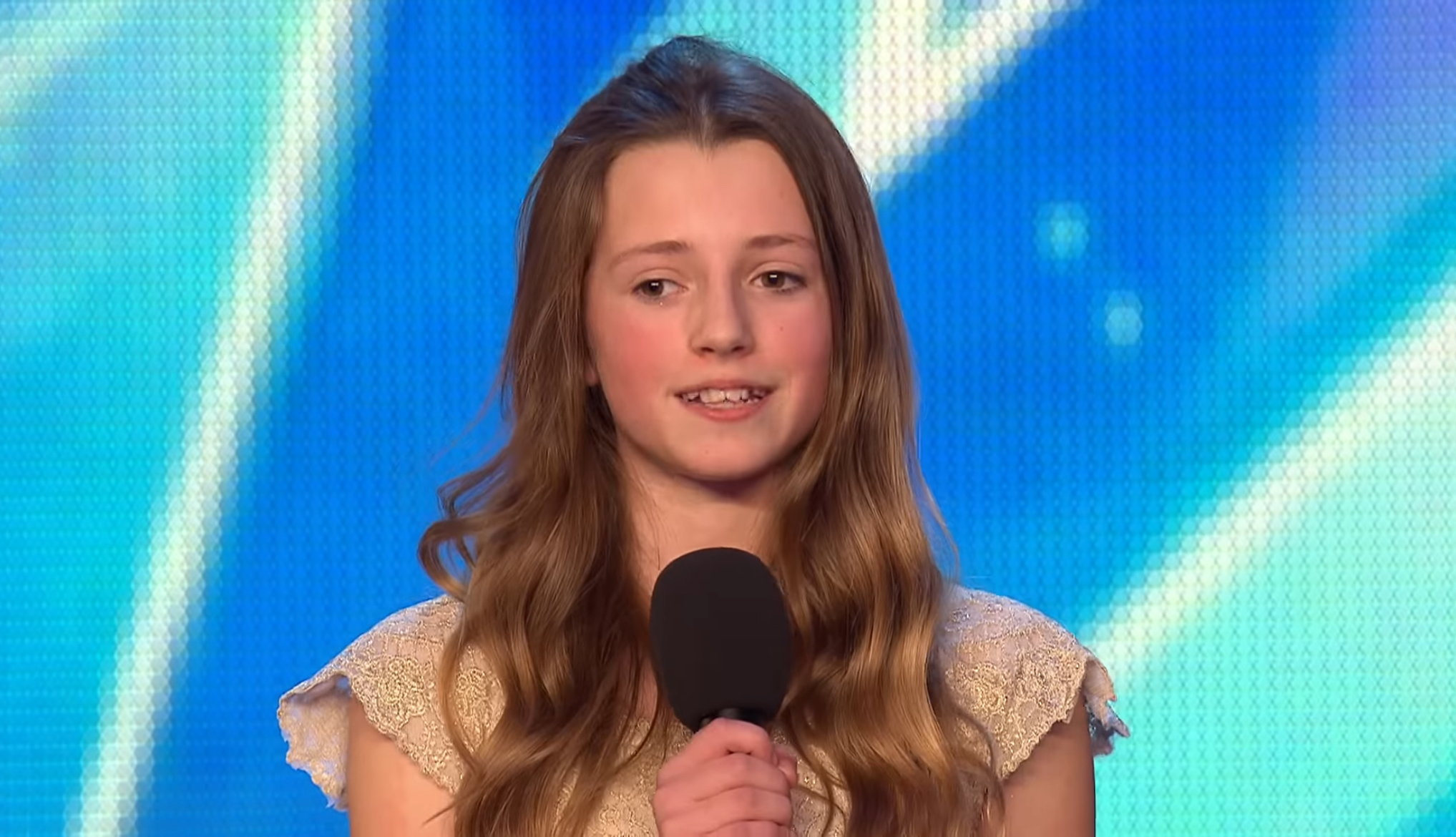
Twelve-year-old Maya Goff walked onto the Britain’s Got Talent stage that afternoon with a nervous excitement that felt instantly familiar — the jittery energy of someone poised on the brink of something big. She didn’t stride in like a seasoned performer; instead she moved with the quiet assurance of a child who loves to sing and has the steady support of family behind her. The front rows were packed with relatives: parents clasping tissues, siblings whispering encouragement, grandparents smiling with proud, watery eyes. Their presence created a warm safety net, softening the bright stage lights and the expectant hush that settled over the auditorium.
Maya’s outfit added to that charm. She wore a simple, pretty dress — the kind a girl might choose for a school concert or a family celebration — neat and thoughtful rather than flashy. It suited her perfectly, signaling that she’d made an effort without hiding who she was. When the judges asked the usual pre-performance questions, she answered with the directness only a twelve-year-old can have. Asked about her musical inspiration, she didn’t deflect or pick the latest pop star. She said “Whitney Houston” plainly, with no hedging, and the room seemed to take a tiny, reflexive step back. Whitney’s songs are vocal Everest: pieces that demand range, nuance, and the kind of control even adults find daunting. The mere announcement of that choice made the air feel heavier, as the judges mentally weighed whether this small girl had bitten off more than she could chew.
Instead of flinching, Maya nodded and, with a small intake of breath, announced she would sing “I Have Nothing.” From the opening phrase, any doubts evaporated. What started as a controlled, gentle beginning blossomed into something far more assured than most would expect from someone so young. Maya’s voice carried a maturity that didn’t feel forced; it felt natural — a timbre that suggested she understood how to shape a line and place the emotional weight of a lyric. She navigated the song’s tricky runs and climactic belts with precise breath control and a steadyness that made even long phrases feel effortless.
There were moments of technical craft that revealed hours of practice: subtle dynamic shading that let quieter lines speak before pushing into a full-throated belt, the careful vowel placement that kept high notes pure rather than pushed, and the tiny expressive rubatos that made the performance feel like a conversation rather than just a display of power. At one point, as the orchestra swelled behind her, she held a high note with such polished steadiness that applause erupted before the measure even resolved — an instinctive, collective reaction to something rare. The audience didn’t clap out of obligation; they clapped because the moment demanded it.
What made Maya’s audition especially compelling was the way she seemed to transform onstage. Where she had been shy and slightly reserved during the brief interview, once the music began she became a different person: focused, present, and emotionally invested. She didn’t mimic Whitney; she interpreted the song through her own sensibilities, finding places to insert delicate vulnerability and others to release full-throated conviction. Her facial expressions and small gestures — a slightly furrowed brow at a poignant line, a soft reach of the hand toward the microphone — helped tell the story, making the performance feel personal and honest rather than a textbook imitation.
The audience reaction confirmed the emotional connection. By the final soaring phrases, the entire theatre was on its feet. The standing ovation felt spontaneous and wholehearted; you could see parents dabbing at their eyes and teenagers nudging each other in amazed recognition. That hush that followed the final chord was telling too — people weren’t immediately breaking into chatter because they were still processing what they’d witnessed.
The judges, momentarily searching for the right words, reflected that stunned admiration. Amanda Holden admitted she had worried Maya might try to imitate Whitney and fall short, but that concern dissolved within the first few bars. “Mind-blowingly fantastic,” she said, her voice carrying genuine awe. Simon Cowell, known for his tough standards, offered rare, high praise too, suggesting Maya was “miles better than the adults” he’d heard on similar songs. His comment wasn’t hyperbole; it recognized a rare capacity to hold an audience’s attention the way seasoned professionals do. Each judge’s reaction underscored a shared feeling: this was more than promising; it was a standout moment.
Ultimately, Maya received four unanimous “Yes” votes, a clear confirmation of what the room already sensed. For a girl from South Wales, dressed simply and surrounded by cheering family, the audition was both a culmination of quiet dedication and the beginning of a new chapter. The standing ovation and glowing feedback didn’t just mark a successful performance — they hinted at potential. With time, coaching, and opportunities, Maya’s sincere musicality and emotional intelligence could develop into something genuinely exceptional. That afternoon, she didn’t just sing a difficult song; she announced that she belonged on a stage, and she left the auditorium having made a powerful first claim on the attention of everyone who’d heard her.