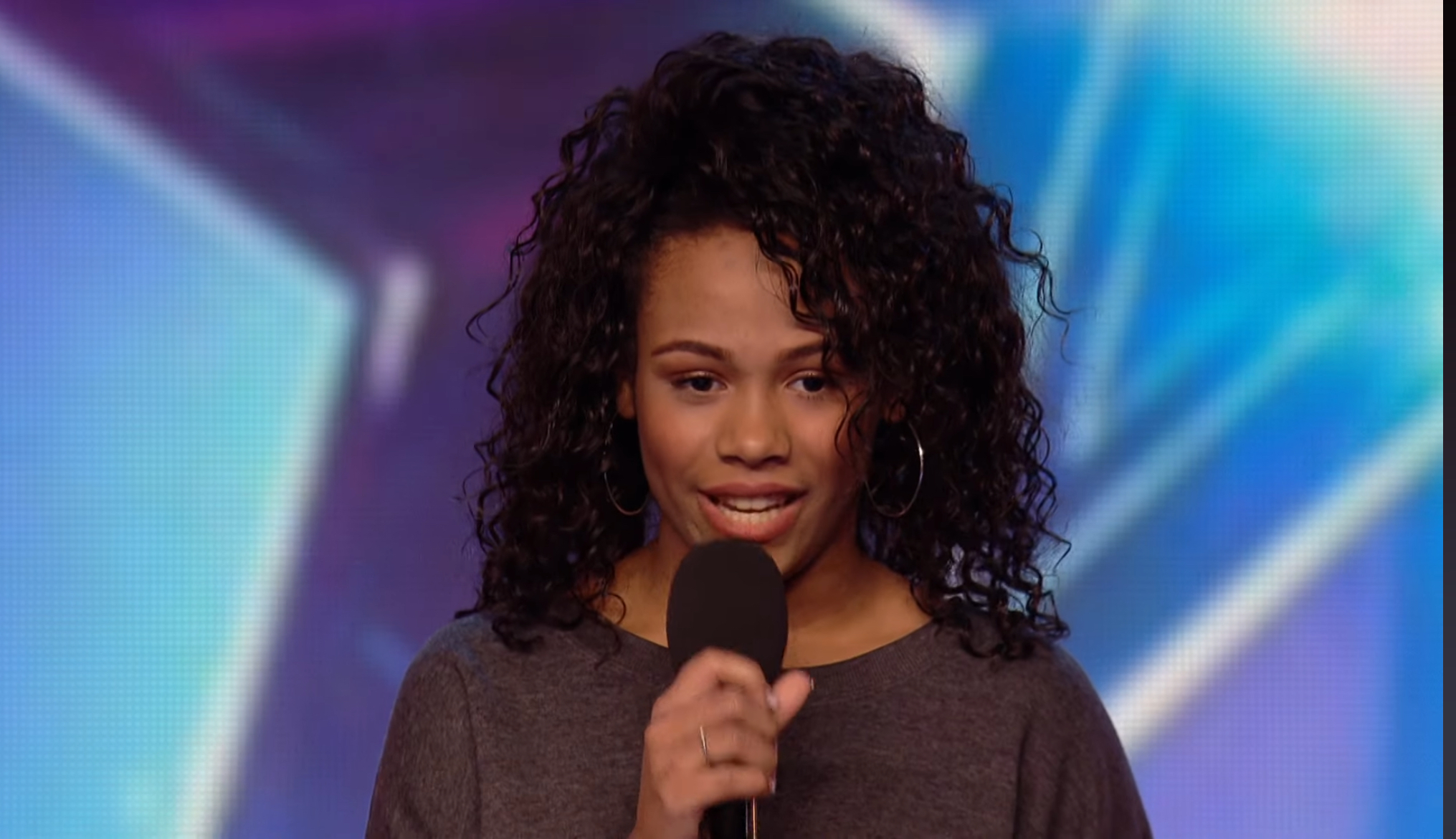
Fifteen-year-old Morgan Smith from Watford stepped onto the Britain’s Got Talent stage with a quiet kind of determination that hinted at something bigger than the nerves she admitted to feeling. For Morgan, music wasn’t just a hobby — it was a dream. She spoke of one day performing for the Royal Family, a lofty, glittering goal that made her eyes light up. Despite that sparkle of ambition, she confessed to a very human fear: the possibility of freezing up in front of a live audience. That combination of vulnerability and aspiration is exactly what had brought her to the audition room, and she was determined to show the judges who she really was.
She began her audition with Jennifer Hudson’s “Spotlight,” a song chosen to showcase her vocal power and range. It’s a dramatic, contemporary number that gives a young singer the chance to belt and show technical skill — a logical pick for someone hoping to make a big impression. But as those first few lines rolled out, it became clear the performance wasn’t landing the way she’d hoped. The judges watched politely, but the spark Morgan had hoped to ignite wasn’t there yet. Rather than letting the moment dissolve, Simon Cowell leaned forward and did something that shifted the entire tone of the audition: he stopped the music.
The interruption could have felt humiliating, but it carried a different kind of intent. Simon didn’t simply cut her off to be harsh; he wanted to see another side of Morgan. He asked her to stop and suggested she try something more emotionally raw — a song that would demand not just vocal ability but soul. He recommended Etta James’s “I’d Rather Go Blind,” a classic that lives and breathes in its emotional honesty. Simon’s point wasn’t merely about changing repertoire; it was about coaxing confidence and heart out of a young performer who had shown talent but hadn’t yet let the audience feel her spirit.
Simon’s words were pointed but encouraging. He told Morgan to be strong, to believe in herself, and to let the judges feel her heart and spirit. Those are the kinds of notes you rarely hear on the first try from someone so young, and they resonated with her. There was a perceptible shift as Morgan absorbed the advice. The second she launched into the opening lines of “I’d Rather Go Blind,” the room seemed to tilt. Where the earlier performance had felt rehearsed, this one felt lived in. She wasn’t merely singing notes; she was inhabiting the song. Her voice softened and deepened in all the right places, carrying a rawness and authenticity that played against the song’s aching lyrics. It wasn’t flawless in a technical, clinical sense — she still sounded like a 15-year-old — but it was sincere in a way that made the judges and the audience lean in.
It’s often the small things that reveal a big change. Morgan used the stage differently the second time; she moved less to show off and more to connect. There were subtle facial expressions that matched the lyric, a catch in the throat here and a controlled release there, and in those moments you could see her fear melt away and her confidence take root. The difference wasn’t just in the notes but in the emotional texture of the performance. She conveyed heartbreak and longing not by pushing volume but by letting the song breathe and by making each phrase mean something.
The judges’ reactions mirrored the performance’s transformation. David Walliams, known for his quick wit, set that aside and said he was “actually really glad you’ve come on this show,” a compliment that meant he saw true promise in her. It wasn’t just about a single good audition; it was about a performer who, given the right guidance and a little courage, might be shaped into something much larger. Alesha Dixon echoed that sentiment, pointing out Morgan’s untapped potential and suggesting she might not yet realize how good she truly is. Those observations weren’t empty flattery; they were reflections of a singer whose second attempt revealed a core talent.
Simon’s switch-up had proved pivotal. Where his intervention might have been bruising to another contestant, for Morgan it acted as a catalyst. He praised her as one of the “better singers we’ve heard on the show this year,” an endorsement that no doubt buoyed her confidence. The judges’ final verdict left no room for doubt: after the rocky start, Morgan walked away with a unanimous four “yeses,” moving forward in the competition.
Her story that day was about more than winning over a panel. It was a reminder that talent and self-belief often arrive at different times, and sometimes all a performer needs is a nudge to reveal the best version of themselves. Morgan had come in with a fear of freezing, and by the end she had shown a kind of bravery — the courage to try something deeper, to let the music live inside her rather than simply performing it. That transformation, small in stage direction but huge in impact, suggested she might indeed one day stand on grand stages and sing for those she admires, perhaps even the Royal Family she dreams about.