
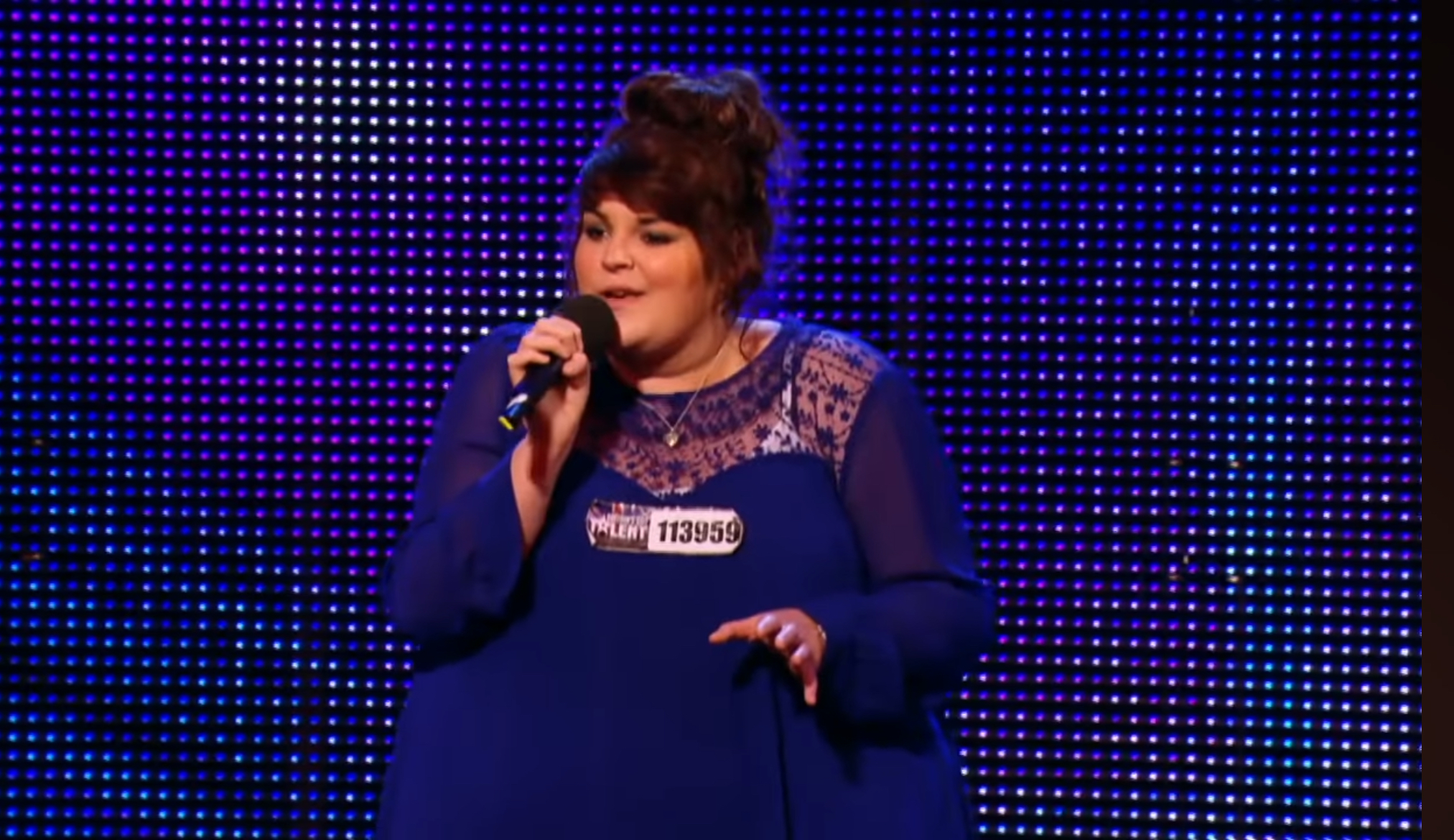
Nineteen-year-old Rosie O’Sullivan stepped onto the Britain’s Got Talent stage with a weight she’d been carrying for years. Growing up in Birmingham, she’d been singing since primary school — school concerts, church choirs, birthdays — yet something about a big, bright stage and a sea of strangers still left her trembling. Rosie described herself candidly: she’d always been “a big big girl,” and with that came a heightened fear of being judged, of becoming the butt of someone’s joke. For her, the audition wasn’t just another performance; it was a crossroads. A “yes” from the judges wouldn’t merely mean a place in the competition, it would be a rare, public confirmation that she was good at what she loved and could, perhaps, see herself differently from then on.
There’s a special kind of bravery in stepping into that spotlight when your inner voice keeps warning you of ridicule. Rosie’s hands shook as she took her place at the microphone, and for a moment the nerves were written across her face. Yet the song she chose — James Brown’s “It’s a Man’s, Man’s, Man’s World” — was bold and imperfectly suited to a newcomer’s insecurity. The track is steeped in raw emotion and power, a classic that demands both technical skill and the ability to inhabit its gravitas. It could have been a mistake. Instead, it became the exact vehicle for her transformation.
The first notes surprised everyone. Rosie didn’t simply sing the melody; she owned it. The nervousness that had shadowed her at the start melted away as if the music itself were a kind of armor. Her voice was big, yes, but it was also nuanced — a mixture of grit and tenderness that made the lyrics land with unexpected weight. Where she might have expected sneers or smirks, she instead earned silence: the kind that fills a room when people stop to truly listen. You could see the audience lean forward, drawn in by the force of her delivery. For Rosie, who’d feared laughter more than anything, the sudden hush must have felt like a small miracle.
What made the performance so compelling wasn’t only the volume or the technical control; it was authenticity. Rosie didn’t try to imitate the original or hide behind gimmicks. She took Brown’s classic and filtered it through her own experience, giving it a modern intimacy without losing its soul. There were moments of deliberate restraint — a held breath before a long note, a subtle drop in tone when the lyrics demanded vulnerability — and moments of full-throttle release, where she let power surge through the chorus. That contrast lent the performance a dramatic arc, as if she were telling a story rather than merely hitting notes.
Small details made the difference. She used the mic stand like a partner rather than a prop, leaning into it when a line required emphasis and stepping back when vulnerability was needed. Her eyes, initially downcast, found the audience at key moments, creating a connection that felt honest and immediate. You could also spot technical strengths: controlled vibrato on sustained phrases, clean transitions between chest and head voice, and phrasing choices that suggested she understood the emotional core of each line. Yet none of this ever felt showy; it always served the song.
When the last note hung in the air and faded, the reaction was immediate and visceral. The crowd rose to its feet, applause swelling like a wave across the auditorium. For someone who had come in fearing mockery, that sound must have been profoundly validating. The judges, too, were unanimous and unequivocal in their praise. Alesha Dixon, often candid and precise in her feedback, told Rosie she had an “amazing” and “powerful voice,” and encouraged her to mirror the judges’ belief in herself. That kind of encouragement can be life-changing for a young artist standing at the brink of self-doubt.
David Walliams, whose comments can swing between cheeky and heartfelt, zeroed in on Rosie’s technical command. He called her control “fantastic” and admitted, with a touch of theatrical longing, that he could listen to her sing all night. It’s the sort of compliment that acknowledges both the skill and the emotional draw of a performance. Simon Cowell, known for his blunt assessments, was visibly impressed and didn’t hold back: “absolutely bloody fantastic.” Coming from someone who’s heard thousands of acts, that phrase carries heavy weight.
Rosie left the stage with a unanimous four “yeses,” but the victory was about more than advancing in the competition. It was the quiet, profound shift in how she might now see herself — a shift from fearing ridicule to recognizing her own worth. For an artist, especially one so young, that kind of moment can ripple outward: auditions become opportunities rather than trials, and practice rooms become laboratories for growth rather than places of second-guessing. Rosie had wanted proof that she was “good at what I do,” and in those applause-filled seconds, she received a public affirmation that could bolster her confidence for years to come.
The performance was a reminder that talent often hides behind insecurity, and that what a performer needs most at times is permission to be seen. For Rosie O’Sullivan, Birmingham’s shy but powerful singer, the stage that had once felt like a place of potential mockery became, even if for a night, the arena where she was finally heard — and believed.