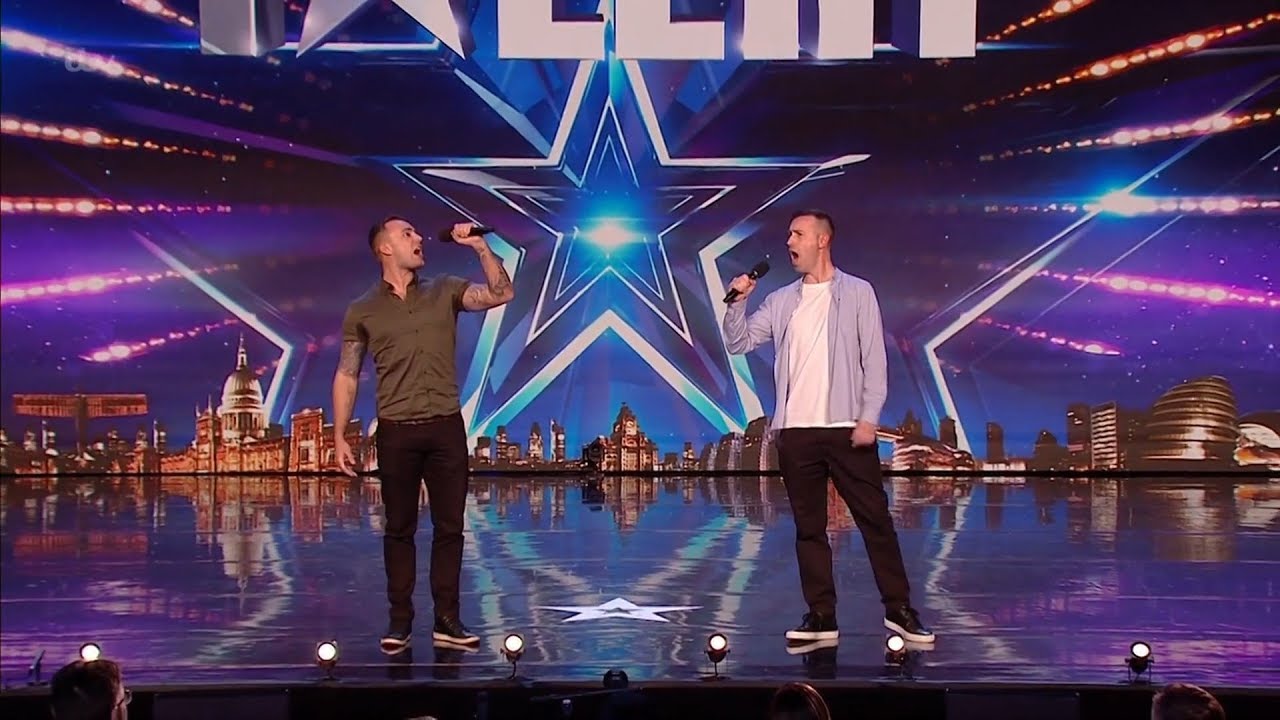
When Vince and Lee, known on stage as The Soldiers of Swing, marched onto the Britain’s Got Talent stage in 2020, they arrived with a kind of theatrical confidence that made you smile before a single note was sung. Their uniforms—crisp, khaki jackets with brass buttons, polished boots, and matching caps—were authentic enough to suggest care rather than costume-shop whimsy. Even their entrance carried a period-specific flourish: a sharp salute, a little military-step promenade, and synchronized nods that read like choreography rehearsed until it felt effortless. From that first frame, they didn’t merely occupy the stage; they invited the audience into another time.
The performance itself felt lovingly put together. They launched into their first number with big-band swagger: tight harmonies, sprightly piano accents, and a rhythm section that kept everything buoyant. Vince’s baritone and Lee’s brighter lead wove together cleanly, the kind of blend that comes from dozens of shared rehearsals—phrasing matched, breaths almost in unison. Their timing was impeccable. Whenever one of them stepped forward for a solo line, the other offered a well-timed comedic look or a theatrical step back that made the interplay as entertaining visually as it was musically. The arrangement was playful but precise, a string of little theatrical touches—finger snaps, jaunty hat-tips, synchronized stomps—that felt like tiny punchlines landing in quick succession.
What could have easily slipped into pastiche instead read as affection. They didn’t treat the wartime references as mere nostalgia; they celebrated the showbiz craft of that era: the close harmonies, the call-and-response flourishes, the way a well-stuffed chorus can sweep you up. Between songs, they tossed in small bits of banter and staged moments—a mock-serious inspection of the audience, an exaggerated wink—each one earning laughs that felt genuine rather than canned. It became clear their act was less about impersonation and more about reviving an attitude: buoyant resilience, cheeky optimism, and the irrepressible urge to dance even when times are heavy.
Concrete moments stuck with you. There was a point in the second number where Lee slid forward across the stage on one knee during a high, jazzy riff, and Vince punctuated with a theatrical, perfectly timed “boom” that sent the front rows into delighted applause. A folded pocket square that fluttered out during a spin became an impromptu gag, with Vince plucking it from the floor and bowing as if that were the plan all along. You noticed the small, human things: the brief exchange of grins between them that let you in on the joke, the visible effort in their calf muscles during a particularly energetic stomp, and the way their eyes sought each other for cues—little signals that kept the performance tight.
The audience response grew organically. At first there were polite chuckles and appreciative clapping, but by the bridge the reaction had swelled into full participation—hands clapping on the offbeat, feet tapping, and even a scattering of people standing by the final chorus. Judges laughed openly, faces lighting up as the duo hit a well-placed comedic beat or launched into a soaring harmony. That kind of reaction matters on a televised stage; it signals that an act has crossed from novelty into communal enjoyment. The theater, briefly, felt like a wartime canteen where strangers found common ground in music and dance.
There was also an emotional through-line beneath the jollity. Wartime swing historically carried a double life: it was both entertainment and balm, a mood-lifter in difficult seasons. Vince and Lee tapped into that duality, keeping things light while letting moments of genuine musical skill shine through. When they softened for a slower passage, the harmonies revealed a sweetness that suggested real musical training and respect for the material. Those quieter instants made the exuberant ones land harder, creating a satisfying arc that kept the audience invested from start to finish.
By the time they finished, Vince and Lee had done more than deliver a routine; they had staged an experience. The applause that followed felt less like closing credits and more like a standing ovation for having been transported—briefly, joyfully—out of the present into a glossy, swinging past. They didn’t just sing about wartime spirit; they embodied the entertainment ethic that kept communities moving through hard times: show up, perform, and make people dance.
Walking offstage, they carried themselves with that same mix of pride and humility. They’d come dressed as soldiers, but they left as hosts of a small, uproarious party they’d created for everyone in the room. For a few minutes on BGT, their careful blend of musicianship, comedy, and period charm turned the stage into a full-on wartime party—an infectious reminder that great showmanship can still light up a crowd.