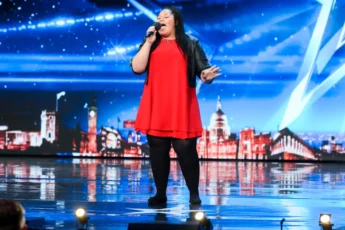
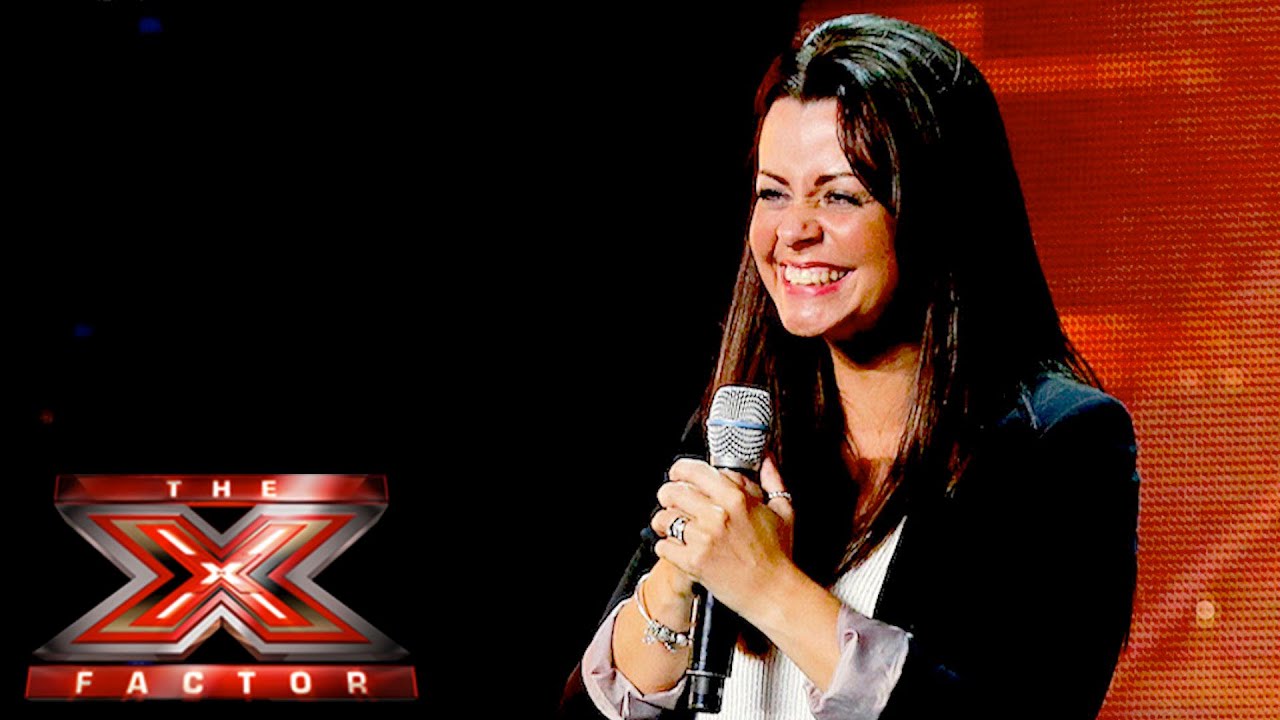
When Cherylyn walked into the audition room, there was a softness about her that spoke of years lived fully rather than of someone trying to manufacture a backstory for television. At 40, a mother of three from South Wales, she carried herself with the quiet assurance of a person who has shouldered responsibility and kept going. She told the judges she’d been singing since she was 13 — evenings in local clubs and pubs, learning how to hold a melody for a room that might be half-full and full of strangers. But then life intervened in a way that changed everything: her husband suffered a terrible accident at work when she was 30, leaving him paralyzed for six months. That moment forced a choice on her. Rather than chase her own ambitions, she became his caregiver, his steady hand and his motivation, helping him relearn how to walk and be the “rock” that kept their family anchored.
When she explained that story in front of the panel, you could see the judges shifting in their seats, listening not just to facts but to the emotions threaded through her words. The anecdotes she offered were small but telling — how she’d traded late-night gigs for hospital visits, how the pubs where she’d once sung seemed to belong to another life, how the hardest work sometimes looks like quiet, repetitive steps: physio exercises in the living room, encouraging words on bad days, cooking meals, and keeping kids’ schedules moving. Those were the kinds of details that made the reason for her decade-long pause feel immediate and real. It wasn’t drama for effect; it was the kind of daily devotion that leaves a mark on both the caregiver and the cared-for.
For her audition, Cherylyn selected Whitney Houston’s “I Didn’t Know My Own Strength.” The choice felt fitting on more than one level. The song is an emotional, soaring ballad about discovering reserves of resilience when life pushes you to the edge — a mirror to her own story. Standing under the lights, she took a breath and began, not with a showy vocal run but with a measured, heartfelt approach that immediately drew people in. Her voice wasn’t the polished instrument of a record-star teenager; it was lived-in and expressive, the kind of voice that gains color and depth from real experience. There were moments of fragility in her delivery that made the powerful phrases later in the song feel earned.
As the song moved on, the emotional content rose alongside the melody. When she sang lines about finding untapped strength, it felt less like lyrics memorized and more like a confession. She hit the crescendos with grit and sincerity, sometimes rough around the edges but honest in a way that technical perfection can’t always capture. At points when Whitney’s famous runs might have been expected, Cherylyn chose instead to inhabit the lyric, to let a single sustained note hold the weight of what she’d been carrying for ten years. That interpretive choice resonated with the audience and judges: she wasn’t trying to out-Whitney Whitney; she was offering her own truth through the song.
The reaction in the room was immediate and warm. People leaned forward in their chairs; a couple of judges’ faces softened into visible empathy. The applause at the end was genuine, not the polite kind reserved for pleasant but forgettable auditions. There was a sense that everyone had been permitted to see something intimate — a life’s worth of sacrifice distilled into four minutes of music. In the brief moments after she finished, the judges took turns responding, balancing praise with constructive feedback. They recognized the raw emotional power of the performance even as they pointed out technical areas where she could improve. It was the kind of honest assessment that can be both humbling and empowering for a returning singer.
Their overall message was clear: talent and authenticity matter, and sometimes the story behind the voice elevates a performance beyond mere notes. They praised her courage for returning to the microphone after a decade away, acknowledging the enormous personal cost of the decade she’d spent supporting her husband. While some technical critiques were offered — suggestions on breath support, pitch control, or occasionally smoothing transitions — those comments were wrapped in admiration. The panel’s recognition that the song’s lyrics matched her lived experience made their feedback feel less like critique and more like guidance for the next stage of her journey.
When the votes were cast, Cherylyn earned three enthusiastic “Yes” votes, a result that felt both triumphant and inevitable given the emotional honesty she had brought to the stage. That green light meant more than a ticket to the next round; it meant public validation of a decade of sacrifice and the beginning of a chance to reclaim a dream that had been shelved for love. For a woman who once traded spotlights for hospital halls, returning to sing in front of thousands — and doing so with such raw heart — was a victory in itself.
Walking away from that audition, it was easy to imagine her heading back into everyday life with something renewed: the knowledge that her voice still mattered, that her story resonated, and that it was not too late to chase the music she had set aside. Her audition served as a reminder that life’s detours don’t always close doors permanently; sometimes they simply change the route, and when you circle back, the destination can feel all the more meaningful.