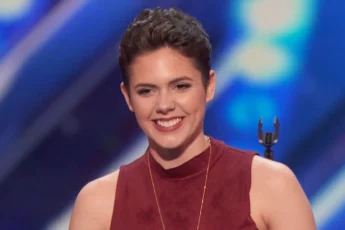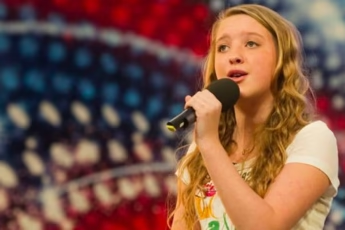
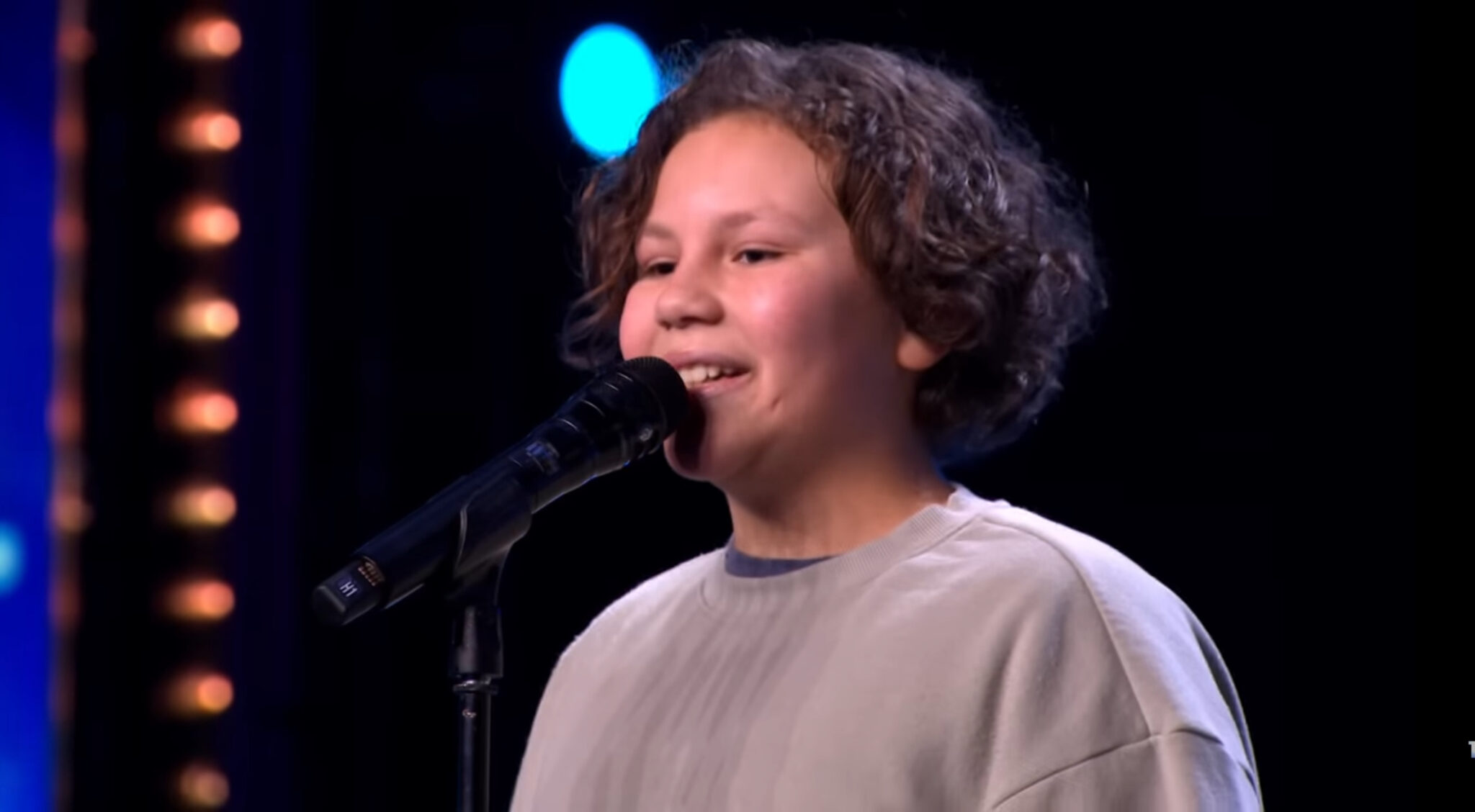
Twelve-year-old Dylan walked onto the Britain’s Got Talent stage with the kind of nervous smile that immediately made the room want him to succeed. He introduced himself simply — a kid from London who’d loved singing since he was little — and there was a shy honesty to the way he spoke about his dreams. He admitted, quite candidly, that he was scared, but then surprised everyone with a practical plan: if he won the prize money he’d treat himself to a trip to Disneyland in America and put the rest toward recording future albums. That blend of childlike wishfulness and early ambition was disarming. It painted him as both an ordinary boy with delights in mind and a young artist already thinking long-term about his music.
The judges warmed to him instantly. They offered gentle encouragement and a few tips to calm his nerves, the kind of small kindness that helps a contestant steady themselves before a big moment. You could see Dylan taking those words in, shoulders loosening just a fraction as he positioned himself at the microphone. The choice he’d made for the audition made the room sit up: “Listen” by Beyoncé. It’s a song built for vocal maturity — wide dynamic range, emotional depth, and demanding climactic notes — normally sung by experienced vocalists. For a 12‑year‑old boy to select it was bold, almost audacious. But Dylan’s decision also hinted at serious confidence; he wasn’t choosing a crowd-pleasing, safe tune. He had chosen a musical mountain.
When the piano began and Dylan opened his mouth, the first thing that struck everyone was the unexpected maturity of his voice. The theatre quieted as if the audience were leaning in to catch something fragile and precious. His tone was warm and rounded, with a control over breath that made lines hold longer than you expect from someone his age. Where some young singers rush to show power, Dylan demonstrated patience: he let the verses breathe, used softer dynamics to draw listeners close, and then built into the chorus with a steady, controlled release. It wasn’t just that he could hit the notes — it was how he shaped them. Small musical decisions — delaying the entrance on a phrase to heighten tension, softening a consonant to let a vowel bloom — made the performance feel thoughtfully crafted rather than merely impressive for its age.
There were moments that revealed an emotional intelligence beyond years. In quieter lines he leaned into vulnerability, making the lyrics land like an intimate confession; when the melody demanded release, he summoned volume without strain, letting the notes ring clear and true. On tougher passages he added tasteful coloration — a slight rasp here, a tasteful slide there — choices that conveyed feeling without calling attention to themselves. Visually, Dylan’s presence matched the vocal work. He kept his posture composed, eyes focused but not rigid, and often closed them as if reaching inward for the emotional source of the song. Those small physical cues turned a technically excellent audition into a performance that felt sincere.
The judges’ reactions captured what many viewers were feeling. Alesha Dixon, known for her musical ear, singled out the technical aspects, praising his tone and saying his technique was “off the scale” for a 12‑year‑old. Her comment pointed to the rare combination Dylan displayed: natural timbre enhanced by disciplined mechanics. Amanda Holden’s response was more personal — she called him a “gorgeous, unassuming, humble person” and said he “completely knocked it out of the park.” Her warmth reflected how Dylan’s modesty made his achievement feel even more impressive. Even Simon Cowell, who often measures risk against payoff, acknowledged the difficulty of the chosen song but respected Dylan’s bravery and ambition. That trio of responses — technical praise, emotional approval, and industry-savvy recognition — summed up the room’s verdict.
When the final chord dissolved and the auditorium erupted in applause, it felt less like a reactive ovation and more like collective validation. Friends and family in the wings were visibly moved; some wiped tears, others shouted encouragement. The standing ovation made clear that Dylan had done more than demonstrate vocal potential — he had given people a moment that landed emotionally. The unanimous four “yes” votes that followed were heartfelt, a clear sign the judges believed in his potential and wanted to see how far he could go.
Walking offstage, Dylan carried himself differently than when he entered: there was a small, shy smile that seemed to hold new confidence. The trip to Disneyland and the dream of recording future albums suddenly felt like plausible next steps rather than distant fantasies. For viewers, his audition served as a reminder that talent can arrive wrapped in ordinary packages — a humble kid with big dreams — and that when grit and gift meet opportunity, the result can be unexpectedly powerful. Dylan didn’t just sing a difficult song; he made it his own, and in doing so offered a glimpse of a young artist with the technical skill, emotional insight, and ambition to build a real career.