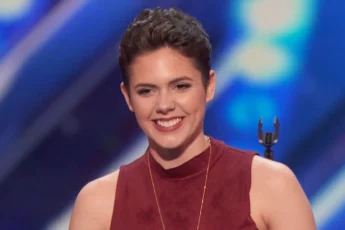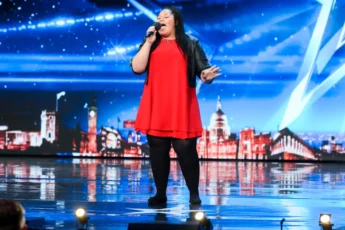
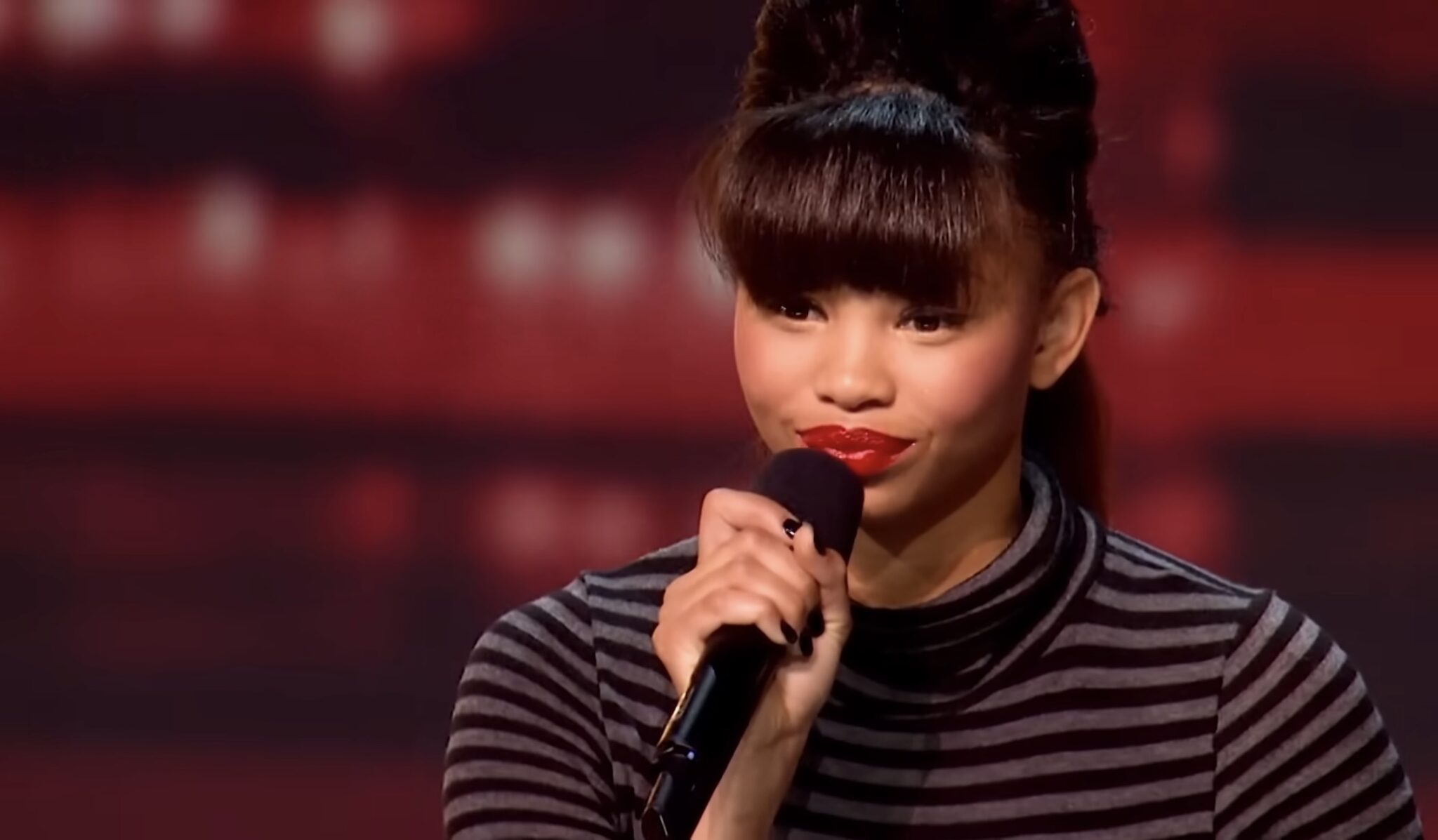
Tiah Toliver walked onto the X Factor stage with a kind of electricity you notice before you hear a note — a deli clerk from a small town with big-city dreams and a look the cameras couldn’t miss. At 19 she already carried herself like someone who believed in possibility; there was “steel in her eyes,” as one judge put it, a mixture of grit and hunger that made it easy to imagine her bouncing back from long shifts behind a sandwich counter to a life under bright lights. She stood there unaccompanied, confident enough to start a cappella, and chose Shontelle’s “Impossible” — a risky pick that stripped away any safety net and left her voice completely exposed.
Her first bars landed raw and immediate. Singing without a backing track was a bold move, meant to showcase pure talent rather than production. For some listeners it was thrilling to hear a voice bare, unprocessed; for others, it showed every wobble and breath. Simon Cowell, famous for recognizing raw potential, was intrigued from the beginning. He leaned forward, eyes fixed, clearly calculating how that spark might translate with the right guidance. But his enthusiasm was not echoed around the table. LA Reid and Demi Lovato were quicker to judge the technical aspects: pitch wobbles, uneven dynamics, moments where youth and nerves laced through the performance. Nicole Scherzinger sat between them, watching, trying to weigh instinct against the reality of what she was hearing.
The split was immediate and dramatic. Where Simon heard raw, unrefined promise, others heard inconsistency and amateurism. LA Reid’s critique was blunt: the performance lacked the polish needed to move on to the next stage of a high-stakes competition. Demi agreed, pointing out that without a backing track or strong control, Tiah’s audition didn’t read as ready for a professional platform. Their two “no” votes felt like a door closing, and the atmosphere in the room thickened with tension — not just for Tiah, but for the judges themselves as they faced a real difference in philosophy. Simon, never one to sit quietly when he believes in someone, pushed back. He argued passionately that the show is about discovering an “X Factor,” not simply rewarding perfection in a first take. To him, Tiah’s performance was a raw diamond: rough, yes, but with facets worth chiseling. In a moment of high drama he even called the other judges “deaf,” a provocative line that underscored how strongly he felt.
The exchange wasn’t only about technicalities; it exposed a philosophical divide. Some judges prioritized readiness and polish; Simon prioritized charisma and star potential that, with coaching, could become irresistible. The contestant, meanwhile, was caught in the crossfire. Trying to remain composed, Tiah’s jaw tightened and her hands fluttered at her sides; the cameras picked up a flicker of anxiety in her eyes. Leaving the stage now would mean returning to a life with bills, shifts, and the deli counter — and a dream deferred. But Simon refused to let that be the end of her story. He insisted she stay, interrupted the formal procedures, and pressed for another chance. Whether out of conviction or a desire to make a statement, he wouldn’t allow a single imperfect moment to be the final word.
Under the pressure — from the judges, the audience, and the cameras — Tiah agreed to try again. When she returned to the mic, the contrast could not have been greater. Choosing Duke Ellington’s “It Don’t Mean a Thing (If It Ain’t Got That Swing)” was a masterstroke: it gave her a different vehicle to demonstrate range, rhythm, and a more controlled sense of phrasing. The swing number allowed her to lean into personality and timing, to show breath control within a groove rather than on isolated high notes. She loosened up, let the rhythm carry her, and suddenly elements that had been shaky in the ballad came into focus. The judges watched as she inhabited the song with a different kind of assurance — playful, grounded, and musically savvy in a way the first audition hadn’t revealed.
Nicole, who had been torn earlier, found herself warming to the new version. The audience, sensing a shift, began to roar encouragement, which seemed to buoy Tiah further. Simon’s earlier defense now felt validated; he’d sensed a performer who could reinvent a moment and command presence. As the final notes faded, the room was charged. Nicole, moved by the second performance and perhaps persuaded by her own instincts, changed her mind and flipped her vote to “yes.” The remaining judges followed. What had started as a near-elimination transformed into unanimous approval, and Tiah left the stage with a mixture of disbelief and elation — tears at the corners of her eyes, a hand over her heart, the kind of stunned smile that comes when a dream takes a surprising, delightful turn.
The episode became less about one singer’s imperfections and more about what talent shows are sometimes meant to celebrate: growth, resilience, and the chance to reveal yourself a second time. Tiah Toliver’s audition reminded viewers that star quality can be messy and that potential is often more compelling than polish. It was a live demonstration that one brave person, given another shot, can change not just a verdict, but the way people see her entirely.