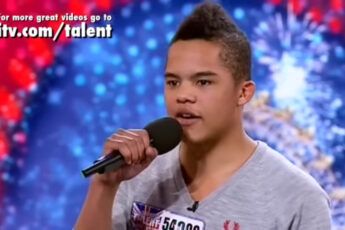

When Rafferty Coope stepped onto the Britain’s Got Talent stage, he filled the space in a way that made people take notice before he even spoke. At 16 years old and already 6’4″, he has the sort of presence that reads as both boyish and oddly commanding; he looked like the kid you’d expect to see in a school play who somehow belongs under the spotlight of a major arena. Yet what made him unforgettable wasn’t just his height or his composure — it was the seamless way he married two very different disciplines: music and magic. That combination turned a typical audition into something that felt part concert, part mystery show, and entirely original.
Rafferty opened with a quiet confidence, setting the stage for tricks that were as musical as they were visual. One early moment that stopped the room cold was when sound seemed to travel through Simon Cowell’s hand. It was a small, uncanny detail — a note that approached, passed, and then continued — but the precision of the timing and the way Cowell instinctively reached out made the effect feel deeply personal. Rather than relying on smoke bombs or flashy pyrotechnics, Rafferty used rhythm and pacing to direct attention, squeezing drama out of silence and letting single notes hang in the air long enough that the audience could feel the anticipation.
As the act progressed, the scale of his illusions grew. He levitated objects not with obvious theatrics but in time with the beat, as if the rhythm itself had weight. A simple deck of cards, a glass, even a pen seemed to rise and fall in perfect sync with the music, creating a choreography that blurred the line between magic and musical performance. Watching him, you got the sense he’d thought through every microsecond — not just what trick would come next, but which drum hit or piano chord would make it land emotionally. It’s a rare kind of showmanship: part engineer, part musician, part performer.
The audition’s centerpiece was the synchronization between randomly selected playing cards and a melody that everyone recognized. KSI was invited to pick cards from the deck at random — an instant that always adds a pulse of risk to live magic — and those choices were then translated into notes. Rafferty took those values and turned them into a perfectly flowing arrangement that transitioned into the opening bars of Journey’s “Don’t Stop Believin’.” The moment the first chords of the anthem emerged, you could feel the audience lean forward, mouths opening in delighted surprise. It wasn’t just clever; it was emotional. The song is one of those universal pieces that carries memory and hope, and hearing it rise out of something as ordinary as a handful of playing cards felt like watching a small miracle.
When the cards were flipped over, the reveal landed with the kind of satisfying clarity that makes you clap before you know why. The backs showed letters that spelled out the song’s title, confirming that the earlier musical translation hadn’t been a fluke. There’s a kind of joy in that precise alignment — the logical puzzle resolving into art — and it swept through the room. Judges who’d been skeptical at first had their expressions change slowly from analysis to wonder. The beat of the performance had done its work, carrying the audience from curiosity to awe.
Beyond the technical wizardry, there was a human thread running through Rafferty’s audition. You could see it in the little things: the way he smiled at KSI when the random choices were made, the subtle nod to the band to cue a change in tempo, the way he let his eyes find the camera for a beat as if to share the secret of the trick with the viewers at home. It’s clear he’s been practicing a long time, honing not just the mechanics of his illusions but the softer art of connecting with people on stage. That emotional warmth made the magic feel less like manipulation and more like a shared experience.
KSI’s reaction crystallized the moment. He was visibly moved, not only by the technical feats but by the charm and sincerity Rafferty brought to them. Pressing the Golden Buzzer is an act that changes lives on the show; it is equal parts endorsement and gamble. When KSI stepped forward and sent Rafferty straight through to the live semi-finals, the auditorium erupted. For Rafferty, who had dreamed of this moment since he was five years old, the scene must have felt surreal: the culmination of years of practice, the realization of a childhood aspiration.
In the wake of the audition, it’s easy to imagine how this performance could shape his path. He’s a rare breed of young entertainer who doesn’t rely on spectacle alone; he builds structure into every beat and uses music to give his illusions narrative weight. That approach makes his magic feel timeless rather than trendy, and it gives audiences something to remember beyond a single gasp. For now, Rafferty Coope is the breakout star of the season — a tall, unassuming teenager with a knack for turning rhythm into wonder and for reminding everyone in the room that when skill meets heart, even the most impossible moments can feel beautifully real.