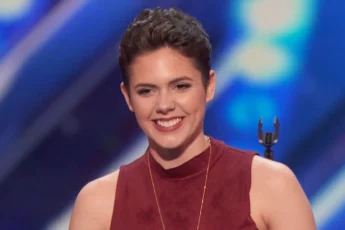
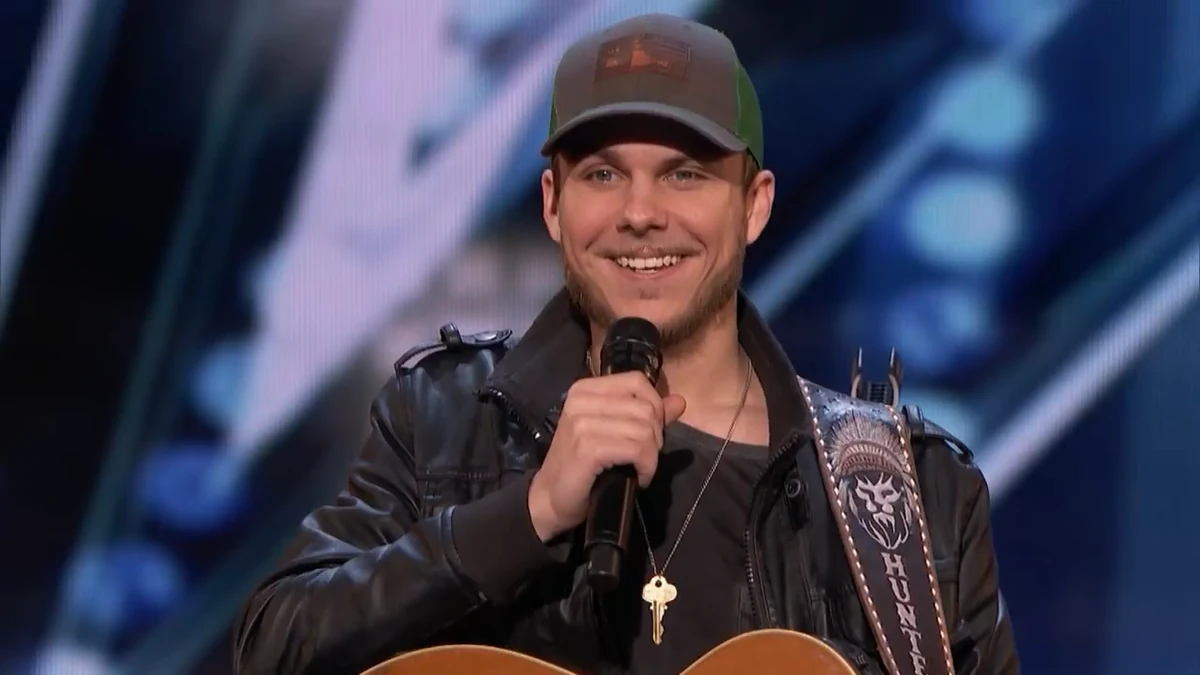
Hunter Price, a 25-year-old singer from Georgia, stepped onto the America’s Got Talent stage with the kind of nervous optimism that’s easy to recognize: a slight tremor in his hands, a hopeful grin, and the kind of polite energy that says he’s used to trying, failing, and trying again. He chose to start with a familiar crowd-pleaser, Bryan Adams’ “Everything I Do,” perhaps thinking a well-known ballad would show his range and connect with the audience. But almost from the first note, the performance failed to land the way he had hoped. The arrangement sounded safe and overly familiar, the kind of karaoke-style rendition that flattens nuance and leaves judges checking their phones. There was nothing malicious about it — Hunter simply hadn’t yet found the version of himself that would translate on such a big stage.
Simon Cowell, never one for circumspection when he senses mediocrity, cut the music without hesitation. The abrupt silence that followed was almost louder than the song had been, and for a moment the auditorium seemed suspended. Simon’s words were blunt and unadorned: Hunter’s version was “very generic,” too much like “something you hear a million times.” The critique landed hard, the kind of public assessment that could crumble someone’s confidence. You could see it on Hunter’s face — not anger, but a flush of embarrassment and disappointment, the realization that the audition was careening away from his plan.
But Simon’s interruption carried a silver lining. Instead of sending him away, he offered a lifeline: did Hunter have an original piece he could try? It was a high-stakes pivot — a test of resilience under pressure. For many contestants, being cut mid-song is the end; for Hunter, it became a crossroads. He nodded, breathing in deeply, and revealed he had been writing his own music, citing contemporary songwriters like Taylor Swift as influences. That fact reframed the entire encounter. No longer was he a contestant relying on covers; he was an artist with something personal to say.
When he launched into “Left Behind,” the room shifted. The melody was fresh and uncluttered, the kind that slips into the listener’s ear and refuses to leave. More importantly, the lyrics carried weight: lines about feeling abandoned, about nights spent alone, about scraping by when life doesn’t cooperate. As Hunter sang, you could feel the honesty in his voice — it wasn’t manufactured to impress; it was the product of someone who had lived through the hardships he described. He later shared that he had been on his own since 18 and had endured moments “when I haven’t had enough money to eat,” a detail that lent a human gravity to the song and made the performance more than entertainment; it became testimony.
Small things amplified the moment. Hunter’s phrasing was conversational yet melodic, his vowels softened in places to emphasize a line’s pain, and at one point a held note quivered just slightly, revealing vulnerability rather than weakness. The camera cut to the judges: Sophia Vergara, who had seemed ready to press the red button after the Bryan Adams number, visibly softened as the song progressed. Howie Mandel, perched on the edge of his chair, looked skeptical but attentive; he later urged Hunter to “open up” more, signaling that while the performance had promise, the artist still had room to shed defensive layers. Simon, who had prompted the turnabout, listened with the careful attention of someone who recognizes a raw jewel that needs gentle polishing. He observed that Hunter was, perhaps, a better songwriter than he’d realized — the problem was he’d been trying too hard to please rather than to be himself.
The judges’ comments were as revealing as the performance itself. Vergara admitted she would have given him a “no” after the first song, a candid admission that underscored how dramatically an artist can change a room with authenticity. Howie, while supportive, pushed for greater emotional openness, offering practical advice about connecting more directly with the lyrics. Simon’s feedback, though measured, was constructive: he saw potential and challenged Hunter to stop mimicking expectations and start channeling his life into his music.
When the votes came, the shift in the room became official. Hunter earned three “yes” votes, not because he’d delivered a flawlessly polished pop anthem, but because he had shown something more essential: a real voice, a songwriter’s sensibility, and the courage to respond under pressure. It was a reminder that talent shows aren’t merely about perfect covers; they’re about discovery — the slow reveal of an artist learning to trust their own story.
As Hunter left the stage that night, the mix of relief and possibility was palpable. He hadn’t just survived the cut; he’d turned it into an opportunity. For viewers and judges alike, his audition became one of those rare moments when a reality show actually felt real — messy, honest, and unexpectedly moving — and when a second chance wasn’t just granted, it was earned.