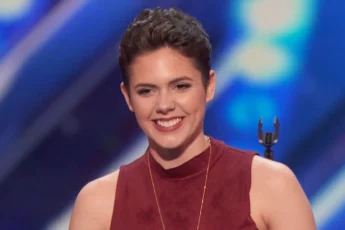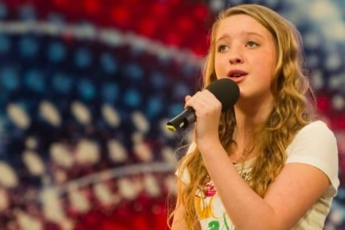
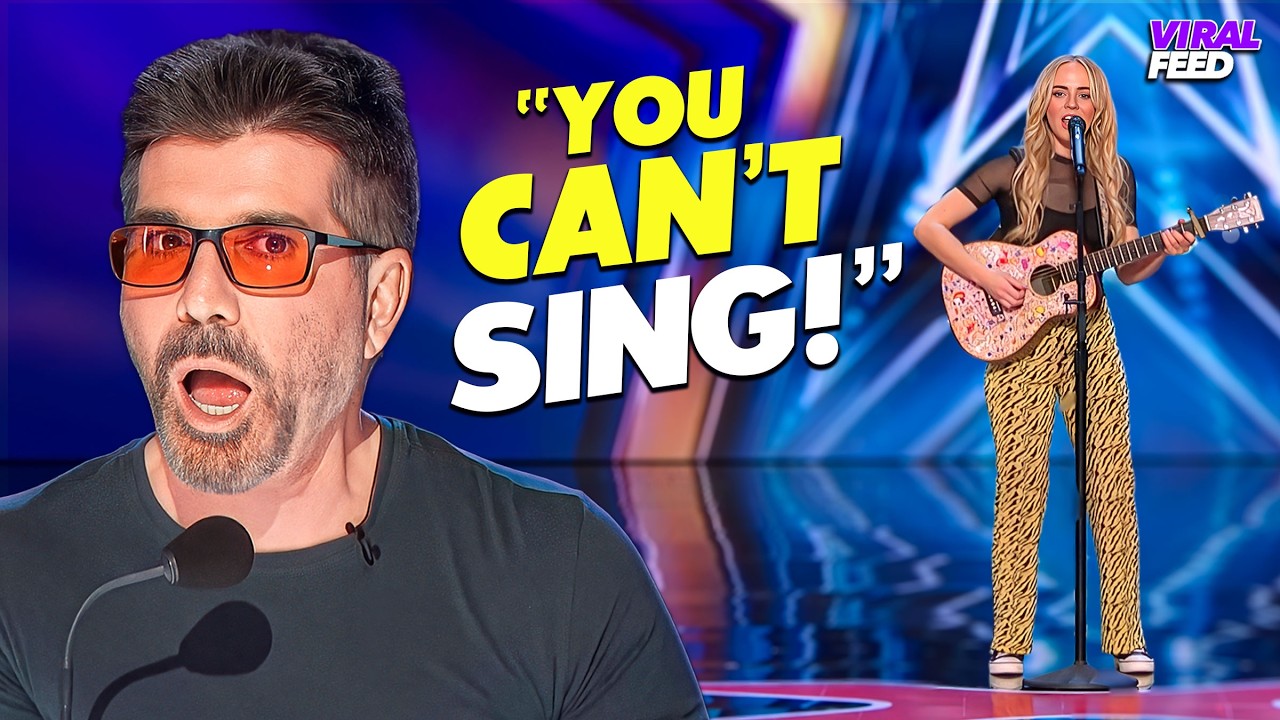
Madilyn Bailey didn’t walk onto the America’s Got Talent stage as an unknown; she arrived with the kind of internet résumé that can’t be faked. Years of uploading covers and originals had earned her millions of subscribers, a recognizable voice and, like any artist who lives in the spotlight, a steady stream of critics and cruel comments. Instead of letting that negativity fester in the comments section, she made a surprising choice: she turned the worst of it into art, and then she brought that art to live television.
She introduced the idea with the kind of calm, slightly amused detachment that suggested she’d rehearsed this moment in her head a hundred times. Posting music online, she told the audience and the judges, meant you were going to get praise and you were going to get hate — it came with the territory. Rather than hide from the latter, she’d done the opposite. Using the very insults and dismissive lines people had left under her videos, she’d written an original pop song. It wasn’t a petty clap-back; it was a creative transformation — a way of “flipping the script,” as she put it, and taking language that was meant to wound and shaping it into something catchy and clever.
The song itself was disarming. Lines that on the surface read like nonsense — “my mom thinks you just got killed by a cat,” “am I the only one who really hates her?” — were stitched together with a surprising ear for melody and rhythm. What might have been just a list of awkward insults became a chorus you could sing along to. Madilyn didn’t yell or snarl; she smoothed those lines into pop hooks, turning spite into a kind of satire. The arrangement was bright and upbeat, underscoring the joke: the comments were ridiculous, and she wasn’t about to give them the power to ruin her.
Watching from the audience felt like watching a small metamorphosis happen in real time. At first, people laughed — not cruelly, but at the absurdity of reading someone’s insults back in a jaunty tempo. Then, as the verses unfolded and the chorus landed, the laughter shifted to genuine appreciation. There was a spark of admiration in the room as viewers realized the stunt wasn’t shallow revenge; it was clever craftsmanship. You could see it in faces as shoulders relaxed, smiles widened and phones were raised to capture the moment.
Simon Cowell’s reaction was emblematic. Known for blunt, often harsh critiques, his smile during the performance said as much as any praise. He’s built his reputation on calling out weakness and rewarding originality, and here was originality packaged with confidence. By the time Madilyn hit the final note, the energy in the theater had changed completely: what started as a curious experiment became a triumphant statement. The audience rose to their feet, and the judges delivered four unanimous “Yes” votes. It was the kind of validation that feels both public and personal — a recognition that she had taken something designed to dismantle her and used it to build something new.
But the moment didn’t stop at applause. Within hours, the audition clip was everywhere. Social platforms ignited: people were sharing the performance not because they wanted to mock, but because they admired the cleverness of it. Comments that had once been used as lyrical fodder were now being laughed at in new contexts. The piece became more than a clever stunt; it was a conversation starter about how we consume and weaponize feedback online. For Madilyn, the immediate payoff was clear — increased visibility, streams and a fresh wave of supporters — but the deeper impact was in how she reframed negativity as creative material.
That reframing turned into more than one standout moment. The viral attention led her to expand the idea into a fuller project: a series of songs inspired by the same concept, each track mining different corners of online vitriol and reshaping it into pop statements. What could have been a one-off gag became a deliberate artistic direction. It’s a smart move because it acknowledges the reality of being an online artist today while refusing to be defined by it. Instead of letting trolls dictate her narrative, she reclaimed the narrative by writing it herself.
What resonated most about the performance wasn’t just the smarts behind it; it was the tone. Madilyn never came across as bitter or defensive. She was wry, playful and in control. There’s a difference between fighting back and showing people that their attempts to hurt you are laughable — she chose the latter. The result was a performance that felt light enough to entertain but sharp enough to leave an impression.
In the end, the audition did more than secure a spot in a competition; it showcased a model for handling online hostility that others might emulate. By taking hateful words and turning them into anthems, Madilyn Bailey turned disdain into momentum, proving that creativity can be a form of armor — and occasionally, a weapon of mass delight.