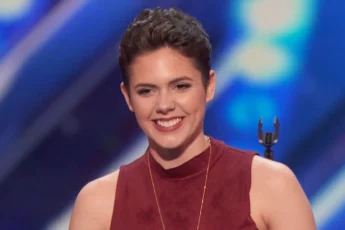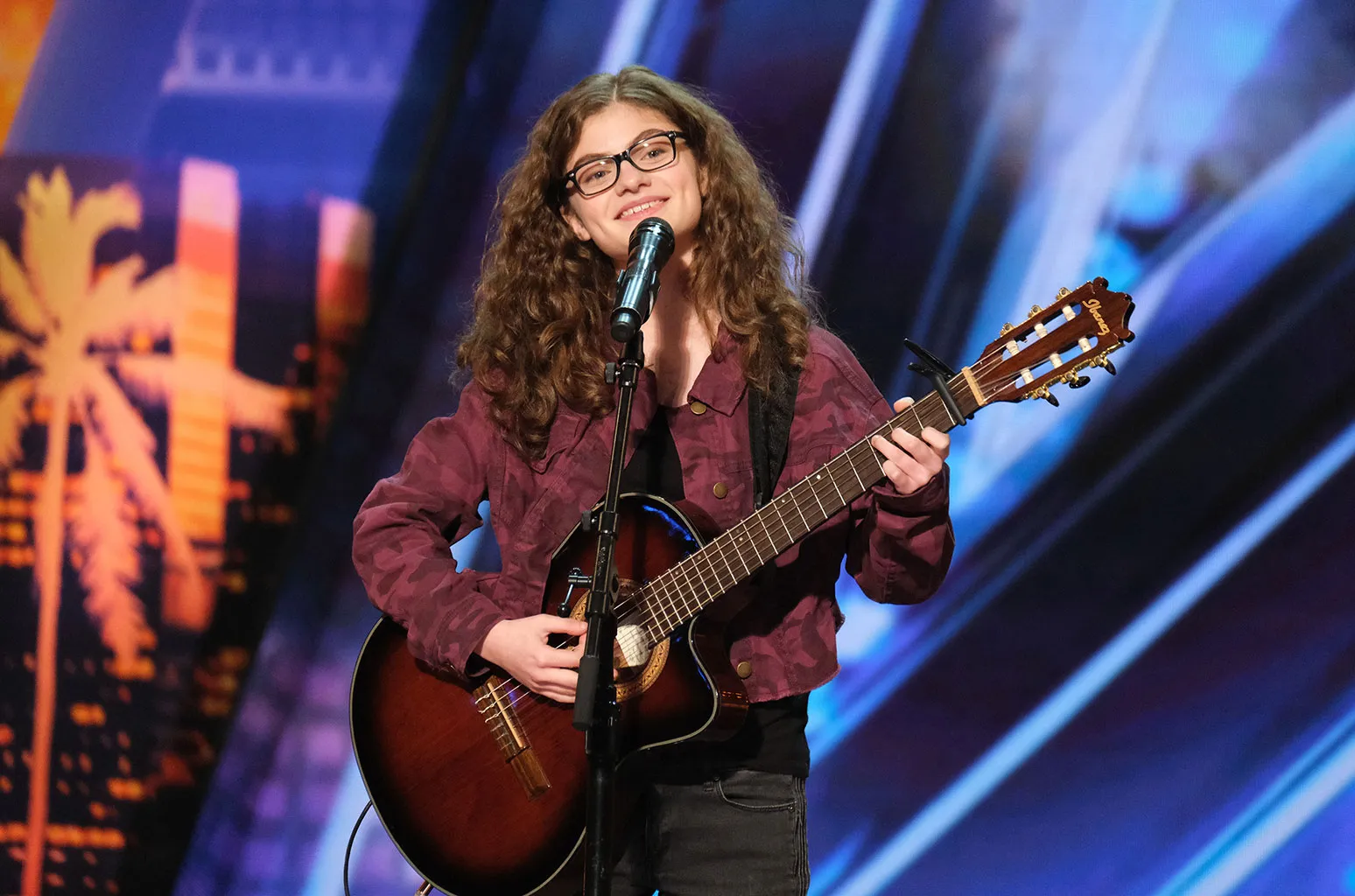
When 15-year-old Sophie Pecora walked onto the America’s Got Talent stage, she carried more than a guitar and a melody — she brought a story that had quietly shaped her for years. Sophie told the audience and the judges that the root of the song she was about to perform came from a painful chapter in seventh grade, when relentless teasing and exclusion left her feeling alone in a crowded school. Rather than masking that pain or pretending it didn’t exist, she had turned inward and found a way out: songwriting. Tonight wasn’t about impressing anyone with vocal acrobatics; it was about speaking the truth she’d kept inside and offering that truth to others who might be listening.
The song itself felt like a conversation more than a performance. Sophie’s lyrics mapped small, specific moments that made the larger hurt tangible: the furtive trips to the bathroom to avoid classmates in the hallway, the hollow feeling of sitting at a lunch table with no one to talk to, the way words thrown carelessly by others could hang around her like a shadow. Those concrete details gave the song weight. You could picture the scenes as she sang them, and that made the vulnerability feel immediate. She didn’t dramatize; she narrated. Her voice carried a quiet strength — not the shout of anger, but the steady tone of someone choosing to transform sorrow into something constructive.
Watching her play, the audience softened. There was an intimacy to the way she told the story: small gestures, like reaching up to tuck a strand of hair behind her ear before a chorus, or closing her eyes on a particular line as if recalling the moment that inspired it. Those tiny actions made it clear this was not a manufactured television moment but a piece of Sophie’s life. The judges, too, leaned in. You could see them listening not just for musicality but for honesty. When a chorus swelled and Sophie’s voice trembled at the edges, you felt the room collectively hold its breath; when she landed a line with plain, unshowy power, a wave of empathy moved through the auditorium.
What made Sophie’s performance especially compelling was how she balanced storytelling with craft. Her melody was simple but effective, a clear vessel for the lyrics. She used dynamics thoughtfully, pulling back at times to let the words land and building up at others to underscore an emotional turning point. It was the kind of songwriting that reveals growth — someone who has learned how to shape experience into art. Between verses she added little vocal inflections and pauses that suggested she was still processing the memory as she sang it. That ongoing processing made the song feel less like a rehearsed statement and more like a moment of real-time healing.
The reaction afterward reflected just how many people in the room connected with Sophie’s message. A smattering of applause at first swelled into a heartfelt standing ovation. Viewers and judges alike seemed affected not only by the quality of the performance but by the boldness it represented: the bravery of a teenager walking onto a national stage and saying, in essence, “This happened to me, and I’m okay to talk about it.” Comments from the judges highlighted different facets of her achievement. They praised her songwriting, her vocal control, and, most of all, her willingness to be vulnerable in front of millions. That combination — talent and authenticity — is what often resonates most on shows like this, and it was clearly present in Sophie’s moment.
When the votes were counted, Sophie received four “yes” votes, sealing her passage to the next round. The affirmation felt like more than a ticket in a competition; it was validation that her story mattered and that her choice to turn hurt into music could inspire others. In the green room afterward, you could see relief and joy mixing on her face as family members and new friends offered embraces and congratulations. She spoke briefly about the support she’d received — late-night practice sessions with a parent, a teacher who encouraged her to keep writing, friends who helped her polish the lyrics — details that reminded viewers this was the product of community as much as personal courage.
Beyond the immediate applause and the next-round slot, Sophie’s performance sent a message to anyone who has felt marginalized or silenced: creativity can be a lifeline. By naming her experience in song, she not only processed it for herself but provided a mirror for others who might be struggling. For many watching, the image of a 15-year-old standing tall because she could sing her truth will linger longer than any single critique or note. Sophie’s audition was proof that art has the power to heal, to connect, and to transform pain into purpose — and for a lot of viewers, that was the most moving part of all.