
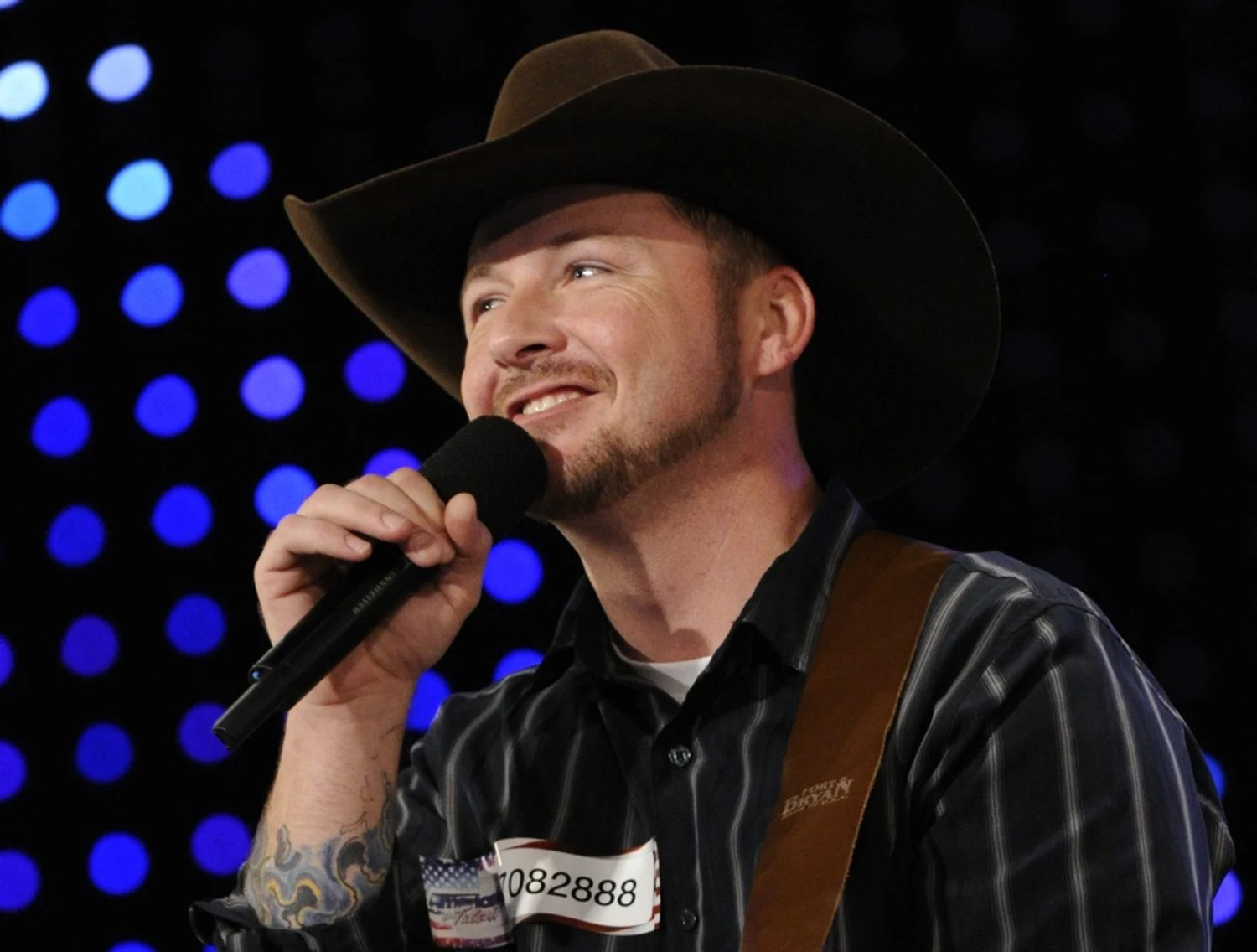
When Tim Poe walked onto the America’s Got Talent stage, there was an immediate hush, the kind that comes from a room unsure whether to expect entertainment or testimony. Introduced as a U.S. military veteran who’d served for fourteen years, Tim’s presence felt different from the usual hopefuls: his posture was steady but unguarded, his hands occasionally clasped in that quiet way people do when they’re holding themselves together. As he began to tell his story, the weight of what he’d lived through became clear. In 2009, while trying to protect his fellow soldiers in Afghanistan, Tim was hit by a grenade. The blast shattered more than his body — his back was broken and he sustained a severe brain injury that left him with a persistent stutter. Listening to him speak about that day, you could hear the pauses and the effort in his words, and the audience leaned in, not because of showmanship but out of respect and curiosity for the man in front of them.
What made Tim’s audition so compelling wasn’t only the scale of his injuries but the way he presented himself: with humility, gratitude, and an insistence on moving forward. He talked about rehab, about speech therapy, about the countless small victories that most people never see. One detail he shared—simple, hopeful, and life-changing—was that his speech pathologist had suggested singing as a therapeutic tool to help manage his stutter. That suggestion, at first practical and clinical, opened a door Tim hadn’t known existed. It was clear as he spoke that finding his singing voice had become more than a remedy; it had become a new form of expression and a way to reconnect with the world.
Then came the moment that made the clip impossible to forget. Tim chose “If Tomorrow Never Comes,” a song soaked in tenderness and reflection. As the opening chords rolled in, something shifted. The stutter that marked his spoken narrative disappeared almost entirely when he sang. The contrast was striking and immediate: the tentative, measured syllables of his speech gave way to long, unbroken phrases, a warm baritone, and a clear emotional core. He didn’t rely on vocal acrobatics or gimmicks; instead, he allowed the melody and the lyrics to do their work. The result was a performance that felt rare and intimate — the voice of a man who had found a way to speak plainly about his heart when spoken words had been so difficult.
Watching Tim sing, you could see the audience respond in real time. People who had been quietly absorbing his backstory were now visibly moved. Some wiped their eyes; others sat completely still, hands over their mouths as if to contain the swell of feeling. The judges’ faces reflected the same mixture of astonishment and tenderness. Howard Stern, known for a sometimes-edgy persona, looked genuinely touched; his softening expression said as much as any comment. Across the panel, admiration and empathy seemed to mingle. What they were witnessing was more than a talented rendition of a well-known ballad — it was a demonstration of resilience, a moment where art and recovery intersected.
There are small, human details in the performance that make it linger. Tim’s breath control, the way he lingered on certain vowels to let emotion bloom, or the slight, almost imperceptible nod he gave the band before a crucial phrase — each choice felt unstudied and honest. He didn’t aim for perfection; he aimed for truth. That authenticity amplified everything: the lyrics about love and uncertainty resonated differently coming from someone who had faced mortality and the loss of familiar faculties. His voice carried a softness that translated into sincerity, making listeners feel the song rather than merely hear it.
After the final note faded, the applause wasn’t just polite TV clapping; it was deep and sustained, the kind of standing ovation reserved for moments that touch something human in everyone present. The judges rose as well, offering heartfelt praise. Their unanimous “yes” votes felt like more than passage in a competition; they felt like communal recognition of a man’s perseverance and the healing possibilities of music. Comments that followed honored both his service and his courage, and many noted how rare it is to see someone transform an adversity into an art form so plainly.
In the days after the audition aired, clips of Tim’s performance spread across social media, accompanied by headlines that called it inspirational and moving. People shared it not just for the singing but for what the singing represented: the restoration of voice and agency after trauma. Threads of commentary praised the role of creative therapies in rehabilitation; others focused on the emotional power of seeing someone reclaim parts of themselves that seemed lost. For viewers, Tim’s audition became a vivid illustration of why such shows continue to matter — they can surface stories that remind us of our shared capacity for resilience and empathy.
Tim Poe’s moment on America’s Got Talent stands as a powerful reminder that healing often takes unexpected forms. For Tim, a suggestion in speech therapy led to a rediscovery of voice, a stage to tell his truth, and a public acknowledgment of his courage. Watching him sing, it’s impossible not to feel moved by the intersection of vulnerability and strength — by the idea that even after the most devastating silences, music can help one find words again.