
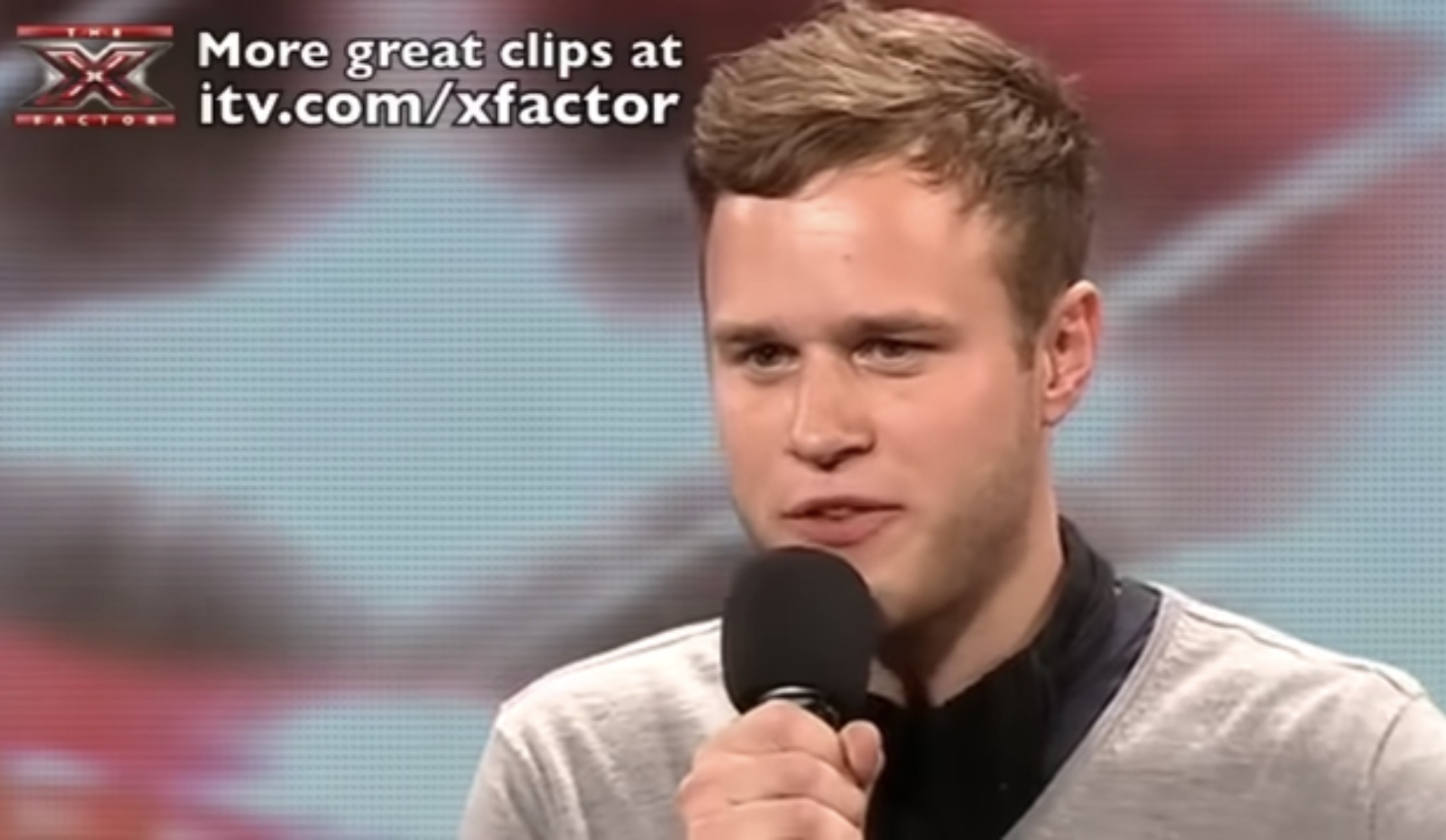
In 2009, a 25-year-old energy advisor named Olly Murs stepped onto The X Factor UK stage with a mixture of nerves and easy charm that made him immediately likable. He didn’t arrive with an air of self-importance or a polished backstory — just a friendly grin, honest answers, and the kind of boy-next-door demeanor that made the audience lean in. When the judges asked why he wanted to be there, Olly spoke plainly about his dream to perform professionally despite having almost no industry experience. There was something disarmingly real about the way he said it, as if he believed in the possibility without needing to oversell it. That groundedness set the tone for what came next: not a manufactured reality-show moment, but the emergence of a natural entertainer.
Before he sang, there was a moment of human connection. He talked about his day job as an energy advisor in nearby Witham, his life in a small town, and the ordinary routines that shaped him. You could tell he wasn’t accustomed to the glare of national television, and that vulnerability made him approachable. When the first chords of Stevie Wonder’s “Superstition” began, whatever nerves he had melted away into a performance that felt effortless. From the opening note, Olly’s voice carried a soulful, buoyant quality that suited the song’s groove. He didn’t try to replicate Stevie Wonder note-for-note; instead, he brought his own warmth and cheeky personality, which breathed new life into the classic tune.
What immediately stood out, beyond the vocal tone, was his confidence on stage. Olly moved with a natural rhythm — a little swagger, a playful flick of the hips, and those now-famous “snake hips” that seemed to combine dancehall ease with pop charisma. It all felt authentic. There’s a difference between someone who performs and someone who celebrates being on stage; Olly belonged to the latter category. He grinned at the audience, connected with the camera, and teased the judges with a wink here and there. The performance was as much about showmanship as it was about singing, and that blend is what makes an entertainer memorable.
The energy in the room shifted palpably. What began as tentative curiosity morphed into genuine excitement. People who had been reserved in their applause found themselves clapping and smiling, swept up by the buoyant atmosphere he created. It wasn’t just that he tackled a challenging, upbeat song well; it was that he made the performance feel like a small party the whole auditorium was invited to. His gestures, the way he faced the crowd, and the little interactions he had with the backing music made the moment feel inclusive and joyous. For someone with limited professional stage time, that level of stagecraft was surprising.
When the judges offered feedback, their reactions reflected the unexpectedness of what they’d just seen. Simon Cowell, known for his often icy and exacting critiques, leaned forward with an expression that combined amusement and approval. He called Olly’s audition “the easiest ‘yes’ I’ve ever given,” a statement that conveyed both the surprise of a contestant surpassing expectations and the recognition of star quality. That line has become part of the audition’s lore because it summed up the simplicity of Olly’s appeal: he was instantly readable and immediately likeable. Other judges echoed similar sentiments, praising not only his vocal potential but the intangible charm that set him apart.
Beyond the judges’ praise, a touching moment came when Olly celebrated with his family. Their presence backstage — the hugs, the laughter, the visible pride — underscored how much this opportunity meant to him. For many viewers, that family interaction made the audition relatable; it reminded people that behind every hopeful performer is a network of loved ones who have supported late-night practices, small gigs, and rehearsals in living rooms. It was a reminder that talent doesn’t exist in a vacuum; it’s often nurtured by others who believe in you when the world has yet to notice.
Looking back, the audition is memorable for several reasons. The song choice, a staple with high expectations, could have flattened a lesser performer, but Olly made it his own through phrasing, timing, and personality. His stagecraft — the way he moved, smiled, and interacted — suggested an innate understanding of entertainment that goes beyond raw vocal ability. And perhaps most importantly, his unassuming honesty about where he came from made his success feel earned rather than manufactured. That combination of warmth, skill, and authenticity is rare, and it’s why his audition resonated so broadly.
The four enthusiastic “Yes” votes launched Olly into the next phase of the competition, but the true impact of that moment extended beyond the show. It marked the beginning of a career built on the very qualities he showed in those few minutes: approachability, charisma, and a knack for connecting with audiences. For viewers, the audition served as a reminder that sometimes the most powerful performances aren’t the most dramatic technically — they’re the ones where a person steps onto a stage and simply lets the world see who they are. Olly’s audition was one of those moments, a snapshot of a young man turning nervousness into charm and a dream into something tangible.