When Kodi Lee walked onto the stage, he didn’t stride confidently like a seasoned performer or pose for effect. Instead, he moved with the gentle certainty of someone who trusts the steady hand of the person beside him. His mother, Tina, guided him to the piano, and the intimacy of that small act — a mother helping her son into position on one of the world’s largest stages — set the tone for what was to come. Before he played a single note, Tina shared a few quiet, heartfelt words about Kodi’s early relationship with music: how, as a child, his whole face would light up when a tune caught him, how those first, unexpected moments of song brought her to tears, and how she realized her son wasn’t just humming to himself but communicating in a language that reached people in a way words couldn’t.
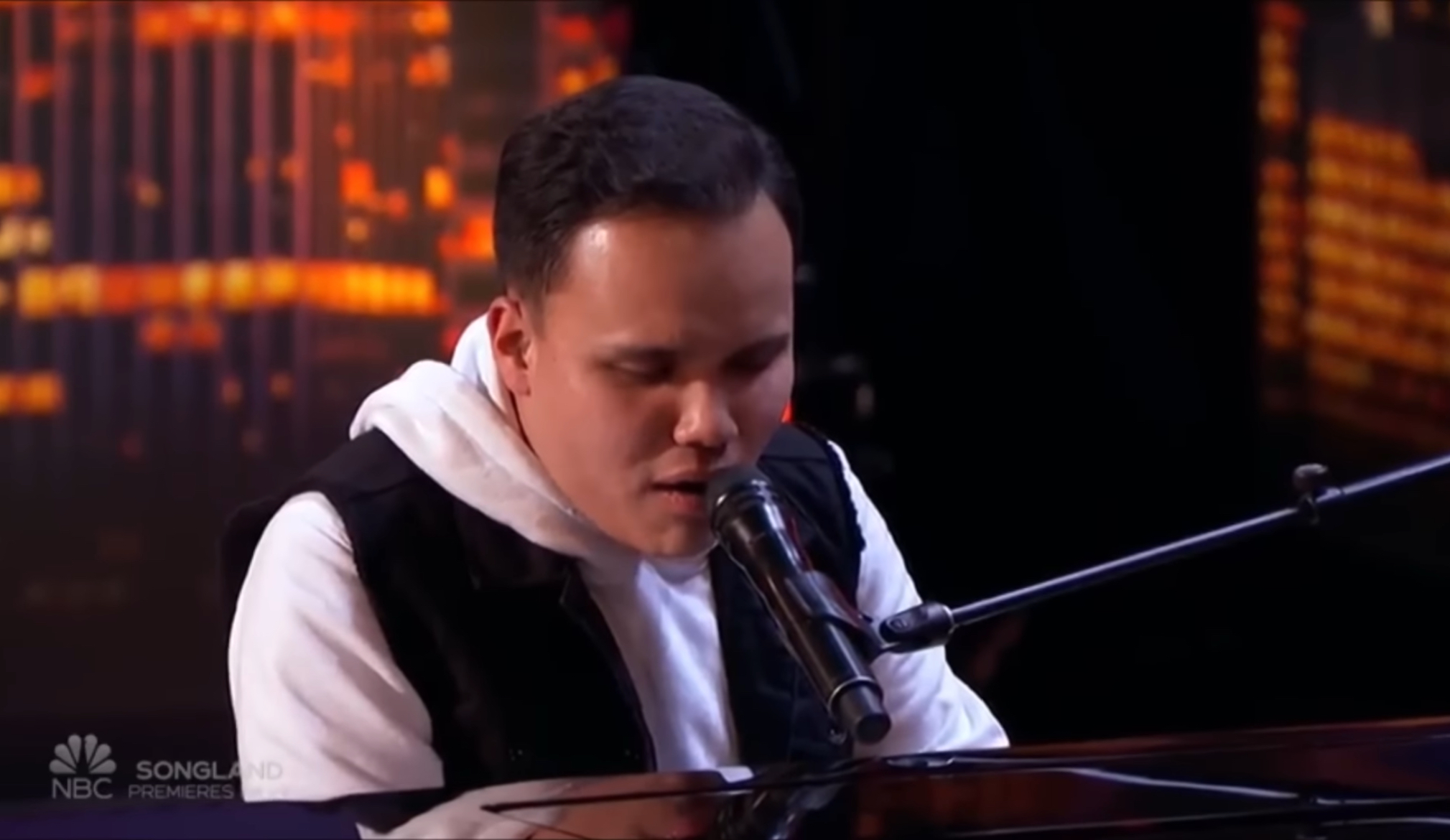
That backstory made the moment feel almost sacred. Kodi sat down, placed his hands on the keys, and began to play “A Song for You,” a choice that felt instantly appropriate — a tender, timeless piece that allows room for both technical skill and deep emotional expression. From the opening chord, there was a hush in the room, the kind of silence that grows when an audience realizes it’s about to witness something rare. Kodi’s touch on the piano was confident and expressive; he shaped phrases with an innate sense of timing, pushing and pulling the tempo in ways that gave the song its emotional contour. Then he sang, and that voice — powerful, soulful, and surprisingly seasoned — filled the theater.
Listening to Kodi sing was like watching someone translate a whole life into sound. There was richness and control in his lower register, clarity and vulnerability in his higher notes, and through it all, a sincerity that made every lyric land. He didn’t rely on flashy runs or theatrical gestures; instead, he let the melody and the story of the song do the work. Small inflections in his voice carried enormous feeling: a held note that trembled just enough to break your heart, a softening of tone that made you lean in as if to catch his breath. It was an affecting juxtaposition — a young man with visible disabilities delivering a technically excellent and emotionally devastating performance that seemed to open a direct line to the audience’s empathy.
The judges’ faces were a study in disbelief and wonder. Julianne Hough, new to the panel and still finding her footing, sat riveted, searching for words as Kodi unfolded the song. Gabrielle Union’s reaction was especially moving; she fought through tears and later explained that as a new mother she felt an overwhelming urge to give her own children everything — a comment that underscored how deeply Kodi’s music tapped into universal maternal instincts and human tenderness. Simon Cowell, who often guards his responses with a wry detachment, couldn’t hide the impression Kodi had made. The collective atmosphere shifted from polite attention to full, palpable adoration as Kodi moved through the song’s crescendos and quiet, intimate heights.
As the final chord faded, there was a beat of stunned silence, like the room was taking one long, shared breath. Then the reaction erupted: a thunderous standing ovation, people on their feet, cheering and clapping with an almost parental fierceness. Some audience members were openly weeping; others reached for phones to capture the moment, perhaps knowing they were witnessing a performance that would stay with them for a long time. Backstage, the emotional energy was equally intense — friends, family, and crew exchanged looks that balanced pride and disbelief.
Gabrielle Union’s response crystallized the feeling in the room. Without hesitation, she strode forward and pressed the Golden Buzzer, an act that felt less like a game show flourish and more like an urgent, instinctive offering. The confetti burst, and Kodi — guided by Tina’s steady presence — experienced a public, overwhelming affirmation that sent him straight through to the live shows. That single, decisive press was a dramatic punctuation mark: a judge recognizing not just a great audition but a human being whose talent moved people to their core.
Beyond the votes and the viral clips, Kodi’s audition mattered in a broader sense. It was a vivid reminder of music’s unique power to transcend labels and barriers. Here was an artist who, despite being blind and autistic, reached across difference to connect with strangers in a language older than speech. His performance challenged preconceptions about disability, artistry, and who gets to own a stage. In the end, Kodi Lee’s moment on that piano was more than an audition; it was a testament to the grace of vulnerability, the force of unconditional support, and the way a single song can change the course of a life — and the hearts of everyone listening.