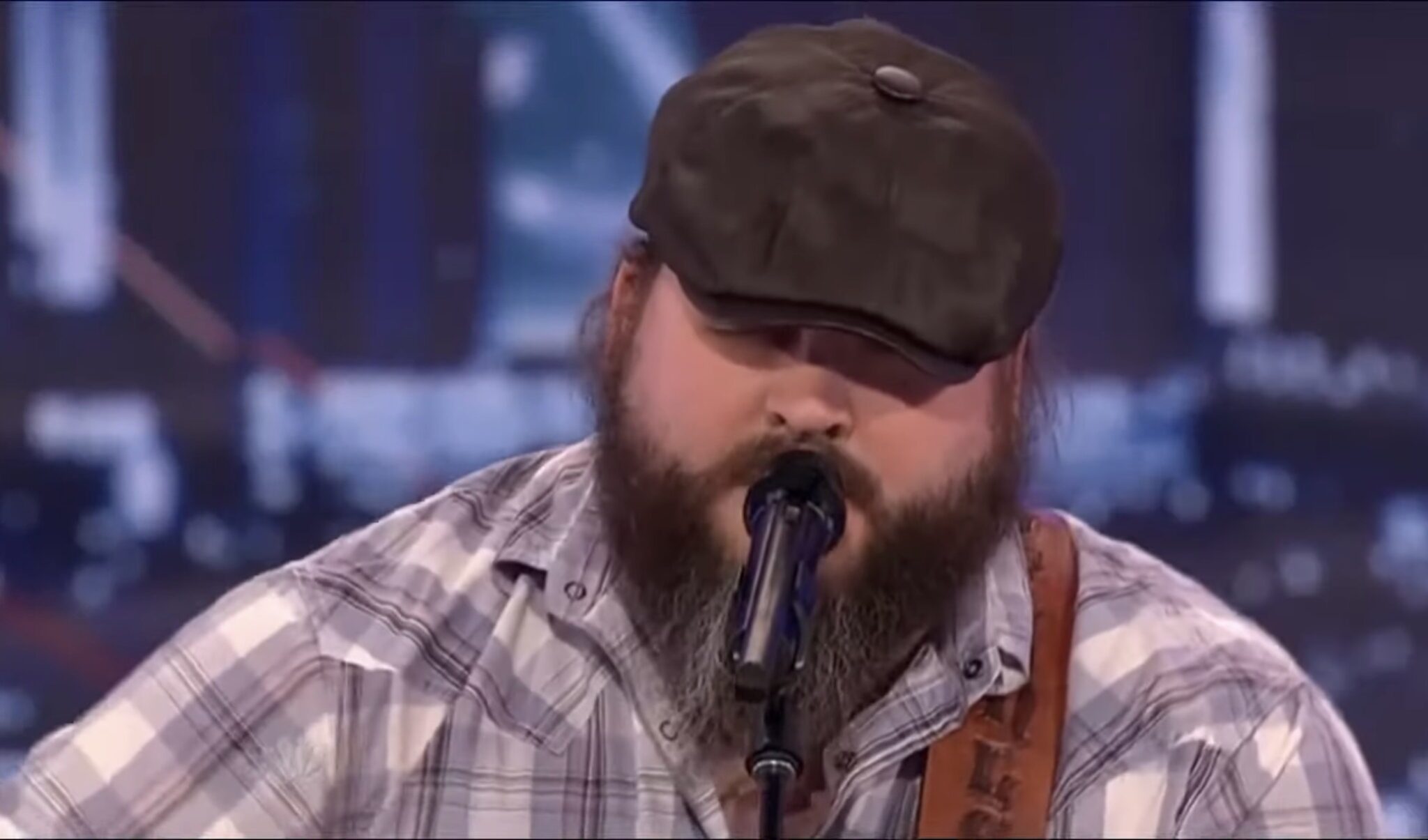
David Fenley stepped onto the America’s Got Talent stage carrying more than a microphone; he carried a decade of persistence, late-night practice sessions and small gigs that hadn’t yet turned into the breakthrough he’d been chasing. He told the judges up front that he’d been working on his craft for over ten years — honing tone, timing and the kind of stagecraft that only repetition and stubbornness can produce. That context set the room up for something meaningful: this wasn’t a flash-in-the-pan audition, but the moment when long, quiet effort might finally meet an audience big enough to notice.
When the opening chords of Alex Clare’s “Too Close” hit, it was obvious quickly that David had arrived prepared to tell a story, not just sing a tune. From his first note his voice carried a raspy, textured quality that suggested lived experience more than mere technique. There was grit in the timbre, a weathered edge that made even the soft lines feel urgent. He didn’t try to dazzle with unnecessary vocal acrobatics; instead, he leaned into emotional honesty. At times the sound was raw and gravelly, at others it softened into a soulful pleading that drew people in. The contrast between those textures made the performance feel like a conversation — sometimes confrontational, sometimes intimate — and it kept the audience leaning forward.
David’s stage presence matched his vocal character. He moved with intent, planting himself and letting phrases land, then stepping into crescendos with a controlled physicality that reinforced the music’s drama. The lighting accentuated those moments: a wash of warm amber for the lower, confessional verses, then a bright, almost stark spotlight as he climbed into the chorus. Small choices made the performance feel lived-in — a furrow of the brow on a particularly emotional line, a hand pressed to his chest on a lyric that landed personally. It felt clear that this was not an exercise in showmanship for its own sake; this was someone sharing something he’d carried for a long time.
The judges’ reactions were immediate and enthusiastic. Mel B homed in on the rasp and the soul, calling attention to the kind of vocal color that can’t be manufactured in a studio. “That rasp — that soul — you’ve got something,” she said, smiling broadly as she absorbed the last note. Heidi Klum, often measured in her praise, was similarly taken aback; she complimented his texture and phrasing, noting how unusual it was to witness such a fully formed artistic persona at the audition stage. Even Howard Stern, whose perspective comes from decades of encountering both raw and polished talent, was visibly impressed; he marveled at how someone of David’s caliber had remained “undiscovered” for so long. That comment landed with a weighty mix of admiration and incredulity, underscoring just how rare it is to find an artist who has patiently refined their voice without mainstream recognition.
Beyond the judges’ one-liners, the audience reaction spoke volumes. People rose from their seats organically as the final notes dissolved, applauding not just the technical feat but the authenticity of the delivery. You could see it in faces around the theater: moved smiles, heads tilted in appreciation, the kind of applause that suggests listeners felt seen, rather than merely entertained. Howard pointed out that the crowd’s response wasn’t showmanship-driven; it was a genuine acknowledgment that something real had happened onstage.
Part of what made David’s moment so compelling was the backstory of persistence that framed it. Ten years of performing in small venues, perhaps opening for other acts, maybe singing in bars, community halls or on street corners — that history was audible in the way he shaped a phrase, in the confidence that only hundreds of nights can bring. There’s a different muscle memory in a voice that’s been road-tested; it breathes differently and trusts itself to carry through the silence between words. That kind of assurance allows nuance: the slight grit on a held note, the tear in a high pitch, the decision to let a line hang and breathe. Those are the things that separate a polished audition from a life lived in music.
When the panel ultimately delivered four unanimous “Yes” votes, it felt like the natural consequence of everything the room had witnessed. The approval was not merely a ticket to the next round in Las Vegas; it was a validation of years spent believing that persistence could outlast disappointment. For David, that moment was a milestone — not the destination, but a major waypoint on a journey that had included more quiet practice rooms than bright stages. After the show, he left to cheers and handshakes, and you could imagine him thinking about the long evenings that led him there: the small gigs, the missed paychecks, the critics and supporters, all feeding into a performance that finally connected.
David Fenley’s audition was a reminder that talent sometimes takes its time to reveal itself. It showed how a voice shaped by experience can cut through the manufactured and the momentary, and how an audience — and a panel of seasoned judges — can instantly recognize the difference. His story was less about overnight discovery and more about the quiet accumulation of craft: ten years of work that, at last, earned him a stage big enough to be heard.