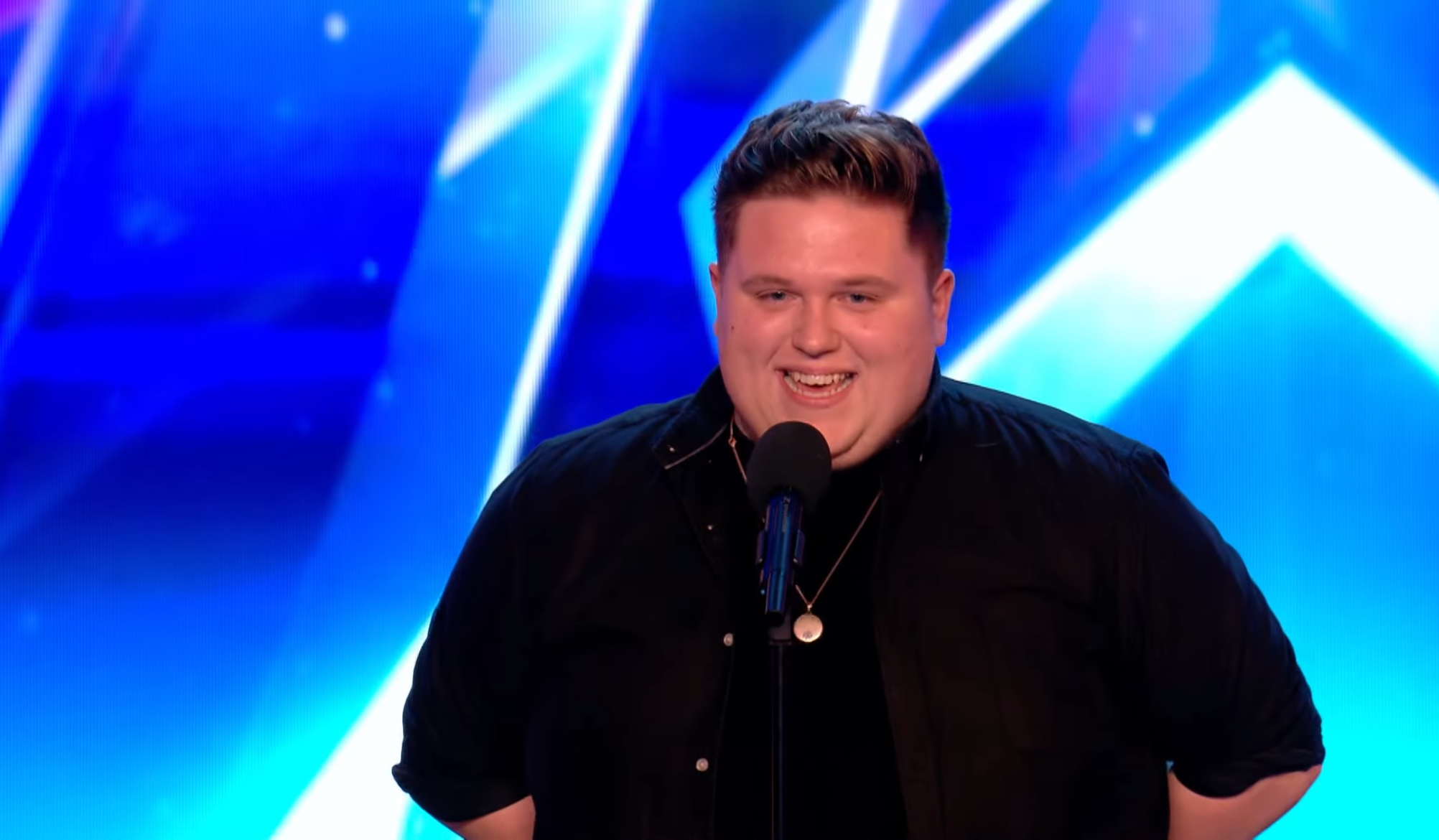
Jamie Lee Harrison stepped onto the Britain’s Got Talent stage with a mixture of nerves and quiet resolve that made his story feel immediate. At 24, he’s no stranger to singing — he’s cut his teeth performing in local pubs and clubs around Newcastle — but he also admitted to the panel that he’d hit a brick wall. After years of hearing people tell him he “didn’t have it in me,” he revealed he’d nearly walked away from music for good. That confession framed the audition as more than a chance to impress television judges; it was a crossroads. He told the judges that the only person who’d kept him going was his mum, waiting anxiously by the phone at home, and that image of a parent on the line made every note he sang feel loaded with personal stakes.
There was a palpable tension in the room when he introduced himself, the kind that comes from watching someone risk everything on a single performance. He chose R.E.M.’s “Everybody Hurts,” a song built on empathy and quiet, aching consolation — a fitting choice for a man wrestling with doubt. It’s the sort of piece that rewards honest delivery more than technical display, and Jamie understood that instinctively. He wasn’t there to show off vocal acrobatics; he wanted to open himself up and be heard. That intention cut through the show’s usual carnival atmosphere and drew the audience in.
From the opening lines, Jamie’s voice did something oddly comforting. There was a smoothness to his tone — a mellow timber that felt weathered in the best way, like someone who’s sung a thousand songs into the small, honest rooms of local venues. He shaped the melody with sensitivity, letting verses sit for a breath longer than expected and allowing the chorus to swell without strain. It wasn’t only about pitch or range; it was about phrasing and empathy. He colored certain words with just enough grit to suggest lived experience, and when he softened on the more intimate lines, you could feel the hush that travel through an audience when they sense truth rather than performance.
Small details made the performance especially affecting. Jamie glanced occasionally toward the wings, where producers and fellow contestants watched with something like collective hope. He seemed to find a rhythm not in bravado but in conversation; his voice invited the room in rather than throwing sound at it. When the song reached its emotional peaks, he didn’t over-scream for effect; instead he leaned into a steadier intensity that let the sentiment land. Those choices made the set feel like a conversation with listeners rather than a demand for their approval.
The reaction was immediate. Where Blackpool’s lineup had been described as a bit “bonkers” that day — full of oddball acts and unsteady moments — Jamie’s audition had the unifying effect of settling everyone. You could see faces relax and become attentive; the murmur of the crowd fell away as people listened. In that stillness, the judges’ reactions shifted from polite interest to genuine engagement. Amanda Holden called his singing “really soulful” and “honest,” praising the emotional clarity he brought to a song that thrives on vulnerability. Alesha Dixon went further, saying Jamie was the first act that day she truly believed could “genuinely become a star” beyond the show — high praise that reflected not just skill but a marketable authenticity.
Simon Cowell’s response was similarly direct, and perhaps most impactful. He said Jamie was the kind of act he’d been waiting for — someone with “real soul” in his voice. For a judge known for cutting commentary, Simon’s praise felt like a rare acknowledgment of raw talent meeting personal truth. He urged Jamie not to give up on singing, emphasizing that the most valuable thing Jamie had was his authenticity, which cannot easily be taught or manufactured.
When the four “yes” votes came through, they felt less like a formality and more like a rescue. For Jamie, the unanimous decision offered a tangible reprieve from the discouragement that had nearly ended his pursuit. For his mum — listening somewhere, phone in hand — it must have felt like vindication of the faith she’d kept alive. And for viewers, the moment worked as a reminder that talent often sits quiet in pubs and small rooms, waiting for a chance to be seen.
Leaving the stage, Jamie carried himself with a quieter confidence than when he arrived. The applause wasn’t just for one good performance; it was for persistence, resilience, and the idea that sometimes a single honest moment can redirect a life. In a day of unpredictable auditions, Jamie’s rendition of “Everybody Hurts” did more than win four yeses: it gave a young performer the encouragement to keep going and reminded everyone watching why they fell in love with live music in the first place.