
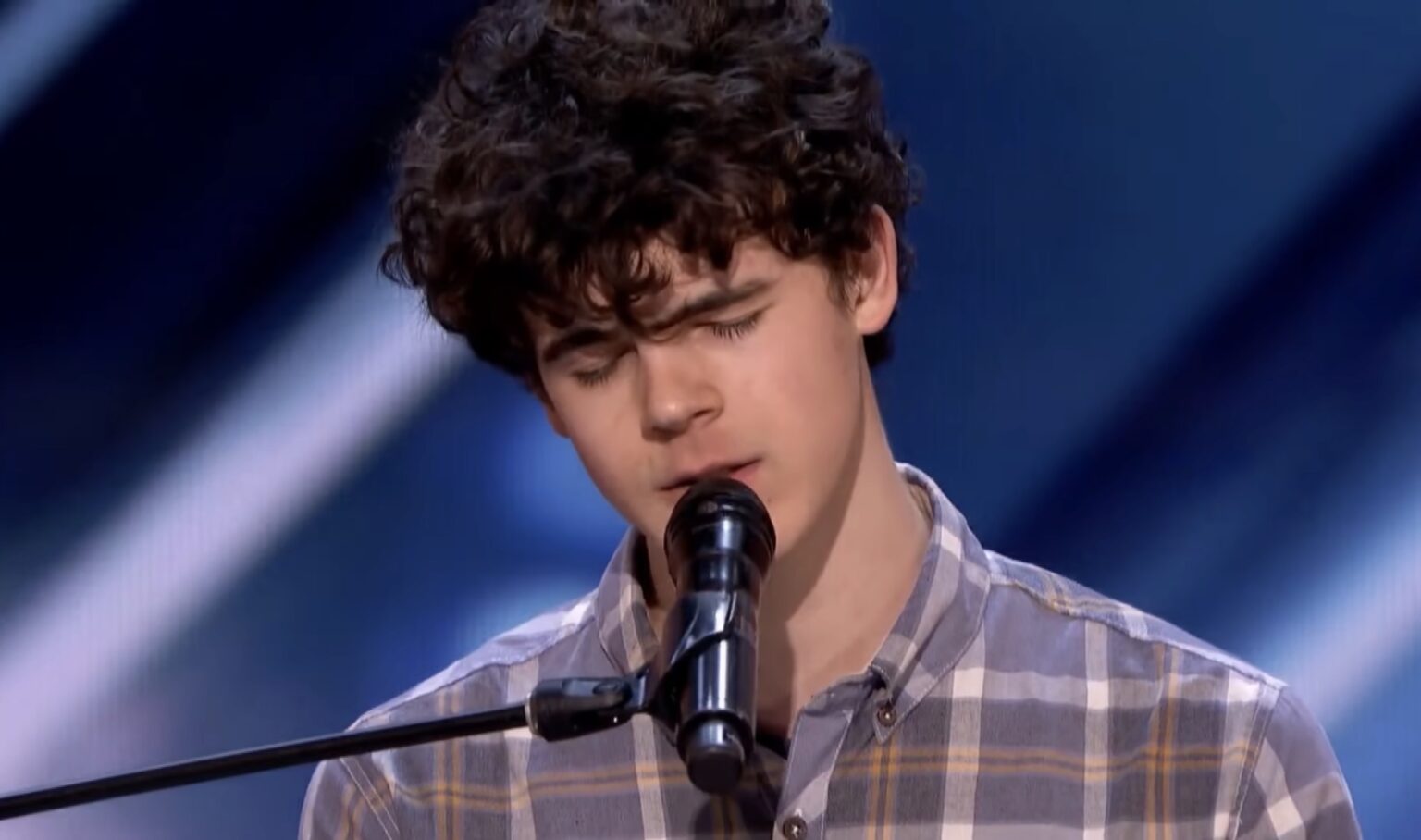
When twenty-year-old Joseph O’Brien walked onto the America’s Got Talent stage, there was an immediate, disarming modesty about him that made the room lean in. He didn’t have the glossy, rehearsed look some contestants bring; instead he arrived in a simple shirt and jeans, hair a little mussed as if he’d been running his hands through it to calm himself. There was a shy, awkward charm to his posture — a nervous smile, a small shuffle of the feet — the kind of presence that makes strangers want to root for you before you even open your mouth. In the pre-performance chat he came across as refreshingly frank, fumbling a little with words in a way that felt utterly human rather than stage-crafted.
Joseph’s candidness extended to a confession that made the audience laugh and then soften: he’d lived a sheltered romantic life. He admitted he’d never been on a proper date and blushed at a playful question about whether he’d ever “snogged” anyone. The judges teased him affectionately and the crowd responded with sympathetic coos and knowing smiles. Those small, awkward admissions did more than draw laughs — they sketched a fuller, more vulnerable picture of the person behind the performer. Suddenly, he wasn’t just another hopeful contestant chasing a TV moment; he was a young man whose shy honesty set the emotional stage for what would follow.
When Joseph sat at the piano, the tone of the room shifted. The light, self-effacing banter dissipated and a quiet focus took hold. He chose Lionel Richie’s “Hello,” a ballad built around yearning and unexpressed affection — a perfect fit for someone who’d just admitted to being inexperienced in love. The opening chords filled the auditorium with a warm, familiar hush; there was no need for spectacle. Instead, he offered a measured, soulful approach that prioritized intimacy over showmanship. His fingers found the keys with a casual steadiness, and the first notes hung in the air like a soft invitation.
From the very first line, it became apparent that Joseph had transformed his nerves into concentration. His vocal tone was clear and unforced, carrying a gentle vibrato that shaded his phrases without ever sounding ornamental. He didn’t belt or over-sing; he chose nuance. “Hello, is it me you’re looking for?” emerged less as a famous hook and more as a tentative question whispered into the room. He lingered on vowels just enough to let the words breathe, used subtle dynamic shifts to shape the narrative, and allowed pauses that made listeners lean forward, as if straining to hear a secret.
Small details made the performance feel intimate. Joseph’s shoulders softened, his head inclined toward the keys, and he closed his eyes at moments, as if recalling a memory rather than delivering a line. Those gestures made the audience feel included in something private. The camera cut occasionally to his family in the wings — a reassuring presence, their expressions soft with pride — and to the judges, whose faces gradually shifted from playful amusement to rapt attention. A hand to a chin here, a raised brow there: these tiny reactions told you everything about how the room was falling under the spell of his quiet sincerity.
There was an emotional alchemy at play when his life experience aligned so well with the song’s theme. Because Joseph had openly admitted to being romantically inexperienced, his rendition of “Hello” carried an authenticity that technique alone couldn’t manufacture. Every carefully placed note felt like a real confession, not a practiced performance. The intimacy of his arrangement — stripped back piano, gentle phrasing, and an emphasis on storytelling — made the familiar track feel fresh and personal. Instead of trying to outshine the original, he reshaped it into his own private statement.
As the last phrases faded, the auditorium seemed to exhale before erupting into warm applause. Friends and family in the wings cheered and wiped tears, and the judges’ feedback was as genuine as their expressions had been. One judge praised the purity of his tone; another marveled at how he’d turned an awkward personal truth into a stage strength. They pointed out that his understated confidence and honesty were more compelling than a flashy act. When the four “yes” votes came through, they felt heartfelt, each one an affirmation that Joseph had done more than sing well — he had made people feel.
Joseph left the stage having shifted the narrative he’d begun with. What started as a shy confession about never having dated turned into something poignant: his sincerity became the very quality that made his performance memorable. He proved that you don’t need a dramatic backstory or theatrical bravado to create a moment that lingers. Sometimes all it takes is a soulful song, an honest heart, and the courage to sit at a piano and let the music do the talking.