
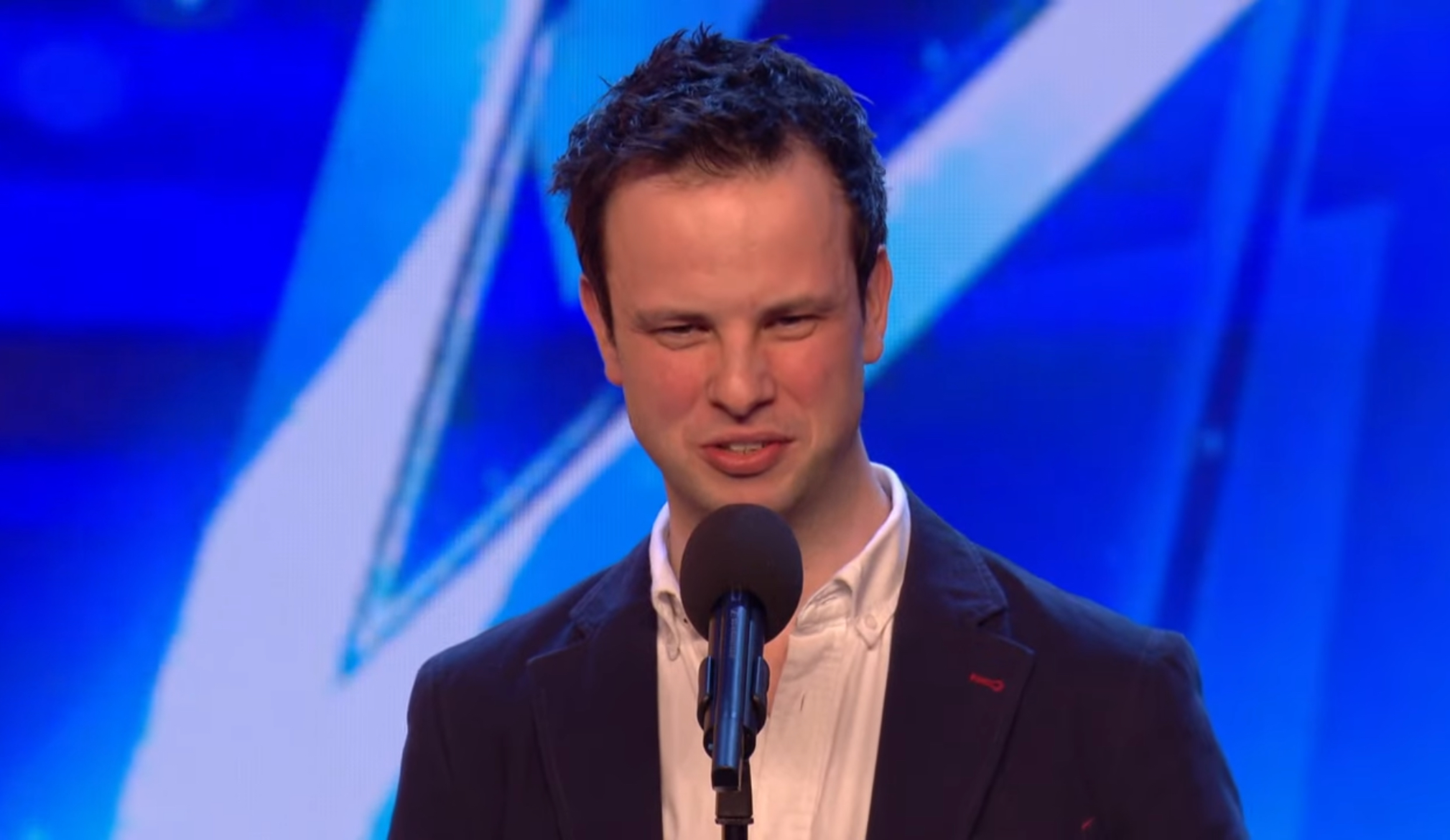
At thirty-three, Ronan Busfield could have blended into any high street crowd. A Tesco employee from Bedfordshire, he had the kind of easy, unassuming look that didn’t immediately suggest a life lived on the stage. Yet when he walked into the Britain’s Got Talent audition room, that ordinary exterior only heightened the drama of what was to come. Ronan told the audience—and the judges—that performing had been a dream “building up inside me for years and years,” a quiet, persistent urge that he’d carried alongside everyday responsibilities. He admitted that a successful audition would be “utterly life-changing,” and with his wife and young son waiting anxiously backstage, the stakes felt palpably real. There was excitement in his voice, but beneath it lay a deep, unmistakable tremor of fear: this was a moment of risk, a choice to lay a piece of himself open to public appraisal.
He chose “Maria” from West Side Story, a classic that demands both technical skill and emotional honesty. From the first phrase, the contrast between the man who stacks shelves and the voice that emerged was startling. Ronan’s tenor rang out with operatic weight—broad, focused, and alive with color. The theatre seemed to hold its breath as his notes unfolded, swelling into the rafters and drawing audible gasps from the audience. It wasn’t just volume; there was a textured warmth and an expressive nuance in his phrasing that made the melody feel personal, as if he were offering an intimate confession rather than simply hitting the expected high points.
As he sang, the judges’ reactions moved from polite interest to outright astonishment. Faces that had been neutral softened into delight; brows lifted, mouths parted. The vocal quality was undeniable—so rich, so controlled, so full of heart that it illuminated every corner of the performance. In that moment, Ronan’s stage presence crystallized. He was no longer merely a grocery worker taking a turn under studio lights; he was a performer with a compelling command of drama and tone, able to transport listeners into the emotional core of the song.
After the final note lingered, Ronan’s composed posture betrayed the turmoil he’d been carrying. When the judges invited him to talk about his background, he revealed a detail that added another layer to his story: he had, in fact, worked as a professional singer five years earlier. He explained that life had shifted after his father’s passing and the arrival of his family; responsibilities multiplied, and he’d stepped away from the stage. “I just fell out of love with singing,” he confessed, a short, honest sentence that carried more weight than any flourish of rhetoric. The words made the audience and judges lean in—here was someone who knew both the demands of the craft and the cost of pausing it, someone returning not out of naïve hope but with the humility of experience.
His reasons for coming back were simple and stirring. Ronan wanted to show his wife and son the possibility of reclaiming a dream. He wanted to prove that stepping back into an uncertain world was worth the effort, that it could be done with integrity and renewed passion. That personal stake made the performance feel less like a bid for fame and more like a conversation with the people he loved. It’s a compelling narrative: a man who suspended a career to tend to family now daring to reopen that chapter, demonstrating to his son what perseverance looks like.
The judges responded with warmth and encouragement. Simon Cowell called the performance “very passionate,” noting that audiences would naturally “root for” someone with Ronan’s blend of talent and humility. David Walliams echoed the sentiment with a simpler verdict: his version was “fantastic.” Amanda Holden and Alesha Dixon added their approvals, recognizing both the technical excellence and the emotional sincerity of the audition. Their comments underscored what had become clear during the performance: Ronan wasn’t merely hitting notes—he was communicating, connecting, and inviting people to invest emotionally in his comeback.
When the verdict came, it was unanimous: four “yeses.” The applause that followed felt like more than a professional green light; it was a communal embrace, a recognition of a man who had returned to something that once shaped him and, in doing so, inspired others. For Ronan, the moment marked a fresh start—a chance to restart a career on his terms, backed by the visible support of his family and the approval of a national audience.
Walking off the stage, he must have felt a wash of emotions: relief, joy, perhaps the quiet resolve to keep going. The audition captured a truth many people relate to—how life’s obligations and grief can sideline passion, and how brave it is to reclaim what once defined you. In Ronan Busfield’s case, the reclaimed gift was his voice, which arrived on that stage both polished by past training and newly urgent with meaning. His performance was a reminder that sometimes the most powerful moments come from ordinary lives taking extraordinary chances.