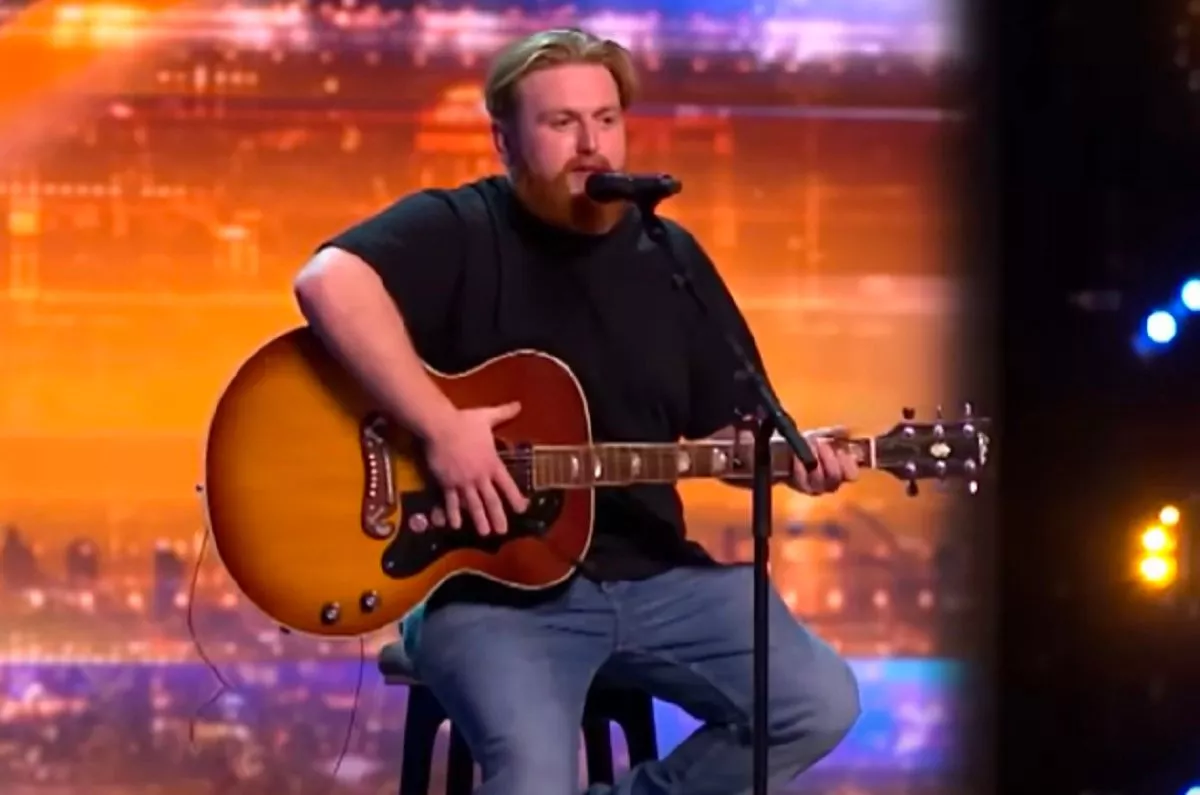
Andrew Hindson walked onto the Britain’s Got Talent stage with the kind of relaxed ease that comes from someone who has learned to roll with life’s chaos. At 30, a father of three from Doncaster, this was the first time he’d ever performed in public, yet he didn’t look like a rookie about to face a hostile crowd. Instead he looked like a man who’d spent a lot of his life talking to tiny, honest audiences — toddlers. He smiled at the judges and explained, plainly and unpretentiously, why he was there: to try to give his family a better life. His motivation was immediate and relatable. He had a newborn son, only six weeks old, and he sang that he wrote the song for his children, something he claimed he sings to them every night before bed.
There was a quiet expectation in the room; the judges and audience seemed to brace for something soft and sentimental. Parenting songs at auditions often lean toward gentle piano ballads or earnest folk tunes about lullabies and life lessons. Andrew could have gone that route, and perhaps many in the room anticipated tears and warm applause. Instead, he took a different tack. With a glint in his eye and a self-deprecating smile, he launched into a brutally honest and hilarious anthem about the daily grind of raising young children.
From the first verse, it was clear the song came from lived experience. His lyrics were packed with little, painfully specific details: temper tantrums erupting in the supermarket, nappies (and “soiled underpants”) that refuse to cooperate at the worst possible moment, the endless negotiation over chicken nuggets at dinner time. He painted a picture of family life that was messy, loud and often absurd. One line about trying to get a child to eat something green — and watching the child gleefully smear it on the wallpaper instead — drew a ripple of recognition and laughter through the audience. It was comedic writing that landed because it was true.
Andrew’s delivery was as important as the content. He performed with the kind of timing that makes jokes land and the kind of warmth that makes even the darkest punchline feel affectionate rather than cruel. When he sang about how parenting had aged him prematurely — the hairline receding, the dark circles under his eyes — people laughed not out of mockery but with empathy. His face registered comic anguish at the lines about wanting to “push them back in,” and the audience howled at his candid plans to get a vasectomy. Those jokes were cheeky, yes, but they were also a safety valve for the exhaustion and helplessness many parents know well.
Small choices made the act feel genuine rather than staged. He reached into his pocket for a prop — a crumpled receipt, a toy, something that suggested a night ruined by a child’s meltdown — and held it up with absurd solemnity. He mimed answering a work call while juggling a baby, a sandwich and a tantrum, and the theater roared as people pictured their own similar juggling acts. There was a moment when he ad-libbed a line about sneaking out for a cup of coffee like it was a secret mission; the improvised aside got one of the biggest laughs of the night, and the judges’ smiles widened. The performance had the spontaneity of bedtime chats and the polish of someone who had thought long and hard about how to make his truths land, on stage and off.
The judges’ praise was immediate and warm. Alesha Dixon singled out his clever writing, confessing that even though she didn’t have three children herself, the jokes felt familiar and painfully accurate. Simon Cowell, who can be scathing, admitted that the song might not be the most musically ambitious piece he’d heard, but its power came from honesty and impeccable timing. That sort of feedback echoed the sense that Andrew was tapping into something bigger than a novelty act; he was speaking for parents exhausted and amused, frustrated and proud. Amanda Holden went even further, comparing him to an early Peter Kay — an astute observation, given Kay’s knack for turning ordinary domestic moments into universal comedy gold.
When the four “Yes” votes came through, the reaction felt almost inevitable. People in the audience clapped and cheered not only for the laughs but for the warmth and truth behind them. For Andrew, the “Yes”es were more than a ticket to the next round; they were validation that his voice — the voice of a tired but loving father, using humor to make sense of chaos — had a place on a national stage. He left the stage with a grin, cheeks flushed from laughter and relief, and you could imagine him thinking of his newborn at home, the song’s chorus already echoing around his living room as he repeated it to the baby before bed.
The performance also hinted at the broader possibilities for Andrew. His brand of comedy felt adaptable: short-form clips for social media, longer observational sets in comedy clubs, or even a family-friendly special where parents could see themselves on stage. More immediately, the judges’ praise suggested he had the stage presence to do this again, to turn more of those everyday parenting moments into material that would resonate with audiences beyond his hometown.
That night, the theatre didn’t just laugh; it connected. Andrew Hindson’s act was a reminder that sometimes the most relatable stories are the ones that make us laugh at ourselves. He had come to the stage to sing for his children and, in doing so, he sang for a whole room of people who had been right there with him in the middle of the night, bargaining over chicken nuggets and laughing through the exhaustion.