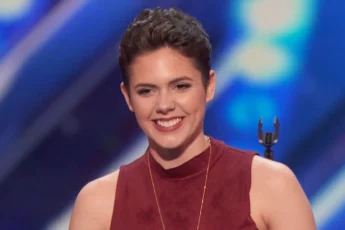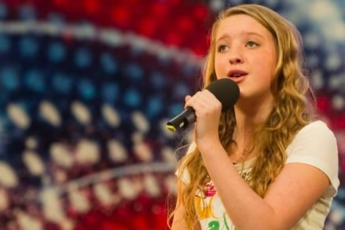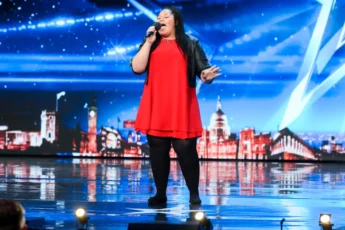
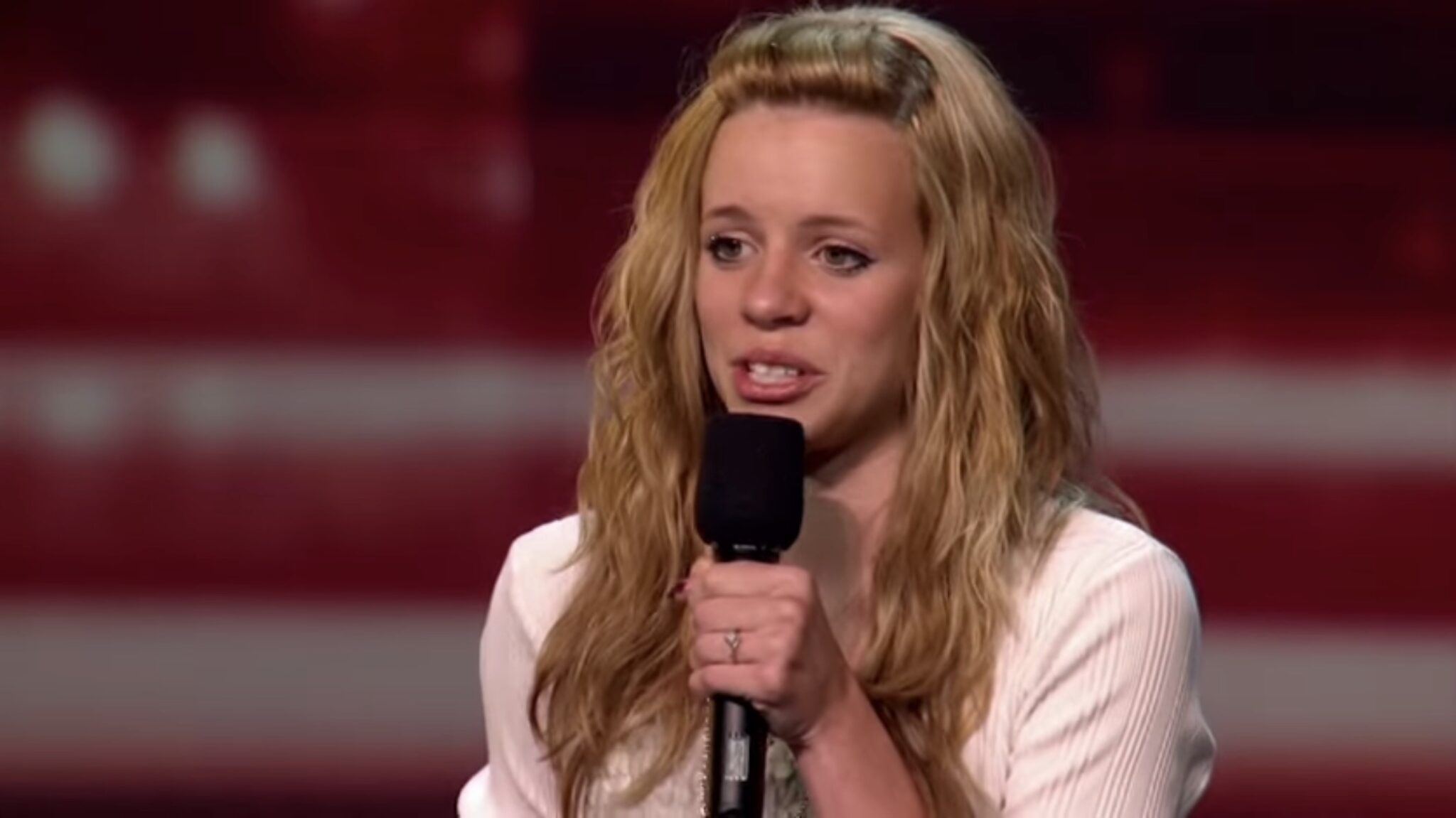
Drew Ryniewicz walked onto The X Factor USA stage in 2011 with the kind of bright, quirky energy that makes you smile before she even sings. At 14, she introduced herself with boy‑band earnestness, confessing a teenage crush on Justin Bieber and even admitting she once wore a purple shirt hoping to catch his attention. Those details painted a picture of a normal kid — a little awkward, hugely sincere, and utterly unaffected by the lights and cameras. The judges chuckled and leaned in, amused and charmed, but there was also an undercurrent of curiosity: would this whimsical teenager be able to carry a tune under pressure?
What made Drew’s audition instantly compelling was the contrast between her playful prelude and the artist she would reveal. She announced she planned to sing Justin Bieber’s “Baby,” a song everyone knew as an effervescent pop anthem — catchy, radio‑friendly, and relentlessly upbeat. The choice seemed almost cheeky. Could a shy teen make a familiar bubblegum track feel fresh on one of television’s biggest stages? The room held its breath as she took a breath herself, clutching the microphone with a nervous optimism that made her feel honest and human rather than staged.
Then Drew began to sing, and the transformation was immediate. She stripped the song down to its bones, replacing the peppy production with a sparse acoustic arrangement that put her voice — and her interpretation — front and center. The first lines arrived low and measured, each syllable carefully placed, and suddenly the arena that had been buzzing just seconds before fell into a reverent hush. What could have been a novelty number turned into something haunting and unexpected. Drew didn’t just cover “Baby”; she reimagined it, turning sugary pop into an introspective ballad that felt intimate and almost fragile.
Her vocal control was the first thing you noticed: precise dynamics, thoughtful phrasing, and a tone that suggested experience beyond her years. Where the original track relied on hooks and production, Drew relied on emotion. She let notes linger, softened vowels for emotional effect, and used a delicate vibrato on longer phrases that tugged at the room’s attention. Small, seemingly casual vocal choices — a barely audible inhale before a key line, a gentle lift at the end of a phrase — added weight. Those miniature moments multiplied into a performance that carried real emotional heft.
The judges’ faces told the story in real time. L.A. Reid’s smile grew from bemused to astonished, the kind of slow grin you give when you realize something unexpectedly brilliant is unfolding. Simon Cowell, usually stoic and skeptical, leaned forward and watched with an intensity that suggested he was recalibrating his expectations. It’s one thing to sing well; it’s another to reinterpret a cultural touchstone and make it feel new. Drew did both. The audience, initially skeptical like the judges, became witnesses to a creative act: a young artist claiming ownership of a song and reshaping it into a personal statement.
Beyond technical skill, what made the performance resonate was its authenticity. Drew didn’t perform the song to score points; she communicated a feeling. The slowed tempo revealed vulnerability in lyrics that had previously been delivered with a different energy, and that vulnerability connected. In that moment, the auditorium stopped evaluating and started receiving. People recognized that they were watching an artist at work — someone experimenting, taking risks, and trusting her instincts. That trust paid off in a way that felt almost magical.
When the final notes faded, the reaction was immediate and thunderous. The applause rolled across the auditorium, building into a standing ovation as viewers processed what they’d just heard. Simon’s praise — calling Drew “one of the best” he’d seen — carried a particular authority; when he uses that phrase, it signals more than approval, it signals potential for a career. L.A. Reid lauded her bravery in reworking such a famously upbeat song, noting that it takes guts to deconstruct a pop hit and reveal something deeper underneath. Paula Abdul, moved by the sincerity of the performance, commended Drew for delivering with a heart that outpaced the theatrics.
The four unanimous “Yes” votes were the inevitable capstone to a performance that had already won over the room. But more than advancing her in the competition, the audition established Drew as a breakout talent with a clear artistic identity: someone willing to take familiar material and make it entirely her own. It positioned her not merely as a singer but as an interpreter — a young musician with the instincts to transform a track into a personal story.
Looking back, the moment remains memorable because it captured a rare combination: youthful innocence paired with artistic maturity. Drew’s purple‑shirt confession and giddy fandom made her relatable, while the stripped‑down, soulful take on “Baby” revealed a creative mind capable of surprising choices. For viewers and industry veterans alike, that audition was a reminder that real artistry often arrives from unexpected places, and that a brave reinterpretation can turn the ordinary into the extraordinary.