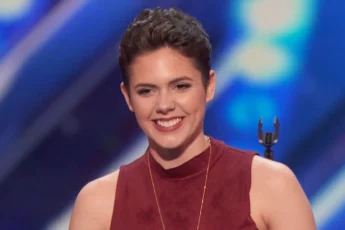
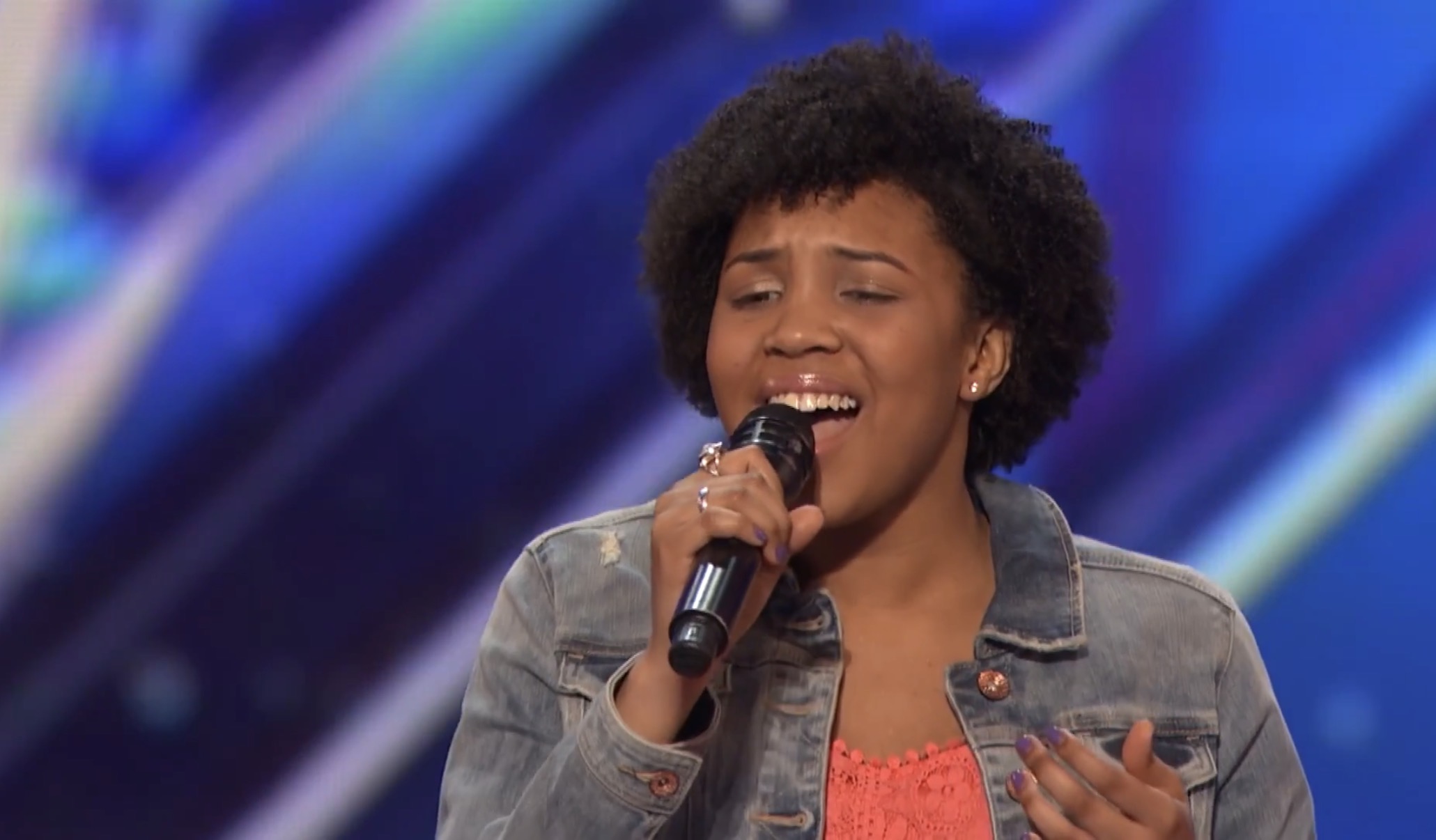
At just fourteen years old, Jayna Brown stepped onto the America’s Got Talent stage with a wide, unaffected smile that instantly lit up the room. There was an easy confidence in the way she stood, but also an unmistakable youthfulness — the kind that makes you want to cheer her on before she even sings. When the judges asked who inspired her most, she pointed without hesitation to her mother, who was waiting backstage and visibly overcome with pride. That small exchange set the tone for the audition: this was a family moment as much as a performance, and the stakes felt deeply personal.
Choosing to tackle “Summertime” was a bold move. The song is a jazz standard that requires nuance, control, and an ability to make something old feel newly felt. Many performers lean on the song’s familiarity, but Jayna treated it like a living thing, something to be molded and made her own. From the very first note, it was clear she wasn’t merely singing the tune — she was inhabiting it. Her voice arrived with surprising depth and warmth, a timbre that suggested both technical training and soulful instinct. The contrast between her youthful appearance and the maturity of her tone made the moment all the more arresting.
Early on, Jayna displayed a keen sense of dynamics. She didn’t blast through the melody; instead, she allowed phrases to breathe, using soft, intimate moments to draw listeners in before releasing into fuller, more dramatic passages. That control made her climaxes feel earned rather than manufactured. A delicate turn on a lullaby-like line would give way to a swelling phrase of pure intensity, and in those transitions the audience could hear both restraint and bravery. It’s one thing to have a beautiful voice; it’s another to know when to hold back so that the powerful moments land like a punch.
There were tiny choices in her delivery that spoke to real musicality. She ornamented a phrase here with a tasteful melisma, landed on a suspended note there with impeccable pitch, and used subtle changes in vowel shape to color a line differently depending on its emotional weight. At times she phrased a lyric almost conversationally, as if sharing a secret with the room, then flipped the switch into full-bodied jazz vibrato when the song demanded it. Those details demonstrated a performer who had been coached, yes, but also someone who listened — to the band, to the acoustics, and to the emotional heartbeat of the song.
As Jayna moved through the verses, the audience’s reaction built incrementally. What began as polite attention blossomed into rapt silence, then into visible excitement. People leaned forward in their seats, eyes tracking her every movement, as though afraid to miss a moment. The theater’s energy swelled with her phrasing; when she hit a particularly expressive line near the song’s midpoint, a ripple of applause broke out even before the phrase fully resolved. By the time she reached the song’s emotional peak, the room was on its feet, cheering and whistling in a way that felt spontaneous and sincere.
The judges, who often maintain poker faces until the very end, were palpably engaged. Simon Cowell watched with that focused intensity he reserves for performances he finds intriguing; Heidi Klum nodded along, clearly moved by the emotional storytelling; Mel B responded with visible enthusiasm, smiling broadly and mouthing encouraging words; and Howie Mandel’s eyes brightened as he leaned into the experience. Their combined reactions underscored that Jayna had done more than display technical skill — she had created a moment that connected with both the judges and the audience.
Watching her mother backstage provided another layer to the performance. Small camera cuts showed her clapping, cupping her hands around her mouth to shout encouragement, and wiping away a tear or two. Those reactions made Jayna’s triumph feel intimate and communal: it wasn’t just about a young singer impressing a national television show; it was about a family seeing years of support, lessons, and late-night practice pay off in a very public way. For a teenager, that kind of validation—both professional and personal—can be life-changing.
When the final note lingered and then faded, the theater erupted into a standing ovation that seemed to take Jayna by surprise. She smiled, slightly stunned, then bowed her head and allowed herself a small, grateful grin. The applause wasn’t merely for vocal fireworks; it was recognition of the emotional truth she had brought to the stage, the storytelling in her phrasing, and the undeniable potential that shone through.
By the end of her audition, Jayna had not only earned a place among the season’s memorable acts but had also offered a reminder: talent often appears where you least expect it, wrapped in youthful exuberance and guided by supportive hands. Her “Summertime” cover felt like a bridge between tradition and a new generation, proving that even the oldest classics can find fresh life when placed in the care of an artist who listens, feels, and sings from the heart.