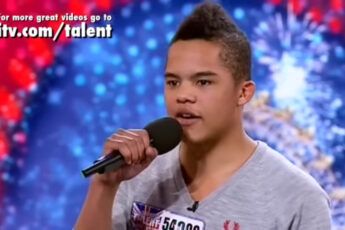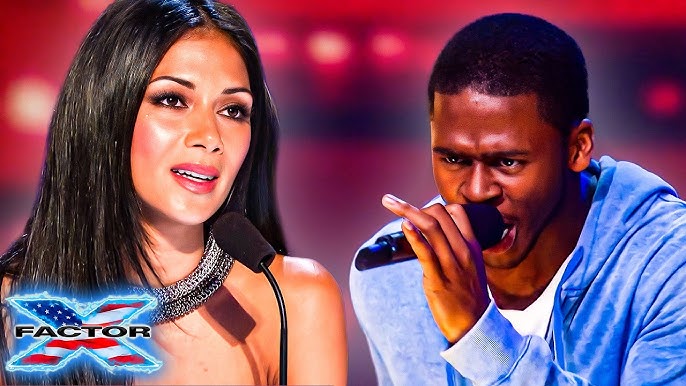
Marcus Canty’s journey onto the X Factor stage felt less like an audition and more like a crossroads. Behind the bravado and the bright studio lights was a young man carrying a very real ultimatum: his mother had given him two years to make it in music or walk away for good. That kind of deadline can crush a dream or sharpen it into something focused and fierce. For Marcus, it seemed to do the latter. He walked out onto that stage with an urgency in his step and a confidence in his chest, as if every rehearsal, every late-night gig, and every moment of doubt had led to this single, make-or-break performance.
From the first note, it was clear he wasn’t relying on luck. His voice had a honeyed R&B warmth, both controlled and emotive, and he used it to pull the audience in rather than just impress them. There was a conversational quality to his delivery—an intimate tone that made listeners feel like he was singing directly to them. But Marcus didn’t stop at vocal skill; he married it to performance instincts that few newcomers possess. He moved across the stage with the assuredness of someone who’d spent hours learning how to connect with a crowd, threading choreography into his singing without ever letting one overpower the other.
Small details amplified the moment. A well-timed head tilt, the way he let a note linger before snapping into a breathy riff, the playful grin he flashed when a chorus landed just right—those little choices made the performance feel lived-in and authentic. The energy in the room shifted; people who had been politely attentive became actively involved, clapping along, rising to their feet, and feeding back the kind of enthusiasm that creates viral moments. You could see it in the judges’ faces: surprise giving way to admiration, skepticism softening into curiosity, and then full-on excitement.
Marcus’s combination of technical ability and showmanship was especially notable because it came with heart. He sang like someone who’d thought long and hard about what he wanted to say and why it mattered. When a lyric reached a sentimental peak, he didn’t just hit the note—he sold it, lowering his voice to coax emotion out of the room. That vulnerability added layers to the performance and made the stakes feel personal rather than manufactured. It wasn’t a ploy to win votes; it was a young man laying his future bare and trusting that honesty would be enough.
The judges picked up on that honesty immediately. Comments ranged from compliments about his “star quality” to specific technical praise—improvements in breath support, cleaner runs, and a stronger sense of musical phrasing. More than once, a judge mentioned the kind of intangible charisma that separates entertainers from mere singers. Marcus had that combination: the chops to back up his ambition and the presence to command an audience. Those are the qualities industry folks look for when they talk about someone being “competition-ready.”
Beyond the studio, the audition carried a narrative that resonated widely. The two-year ultimatum from his mother made the performance feel like more than a bid for fame; it became a test of conviction, a family’s hope pinned on a single moment. Viewers connected to the story because it’s a familiar one—parents balancing support with practicality, young adults trying to prove they can make a living doing what they love. Social media lit up with clips, reactions, and messages of encouragement from fans who’d been there themselves or who simply wanted to see good things happen to a determined, talented kid.
It’s worth noting how Marcus’s stagecraft reflected real-world preparation. The tight choreography hinted at hours spent rehearsing, while the way he held a sustained note suggested disciplined vocal training. He wasn’t simply relying on raw talent; he was applying it in ways that showed an understanding of audience psychology. For instance, he used quieter moments to create intimacy, then built to louder sections that allowed the crowd to unleash pent-up energy—an effective arc that left the performance feeling complete rather than a string of impressive but disjointed moments.
When the judges delivered their verdict, it felt like the natural conclusion to a story that had been building throughout the audition. Their “yes” wasn’t just for an excellent performance; it was a validation of Marcus’s gamble and his mother’s faith. For a young artist operating under such pressure, this affirmation can be life-changing. It offers not only a shot at industry exposure but also the emotional currency that comes from knowing you’ve convinced a room full of skeptics to believe in you.
In the aftermath, the audition continued to ripple outward. Clips accumulated views, pundits debated Marcus’s potential, and fans rallied behind a narrative that blended talent with tenacity. That “now or never” tension was part of the appeal—it gave the performance dramatic weight. But the real takeaway was simpler: Marcus showed that pressure can be a catalyst rather than a burden. He turned a family ultimatum into fuel for an electrifying audition, proving that sometimes one moment, executed with skill and heart, can alter the course of a life.