
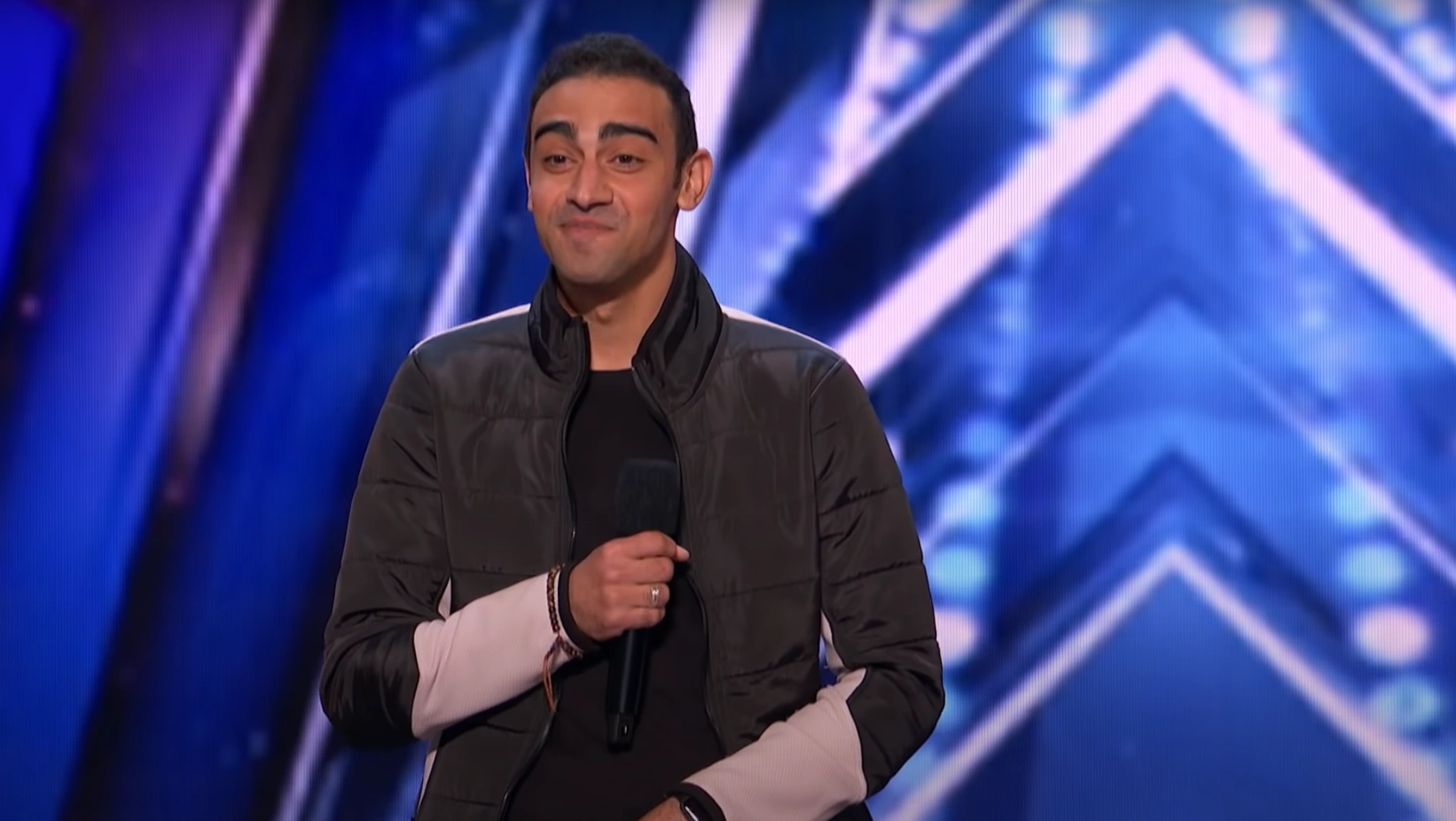
Medhat Mamdouh walked onto the America’s Got Talent stage carrying something the judges clearly didn’t expect: a small wooden recorder. The room practically hummed with amused skepticism. Recorders, after all, carry the baggage of elementary school music classes—awkward lessons, squeaky notes, and the memory that they rarely led to superstardom. Simon Cowell didn’t bother hiding his bias; he admitted with a smirk that he “hates recorders” because he was forced to play one in school. The panel traded barbs about the instrument’s reputation and the conspicuous absence of famous recorder virtuosos in music history. Through it all, Medhat stayed calm and unruffled. He explained simply that he’d written his own piece and intended to show the judges what the recorder could do in the hands of someone who’d reimagined it. That quiet confidence set the tone for what came next.
He began with something familiar: a clear, melodic line that sounded rooted in traditional Middle Eastern music. The opening notes were pure and plaintive, the kind of melody that made you sit up and listen rather than chuckle. Then—seemingly without warning—everything shifted. Medhat didn’t just play the recorder; he turned it into one voice among many, layering sound in a way that made it impossible to tell where the woodwind ended and the rest began. He introduced beatboxing—fast, precise, and intricately timed—while continuing to play. The two elements wove together, creating a single, astonishing tapestry of rhythm and tune.
What was most impressive wasn’t merely that he could beatbox while playing; it was how he used his mouth, breath, and instrument simultaneously to construct a full musical environment. Percussive clicks and pops emerged under the recorder’s flowing lines, giving the impression of drums, snares, and even bass. Melodic ornamentations, trills, and microtonal slides referenced traditional maqam scales, grounding the piece in Medhat’s cultural roots. The result was neither novelty nor gimmickry. It was a carefully thought-out fusion—ancient phrasing meeting modern urban pulse—that sounded both surprising and inevitable.
The audience sensed they were witnessing something unusual. People leaned forward, watching Medhat’s lips, fingers, and chest as if following multiple conversations at once. The judges’ expressions shifted from skeptical smiles to genuine surprise. Sofia Vergara, who earlier had laughed along with the recorder jibes, found herself captivated by the Middle Eastern inflections and the way the performance transcended the instrument’s humble origins. Howie Mandel, always appreciative of reinvention, praised Medhat for taking what many consider a joke of an instrument and making it “trendy” and compelling. Simon, whose disdain had been the most pronounced, went through the most visible transformation. As the piece built and then resolved, Simon’s brow smoothed; his posture relaxed. When the final chord faded, even he—accused of being a stickler for authenticity—couldn’t deny the talent before him. “I’m actually going to say yes,” he said, surprising many in the room and perhaps himself.
Those three words were a short way of acknowledging a larger truth: Medhat had done more than perform a trick. He had reframed the recorder in the public imagination. By bringing elements of his musical heritage and pairing them with contemporary vocal percussion, he demonstrated how adaptable and expressive the instrument could be. The performance felt urgent and present rather than quaint. It didn’t lean on novelty alone; it relied on technique, creativity, and an evident love for sound.
Small moments amplified the intimacy of the act. At one point Medhat’s eyes closed for a second, as if listening inward, and you could see him shaping the music with intent rather than improvisation. He smiled subtly when the beat hit just right, the kind of smile that betrays a performer’s private joy in a risky, successful maneuver. The audience responded with cheers and applause that seemed to come from a place of genuine delight rather than polite encouragement. By the time he finished, the clapping swelled into a standing ovation.
When the judges voted, there was a unanimous yes—four resounding endorsements of a performance that had converted skepticism to admiration. Medhat left the stage having done something rare: he took a simple, often-mocked instrument and made it feel powerful, modern, and emotionally resonant. He validated his own bold dream of someday having a Vegas show, proving that reinvention and respect for tradition can coexist beautifully. More than that, he reminded everyone watching that artistry often lives where expectations are overturned and that an instrument’s worth depends entirely on the imagination of the person holding it.