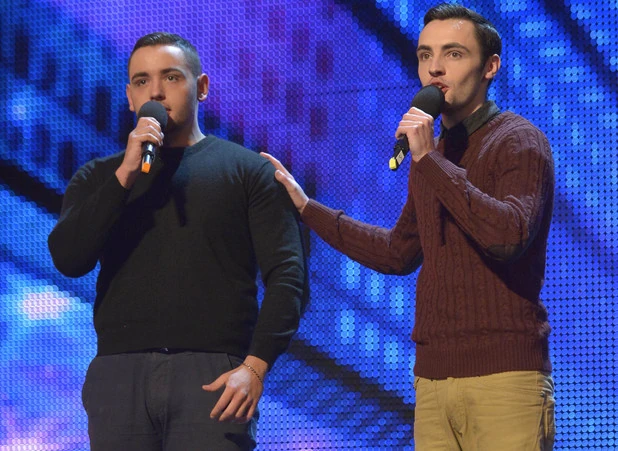
Richard and Adam, two brothers from North Wales, walked onto the Britain’s Got Talent stage in 2013 carrying with them a story as humble and instantly likable as their accents. At 22 and 19 years old, they weren’t polished, manufactured stars — they were lads who had spent years singing around the house and entertaining the person who mattered most to them: their grandmother. That bond came through straight away in the way they introduced themselves, smiling sheepishly as they explained how their Nan was their biggest fan. It was easy to picture the scene they described: two brothers rehearsing at the kitchen table, harmonizing over a cuppa, and then heading out to work a normal shift behind the counter of a local sandwich shop.
They leaned into that everyday charm during their banter with the hosts, joking about how they divided the sandwich-shop duties — one buttered the bread while the other added the fillings — and the audience loved it. Those offhand details did more than make people laugh; they humanized the pair. They weren’t mysterious prodigies plucked from elite conservatories. They were family boys with real jobs, practicing for the love of music and the joy it brought to their Nan. That authenticity made the tension in the wings feel relatable rather than manufactured: you weren’t watching a TV moment so much as a family milestone being shared with the nation.
When the first notes of “The Impossible Dream” began, it became immediately clear why they had been practicing at home for so long. Their rendition was rooted in classical crossover style — operatic power married to pop sensibility — and their harmonies were the kind that make the hairs on the back of your neck stand up. Richard and Adam sang not as soloists taking turns, but as a single musical unit, weaving lines around each other with the kind of timing and blend that can only come from years of listening to one another. They took the song’s soaring phrases in confident strides, and when they reached the climactic moments, there was a resonance in the arena that felt almost physical, as if the sound had weight.
Small gestures made the performance feel intimate despite the scale. At one point they exchanged a glance that was equal parts affection and focus; in another, they subtly leaned toward each other on a sustained note, a tiny reminder that this was a family collaboration more than a contest entry. Their Nan watched from the wings with Ant and Dec, her face alternately beaming and wiping away tears of pride — an image that underscored the emotional core of the performance. For viewers at home, that sight turned the audition into more than just an impressive vocal showcase; it became a family triumph played out on a national stage.
The judges’ reactions mirrored the audience’s growing awe. Alesha Dixon was effusive, calling their voices “incredible” and pointing out how perfectly their harmonies sat together. She wasn’t just praising technical ability; she was applauding the emotional truth of what they were doing. Simon Cowell, known for cutting critique, praised their passion and authenticity even as he suggested they might benefit from some technical refinement. He made the fair point that while raw power and feeling can carry you far, a little polish in areas like breath control and diction could elevate them even more. Yet it was his comparison to the “Olympic spirit” that felt especially telling — he was recognizing the brothers’ work ethic, the long hours of practice, and the determination to take a dream seriously even while juggling ordinary jobs.
That combination of talent, humility, and emotional resonance is what ultimately won them unanimous approval. The four “yes” votes were met with an eruption from the crowd, and the image of two sandwich-shop brothers embracing each other backstage afterward felt like a small, cinematic moment of triumph. For Richard and Adam, the advancement to the next round was not just a step forward in a televised competition; it was a validation of all the afternoons spent singing in their living room and the weekends balancing tills and panini presses.
Their audition also served as a broader reminder that remarkable talent often lives in ordinary places. There was something inspiring about seeing two young men who weren’t polished by private tutors or propelled by industry connections get the chance to shine because of sheer dedication and heart. Their story resonated with viewers who saw in them the possibility that artistry doesn’t require an exclusive background — it requires persistence, family support, and a willingness to be vulnerable on a big stage.
As they walked off with their Nan’s hug and the judges’ praise, Richard and Adam left behind more than applause; they left an affirmation that dreams practiced in the kitchen can be powerful enough to fill an arena. The sandwich shop routine would still be there after the cameras went away, but for that night, the brothers had traded buttering bread and adding fillings for something much bigger: a moment that might change the course of their lives.