Some bonds are forged in classrooms. Some are built on playgrounds. But the strongest bonds? They’re often created in moments when life and death stand face to face. This is the story of two soldiers who once stood shoulder to shoulder in uniform—and later stood side by side on a stage, not with weapons, but with music.
They didn’t meet in a music studio or at an open mic night. They met in service, long before either of them considered singing in front of an audience. Picture early mornings before sunrise, boots laced tight, the air sharp with leftover cold from the night. The sky would still be dark, stars barely fading, as they lined up for roll call. The rhythm of commands—short, clipped, unwavering—became a kind of music in itself. Left, right, left. Over time, that cadence settled into their bones.
They endured endless drills where sweat soaked through uniforms and dust clung to everything. On missions, trust wasn’t optional—it was survival. When one moved, the other followed without hesitation. When tension spiked, they read it in each other’s posture before a single word was spoken. In those conditions, colleagues quickly became something more. They shared tents pitched on rocky ground, mess-hall coffee that tasted burnt no matter how much sugar was added, and the kind of half-whispered jokes that only make sense at 3 a.m. between watches. They traded stories about home—one missed his daughter’s first steps, the other kept a folded photograph of his parents in his breast pocket. They spoke about worries for the future and fears they wouldn’t admit to anyone else. In the quiet stretches of night, when even the wind felt loud, that honesty cemented a bond civilians rarely get to see.
Over time, they became more than teammates. They became brothers. There’s a shorthand that develops when you’ve seen someone exhausted, frustrated, even scared, and watched them keep going anyway. A glance that says, “I’ve got you.” A nod that means, “Do what you need to do.” After a tense patrol ended safely, they’d slap each other on the back, laughter cutting through the leftover adrenaline. Other times, they’d sit in silence, leaning against a vehicle, helmets resting at their feet, saying nothing because nothing needed to be said. That kind of closeness doesn’t dissolve when uniforms are folded and tucked away in a closet.
When the war ended, civilian life began, and the transition hit harder than either expected. The structure they’d known for years—the strict schedules, the clarity of command, the unspoken certainty of purpose—vanished almost overnight. One found himself staring at a grocery store aisle, overwhelmed by trivial choices. The other struggled to sleep without the familiar hum of generators or the reassurance of someone else on watch. Adrenaline quieted into a strange emptiness. They missed the camaraderie, the sense that every day mattered in a clear and immediate way.
Like many veterans, they carried memories that surfaced unexpectedly. A loud bang could tighten a chest. A certain smell might transport them back to a different place entirely. It was in that hush of post-service life, when the world felt slower but their minds didn’t, that music quietly stepped in.
At first, it was almost accidental. One hummed while washing dishes, the melody drifting through the kitchen without much thought. The other found himself whistling on long walks, hands in his jacket pockets. Songs they used to play in the barracks—old rock anthems blasting from a tinny speaker, folk tunes strummed on a borrowed guitar—began to resurface. Eventually, at a small reunion barbecue, someone handed them a guitar. They laughed it off at first. But then one started a familiar tune, and the other joined in.
When their voices met, something shifted. They weren’t polished or perfectly in sync, but their tones blended with a kind of honesty that couldn’t be rehearsed. There was a rough edge to their harmonies, a tremor in certain lines, but it felt real. They weren’t trying to perform; they were remembering. They were releasing.
Singing together felt surprisingly similar to serving together. It required trust and timing. When one took the lead, the other instinctively found the harmony. When one faltered, the other steadied the line. They watched each other closely, the same way they once had on patrol—anticipating, adjusting, supporting. Only now, instead of coordinating to protect lives, they were coordinating to touch hearts. The songs became a bridge between who they had been and who they were becoming. Grief and gratitude coexisted in a single verse.
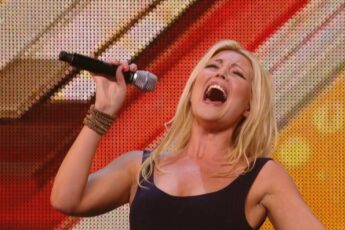
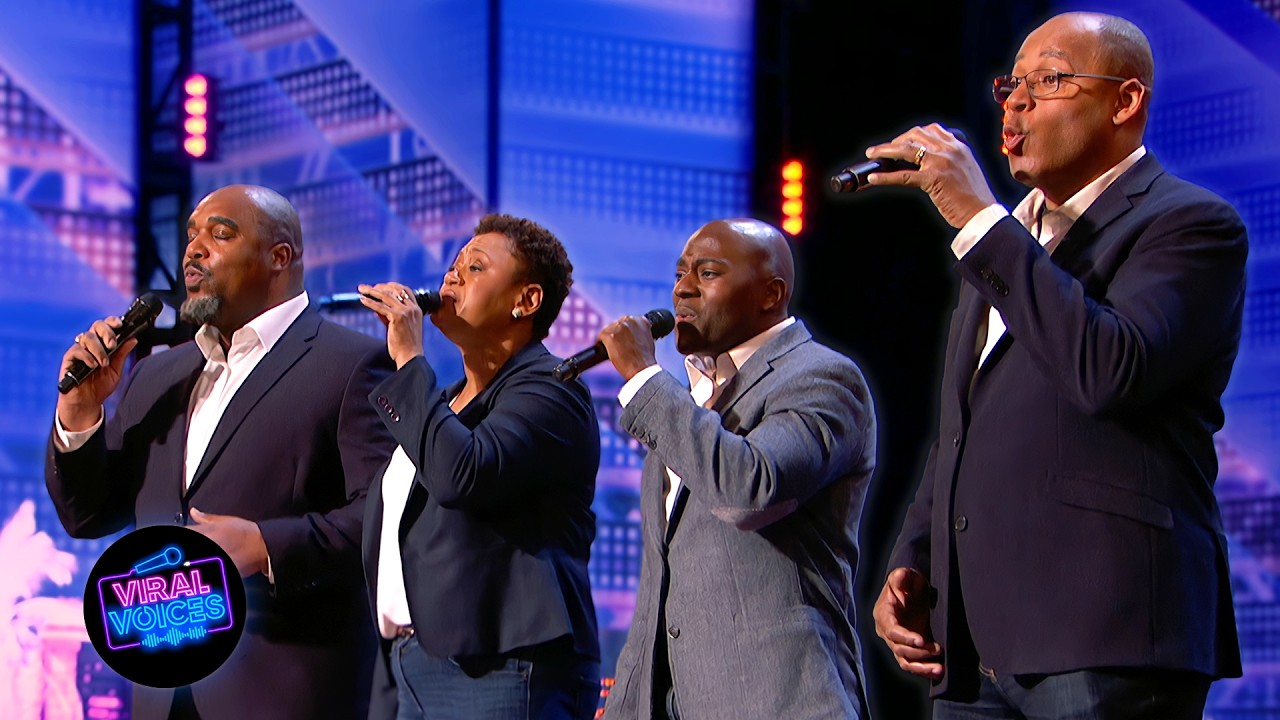
Then came the night they stepped onto a real stage. The lights were warmer than they expected, the microphone slightly trembling in one man’s hand. An expectant hush fell over the crowd. For a moment, they exchanged the same glance they’d shared countless times before—steady, grounding. As the first note rang out, the room seemed to lean forward.
It wasn’t flawless. One voice cracked on a lyric about coming home. Breath caught on a line about missing friends who didn’t. But that imperfection was the point. You could see their eyes glisten under the lights. In the audience, people wiped away tears. A woman in the second row pressed her hand to her mouth. A man in the back closed his eyes and bowed his head. When the final chord faded, there was a heartbeat of silence before the applause rose—not polite, but full and grateful.
Their song hit hard because it wasn’t about technique. It was about truth. They weren’t singing to impress anyone; they were singing to express what they’d carried for years. Their performance reminded the room that heroes struggle too, that healing is uneven, and that friendship can save you more than once. For them, music became more than an activity—it became a lifeline. It offered a safe space to breathe, to place heavy memories into lyrics and watch them transform into something shareable.
By stepping onto that stage, they did something quietly brave. They showed other veterans that vulnerability isn’t weakness. They proved that beauty can follow pain, that brotherhood can evolve into harmony, and that sometimes the most powerful weapons we ever wield are the songs we choose to sing together.