
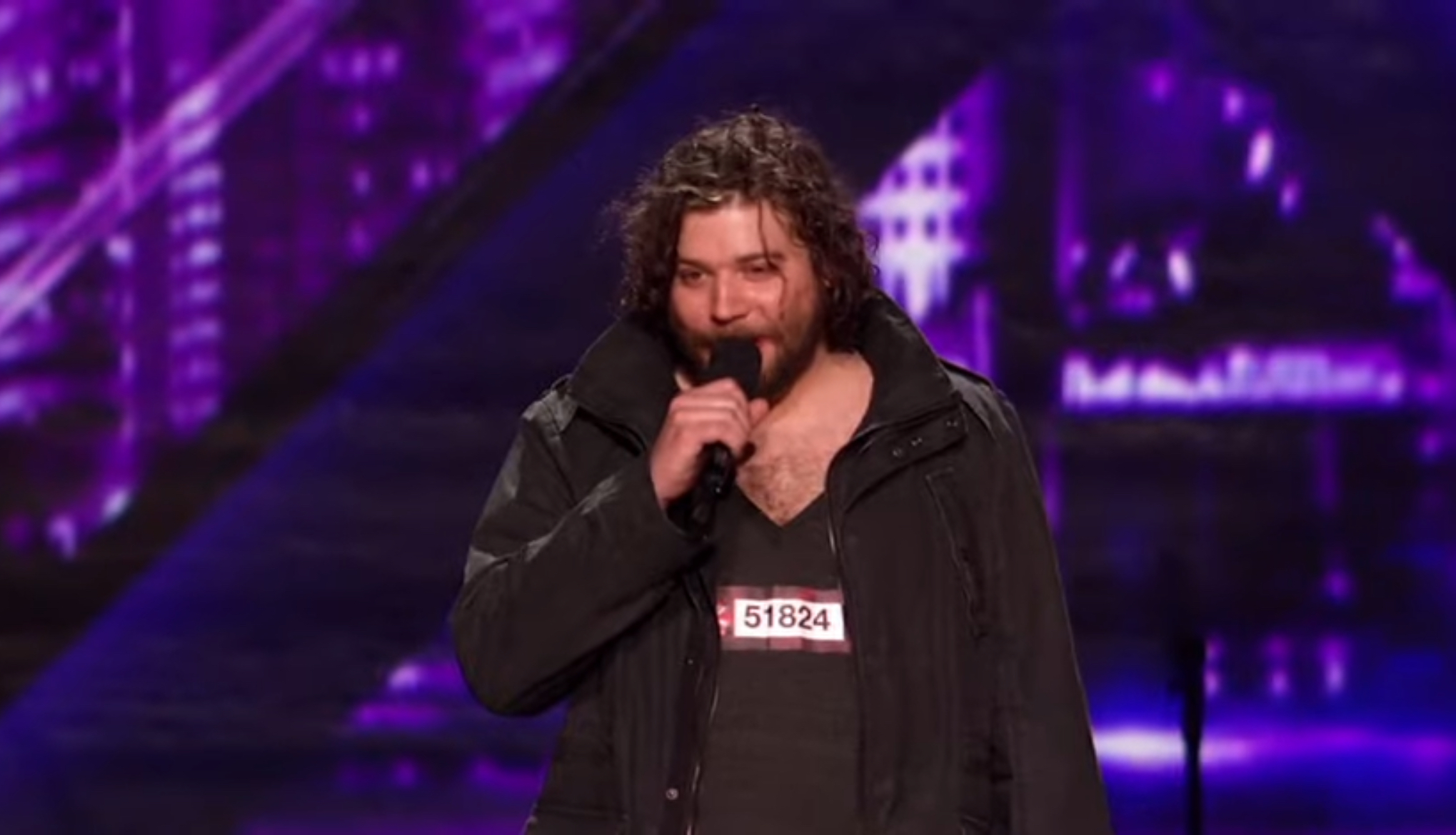
Josh Krajcik’s audition on The X Factor USA felt like a storybook collision of the ordinary and the extraordinary. At thirty years old, he arrived not in a limousine or with a cinematic backstory, but straight from a shift at a burrito restaurant—seven hours of travel with his mother tucked into the journey, carrying a single-minded hope that his life could change. He didn’t hide the truth: he joked about smelling like onions and burritos, an image that made his audition all the more human. The contrast between the grease-stained reality of his day job and the glimmering promise of the stage only amplified the sense that something genuine was about to happen.
When Josh announced he would sing Etta James’s “At Last,” the choice itself signaled more than mere ambition. It was a declaration of intent: this was a classic with weight, history, and emotional depth, a song that demands more than vocal acrobatics—it needs soul. For someone who’d spent years working nights and singing in spare moments, choosing a piece like that was brave. It also set the judges’ expectations high, because tackling such a revered standard invites comparison with legends. Yet from the very first note, it was clear Josh wasn’t trying to imitate anyone; he wanted to inhabit the song with his own life-worn voice.
The moment he opened his mouth the room changed. What had been casual chatter and the typical television-buzz hush transformed into an electric stillness. His voice was raw and bluesy, threaded with a gravel that spoke of real experience rather than manufactured toughness. There was a lived-in warmth to his tone—a combination of husk and honey—that made each phrase feel like a confession. Josh didn’t just sing the melody; he told a story, and the texture of his voice sold the details: the tired nights, the small triumphs, the yearning for something brighter.
Technically, his performance was impressive but never clinical. He used dynamics intelligently, beginning with an intimate softness that pulled listeners in and building toward surer, more expansive moments without ever feeling forced. His phrasing leaned into the lyric’s sentiment; he lingered on key words, letting them resonate, and then released them in a way that felt both natural and deliberate. The result was a rendition that honored the song’s original soul while allowing his own personality to color it. Where polished pop singers might smooth rough edges, Josh embraced them—turning potential imperfections into emotional currency.
The judges’ reactions were immediate and visceral. Nicole Scherzinger and Paula Abdul, usually composed and measured, were visibly moved. You could see it on their faces—a softening, a look of surprised recognition—as the performance seemed to crack open something in the room. Their emotional responses underscored what viewers were feeling: this wasn’t merely a technically great audition, it was a moment of authenticity that cut through the artifice of television. Even those skeptical of underdog narratives found themselves won over by the sheer honesty of the delivery.
Small visual cues made the moment more poignant. Josh’s hands, stained perhaps from a day’s work, rested naturally by his side or tightened slightly when passion lifted the song. When he inhaled before a big note, you could sense the weight of years held in that breath. His mother, who’d driven him for hours, watched from the wings with an expression that shifted from anxious hope to visible pride. Those human elements—the onion smell joke, the long drive, the maternal presence—turned a great performance into a deeply relatable story about ordinary people daring to reach for something remarkable.
Beyond the immediate thrill of the audition, Josh’s performance hinted at why people fall in love with music: its capacity to reveal hidden lives. Here was someone whose daily routine involved flinging burritos and sweeping floors, yet when given a microphone, he produced a voice that resonated with the kind of emotional truth often cultivated through hardship rather than privilege. That dissonance between his working-class reality and his vocal gift made his success feel earned, not manufactured.
In the aftermath, conversations about Josh weren’t only about the notes he hit but about what his moment represented: a reminder that talent exists in unexpected places, and that sometimes it takes a modest life to produce a compelling art. For the judges, it was a humbling reminder that surprises still exist. For Josh, the audition offered something more tangible—a platform where the years of quiet singing and hard work could finally be recognized.
As the final chord settled and the crowd’s reaction swelled, the image of the burrito cook-turned-singer lingered. It was more than a TV segment; it was a small-life triumph that resonated because it felt real. In a world often obsessed with polish and presentation, Josh’s audition proved once again that authenticity—supported by undeniable talent—can stop a room and change a life.