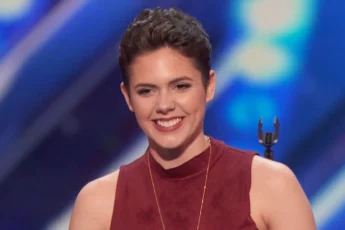
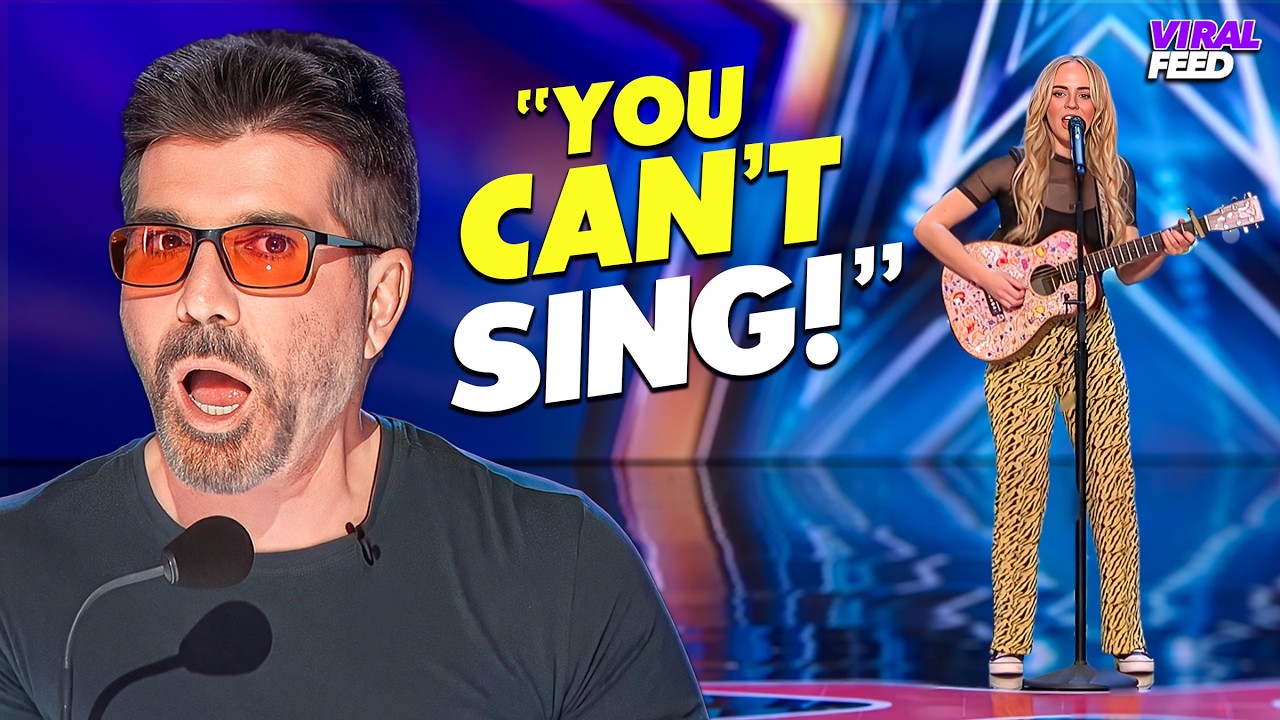
When Madilyn Bailey walked onto the stage of America’s Got Talent, she wasn’t exactly starting from scratch. Unlike many contestants who arrive as complete unknowns, she already had a massive online presence. Millions of people followed her on YouTube, watching her covers and original songs. But with that level of visibility came something else—an overwhelming wave of criticism. For every supportive fan, there seemed to be someone else leaving harsh, unnecessary, and often downright bizarre comments.
Instead of brushing off the negativity or letting it wear her down, Madilyn chose a completely different approach. She leaned into it. She decided to take the very words meant to tear her down and reshape them into something creative. It was a bold move, and honestly, not one many people would have the confidence to pull off—especially on a stage as big and unforgiving as AGT.
Before she even sang a single note, Madilyn calmly explained her idea to the judges and audience. Standing there with quiet confidence, she acknowledged a truth that anyone who has spent time online understands: sharing your work publicly almost guarantees criticism. Some of it can be constructive, but a lot of it isn’t. Rather than letting those comments define her, she said she wanted to “flip the script.” Using her songwriting skills, she had taken real hate comments from her videos and turned them into the lyrics of an original pop song.
At first, the concept itself drew a few chuckles. It sounded unusual, maybe even a little risky. But the moment she started performing, it became clear that this was more than just a gimmick. Lines like “my mom thinks you just got killed by a cat” and “am I the only one who really hates her?” were delivered with a catchy rhythm and melody that made them feel oddly infectious. The absurdity of the comments, when placed in a musical context, suddenly became humorous rather than hurtful.
As the performance continued, something shifted in the room. The audience, who initially reacted with amusement, began to connect with what she was doing on a deeper level. There was something undeniably empowering about watching someone reclaim words that were meant to bring them down. Madilyn didn’t just sing the lyrics—she owned them. Her expression, her timing, even the subtle way she emphasized certain phrases made it clear she was in control of the narrative.
Even Simon Cowell, known for his sharp critiques and often brutally honest feedback, couldn’t hide his reaction. As the performance went on, a smile spread across his face, the kind that signaled genuine appreciation rather than polite approval. He seemed to recognize not just the creativity of the idea, but the intelligence behind it. This wasn’t just a singer showing off her voice—it was an artist making a statement.
By the time Madilyn reached the final note, the energy in the room had completely transformed. What started as curiosity had turned into full-on support. The audience rose to their feet in a standing ovation, cheering not just for the performance itself, but for what it প্রতিনিধated. It was a moment of triumph that felt earned in every sense. The judges followed with four enthusiastic “Yes” votes, sending her through to the next round and confirming what everyone in the room had just witnessed.
But the impact of that performance didn’t stop when the episode ended. Once it aired, the audition quickly spread across the internet, gaining millions of views in a short time. Viewers from around the world resonated with the idea of turning negativity into something meaningful. In a digital age where online criticism can feel relentless, Madilyn’s approach struck a chord.
She didn’t stop there, either. What began as a single audition evolved into a larger creative project. She continued writing and producing songs inspired by hate comments, building a collection of music that blended humor, honesty, and resilience. Each track carried the same underlying message: you don’t have to let negativity define you—you can reshape it, repurpose it, and even use it as fuel.
What made Madilyn’s performance so memorable wasn’t just her voice, though that was undeniably strong. It was the idea behind it and the way she executed it with confidence and authenticity. She showed that vulnerability and strength aren’t opposites—they can exist together in the same moment. By putting her critics’ words front and center, she stripped them of their power.
In the end, her audition became more than just another standout moment on a talent show. It turned into a reminder that even in the face of constant criticism, it’s possible to take control of your story. Madilyn didn’t just respond to the hate—she transformed it into something creative, funny, and, most importantly, empowering.