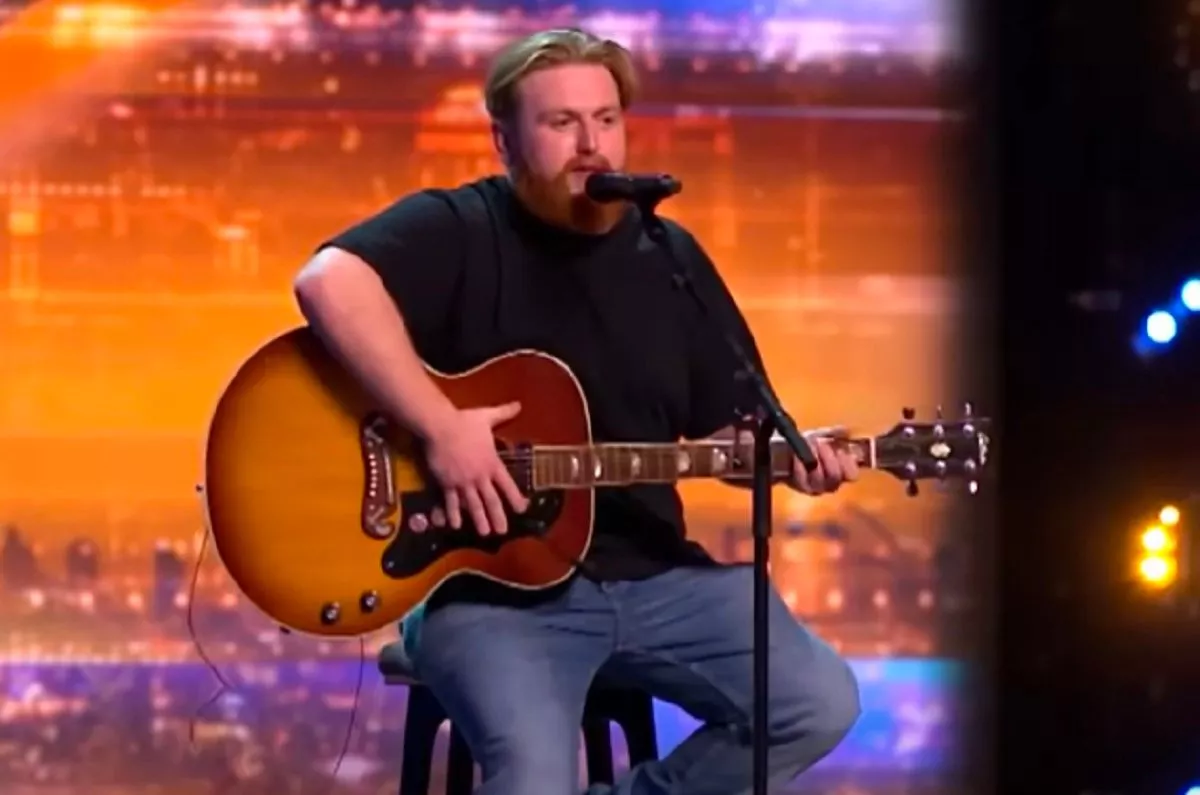
Andrew Hindson, a 30-year-old father of three from Doncaster, walked onto the Britain’s Got Talent stage with the kind of weary smile that immediately told a story before he even opened his mouth. He wasn’t a polished comedian or a seasoned performer; he was a dad in sensible shoes, carrying the authentic exhaustion and fierce love of someone who spends more nights wrestling duvet covers than rehearsing punchlines. He told the judges up front that this was his first public gig and explained why he was there — to try and give his children a better life, to be able to breathe a little as a parent, and to offer something lasting for a newborn son who was only six weeks old at the time. That mixture of vulnerability and purpose made him instantly likable.
Andrew introduced his song as something he wrote for his kids, something he crooned at bedtime as a lullaby and then, apparently, reworked into a comic anthem. The judges and audience braced for a soft, sentimental serenade — perhaps a tearful ballad about late-night feedings and the quiet heroics of parenthood. Instead, what followed was a refreshingly frank, side-splittingly funny catalogue of domestic chaos. He dove in with lyrics that were equal parts truthful and absurd: tales of temper tantrums that could be heard down the street, the indignity of “soiled underpants” discovered in unexpected places, and an ongoing culinary war in which chicken nuggets were the only negotiated peace treaty.
His comedic timing felt instinctive, the kind honed at kitchen tables and school gates rather than in comedy clubs. When he sang about being woken at ungodly hours because someone had decided their duvet was now a parachute, the audience roared; when he admitted that parenting had aged him “like a banana left in the sun,” the laugh that followed was full of recognition, not mockery. Small, specific images — a toddler’s sticky fingerprint on the living-room window, the discovery of a crayon mural on a cereal box, a plastic dinosaur lodged between sofa cushions — made the song land in a way generic jokes never could. They weren’t just funny lines; they were family truth, the kind that makes parents nod with a wince and a grin.
Andrew also wasn’t afraid to pull the room in with darker, more honest one-liners that exposed the grit behind the humor. He joked about the fantasy of “pushing them back in,” a line that drew gasps followed by nervous laughter, and then quickly pivoted to the realities of considering a vasectomy — a throwaway line that underlined his exhaustion but was delivered with enough self-awareness to keep the tone affectionate rather than bitter. Those moments of borderline confession, wrapped in a comedic bow, gave the act texture: it was heart and hard-won humor in equal measure.
The judges responded enthusiastically. Alesha Dixon praised Andrew’s clever songwriting and said she’d never felt so seen by a comedy routine — even though she wasn’t a parent of three, she admitted to finding the material painfully familiar. Simon Cowell, usually the one to temper praise with criticism, pointed out that the song might not be the most musically sophisticated audition he’d ever heard, but he applauded Andrew’s authenticity and impeccable timing. Amanda Holden went further, comparing his observational, working-class humor to early Peter Kay — not in imitation but in spirit: warm, relatable, and rooted in the minutiae of everyday life.
Beyond the judges’ compliments, there was a larger, more human reaction from the audience. Parents who had been through similar nights laughed until they cried; single viewers appreciated the honesty and charm; people who’d never changed a nappy still found the performance endearing because Andrew transformed petty domestic disasters into a shared language. His stagecraft — from the way he held the microphone like it was both a prop and a confidant, to his expressive face that sold every line — suggested someone who knows how to connect with people by simply telling the truth about their lives.
When the votes were cast, the result was as unanimous as it felt: four enthusiastic “Yes”es. It was more than a passage to the next round; it was recognition that real life, with all its mess and moments of unexpected comedy, makes the best material. For Andrew, the decision represented hope: a chance to build something for his family beyond late-night shifts and sleep-deprived mornings. Backstage, his relief was visible as he hugged loved ones and allowed himself a laugh that seemed to release some of the pressure he’d carried in.
His audition served as a reminder that relatability can be a superpower on a big stage. In a field often full of trained singers and extravagant acts, a dad who can turn diaper disasters into a perfectly timed punchline stole the room. Andrew’s performance wasn’t just entertaining; it felt like a small victory for every parent who has ever longed for a break, a laugh, or the simplest luxury: a full night’s sleep.