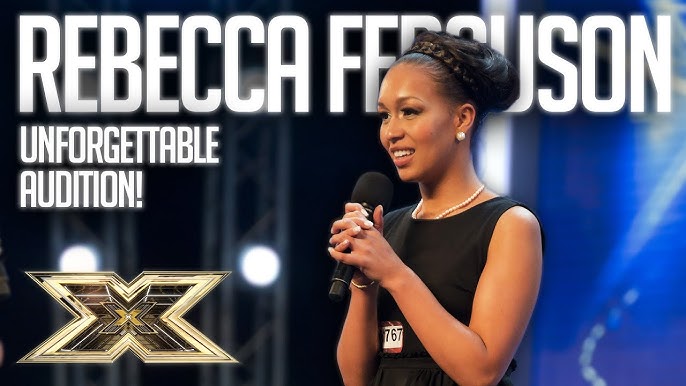
That backstory mattered because it set the emotional stakes. When someone who sounds so ordinary speaks about the reasons they’re taking a risk, listeners tend to lean in. You could see it in the room: a hush of curiosity, people exchanging looks, the kind of gentle goodwill audiences extend to someone trying to change their life. It made what came next feel inevitable and important rather than merely performative. Rebecca’s nerves — the quick intake of breath before she began, the slight tremor in her hands — made her vulnerability part of the story, and that vulnerability made the song itself hit harder.
When the first lines of “A Change Is Gonna Come” unfolded, the atmosphere shifted dramatically. The polite interest that had hovered around her opening comments evaporated, replaced by a stunned silence. Rebecca’s voice possessed a depth and soul that seemed to come from somewhere far older and more weathered than her years. There was a classic timelessness to her tone, a smoky, resonant quality that evoked the great Motown and soul singers of decades past. Yet it wasn’t mere imitation; she brought an honest, personal interpretation that made Sam Cooke’s words feel freshly lived.
Technically, her performance was striking in its control and emotional nuance. She didn’t resort to excessive ornamentation or showy runs; instead, she chose to place each note carefully, letting the melody breathe and the lyrics carry emotional weight. In softer moments, her voice hovered with intimacy, as if she were singing directly to one person in the crowd. Then, at the song’s crescendos, she opened up into a powerful chest voice that filled the auditorium without sounding forced. Those transitions — whisper to roar, restraint to release — were handled with a maturity that belied both her nervousness and her relatively modest background in the industry.
The judges’ reactions traced the arc of everyone else’s astonishment. Faces that had been polite and expectant softened into pure admiration. Simon Cowell, known for his blunt and often skeptical evaluations, watched with a rare look of awe, and when he spoke his praise felt earned and unequivocal. Other judges echoed similar sentiments, noting not only her vocal talent but the authenticity of her delivery. They recognized that they weren’t witnessing a rehearsed television moment so much as the emergence of a genuine recording artist — someone whose voice could carry emotion across radio waves and studio recordings in a way that connects deeply with listeners.
Beyond the technicalities and the judges’ comments, what made the audition memorable was the human response it produced. The audience moved as one: from curiosity to silence to an outpouring of applause and a standing ovation that swept the theater. People wiped at their eyes, clapped until their hands stung, and cheered in a way that felt less performative and more like collective gratitude. It was clear the reaction was not just to a well-executed song but to the story embedded within it: a woman pushing past fear, speaking for her family’s future, and doing so with an artistic courage that resonated.
In the hours and days after the audition aired, the moment rippled outward. Clips circulated online, music blogs dissected her phrasing and stylistic choices, and casual viewers shared the performance with exclamations of disbelief and delight. For many, Rebecca’s audition became a touchstone: proof that raw talent can surface in unexpected places and that personal narrative can amplify artistic impact. Her transition from a nervous mother to a confident singer was more than a television beat; it was an inspiring arc that reminded people why talent shows still hold emotional currency in a crowded media landscape.
Perhaps the most enduring part of that night was how it reframed assumptions about who could be a star. Rebecca didn’t arrive with a flashy backstory or a manufactured persona; she came as herself — imperfect, sincere, and driven by a real need to change her life. That authenticity, coupled with a voice that felt simultaneously classic and fresh, made her audition feel less like a contest entry and more like the first page of a career. When the standing ovation finally subsided and the judges’ praise echoed through the theater, it was clear that this had been more than a memorable television moment: it was the beginning of a journey, the kind that proves talent often hides in the most unassuming places.