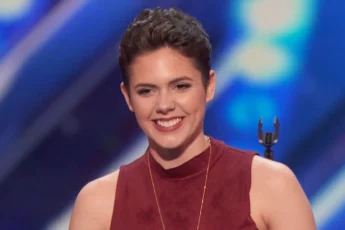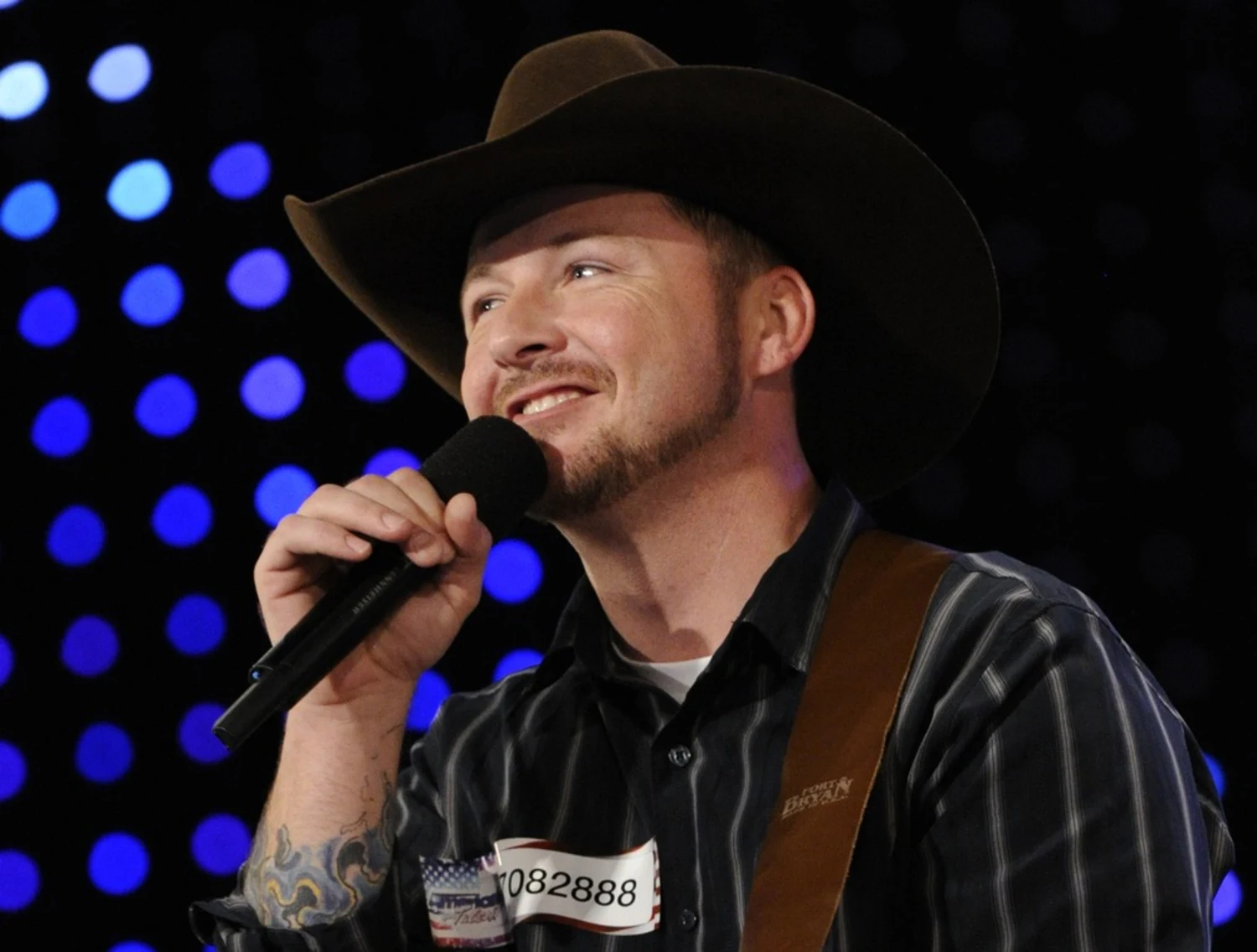
When Tim Poe walked onto the America’s Got Talent stage, you could feel the weight of his story before he even spoke a word. The posture of a man who has weathered far more than most people ever will — careful movements, a measured gaze — set the tone for what he was about to share. Tim began by telling the audience about fourteen years in the U.S. military and the life-changing moment in 2009 when he was hit by a grenade in Afghanistan while trying to shield his team. The blast fractured his back and caused a severe brain injury, leaving him with a persistent stutter that has followed him ever since. Those facts alone are enough to inspire respect, but Tim’s demeanor made listeners feel the human side of that history: the quiet pain, the stubborn hope, and the everyday work required to keep moving forward.
As he described his rehabilitation, he spoke plainly about speech therapy and the small breakthroughs that built into something bigger. It was in therapy that his pathologist suggested an unusual remedy: try singing. At first that idea might sound simple, even obvious, but for someone whose words caught on the way Tim’s did, the thought of stretching his voice into melody was a risk. Singing offered a different path for expression, one that bypassed the neural patterns that had been altered by injury. Tim’s explanation was humble — he didn’t present himself as some overnight miracle, but as a man who pieced together progress with patience, determination, and the willingness to try new things. That background made what came next feel like the next chapter of a long, quiet story.
When the accompaniment started and Tim opened his mouth to sing “If Tomorrow Never Comes,” the room changed. The stutter that had marked his spoken words slipped away, replaced by a smooth, resonant tone that seemed to belong to someone else entirely — or perhaps, to a truer version of the same man. There was no over-singing, no attempt to dazzle with technical gymnastics; instead, he relied on a warm timbre and straightforward delivery that let the lyrics breathe. The contrast between his halting speech and his controlled phrasing struck everyone in the room. It wasn’t just about the surprise that someone who stutters could sing fluently; it was the emotional clarity of a veteran using song to say what speech could not.
Small details made the moment all the more affecting. You could see the way Tim closed his eyes on certain lines, as if recollecting memories tucked behind the words. The audience leaned forward as if drawn into a shared secret. Cameras captured the soft intake of breath from the judges as the notes settled. When he held the final phrase, the room responded not with a mechanical round of applause but with a palpable respect that felt earned. It was, undeniably, a performance — but it was also a revelation about resilience, the kind of scene that compels viewers to stop scrolling and watch the whole thing.
The judges’ reaction was immediate and genuine. Howard Stern and the rest of the panel listened with expressions that moved from curiosity to astonishment to admiration. Their unanimous “yes” wasn’t merely a vote to advance him in the competition; it was recognition of the courage it takes to return to the stage after trauma, and of the artistry embedded in Tim’s voice. In interviews and social media afterward, viewers expressed how moved they were not only by the singing but by Tim’s willingness to lay his story bare in front of millions. For many, watching him sing felt like watching a healing moment unfold live; the applause seemed like a communal acknowledgment that his journey mattered.
It’s important to note that Tim’s audition resonated beyond the immediate thrill of discovery. The clip became widely shared not because it was a flawless vocal showcase, but because it illustrated the healing power of art. Music provided a bridge for Tim — a way to access parts of himself that had been obscured by injury. For others watching, especially veterans and people with speech impairments, his performance offered a concrete example of how therapy, creativity, and determination can intersect to produce real change. Comments poured in from people who said they were inspired to seek therapy, to take a singing lesson, or simply to be kinder to themselves during recovery.
There’s also a broader takeaway about storytelling and visibility. Tim’s moment onstage reminded viewers that everyone carries an untold narrative — and that public platforms, when used with care, can elevate those narratives into collective empathy. The audition did not erase the hardship of his injuries, but it reframed a painful history into a hopeful present: a man who had fought for others now found a way to give himself a voice. In the days following the episode, the video continued to make rounds online, shared by people who wanted their friends and family to witness a moment where human fragility met undeniable strength.
When the lights dimmed after his performance, the echoes did not disappear. Tim Poe’s audition lingered as proof that healing can take unexpected forms, and that music can be a powerful conduit for recovery and connection. For many, it remains a must-watch: not simply for the surprise of a veteran who sings without a stutter, but for the deeper story of perseverance, reinvention, and the simple, transformative act of being heard.