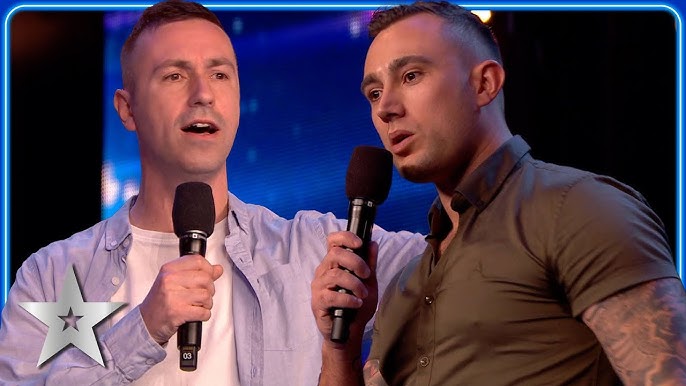

The Soldiers of Swing—Vince and Lee—walked onto the Britain’s Got Talent stage with the kind of easy confidence you’d expect from two people who have faced real pressure together. Both veterans, they carried themselves with a casual, unforced calm, exchanging a few quick smiles and a nod before the music began. At first, though, the performance didn’t land the way they or anyone in the theatre had hoped. Their opening choice felt miscast: an attempt at a contemporary pop number that simply didn’t showcase the voices they’d built together during years of singing around campfires, mess halls, and late-night guard shifts. Simon Cowell didn’t mince words—he called the song “throwaway”—and the verdict in the room was clear. There was a moment where the electricity drained out of the space, replaced by awkward silence and the kind of disappointed rustle that follows a misstep on live television.
That low point is what made what came next so dramatic. Simon, who’s known for being decisive and unforgiving, did something unexpected: he offered them another chance. It was a rare second life in a format that usually moves on quickly from acts that don’t hit right away. For Vince and Lee, that brief lifeline must have felt like both a blessing and a test. They stepped offstage for a few seconds, the cameras panning to capture their faces—tense, focused, a flicker of nerves—but not defeated. Backstage glimpses showed them huddling close, quietly discussing the one number they both knew would let their strengths shine: a classic swing standard that called for swagger, phrasing, and close harmony.
When they returned and launched into “Luck Be a Lady,” the room shifted. The arrangement immediately suited them: a sultry, rhythmic groove that let Vince’s baritone anchor the melody while Lee’s smoother tenor added lift and counterpoint. Their phrasing was conversational, the kind of give-and-take you only get from singers who have learned to listen as much as they sing. Small, telling details made the difference—the way Vince tipped his hat in a half-joking, half-theatrical gesture, the way Lee leaned back on a lyric, letting it breathe before sliding into the harmony. It wasn’t just technical skill on display; it was chemistry. Those offstage hours of friendship and shared experience translated into a natural stage rapport that couldn’t be faked.
Audience reaction was immediate. Heads that had been tilted skeptically in the first half straightened, smiles spreading. You could see people leaning forward, fingers unconsciously tapping, eyes tracking the duo’s movements. The judges who had been reserved in their critiques sat up more alertly—ears pricked for the nuance that had been missing earlier. Even small touches mattered: when Vince and Lee traded a glance and a grin over a well-executed harmony, there was genuine pleasure in the crowd as if they were watching old friends having the time of their lives rather than contestants trying to win a vote.
The transformation felt cinematic—two men who had stumbled now finding their stride in a way that revealed why they’d been standing side by side through hardships in the first place. Their phrasing on the bridge was a masterclass in musical storytelling; they brought out the song’s flirtatious charm without turning it into camp. Authenticity carried the moment. The judges’ faces changed from skepticism to surprise to something like delight. When they hit the final, perfectly blended chord, the theatre erupted into a standing ovation. It was the kind of response that made the hair on the back of your neck stand up.
In the aftermath, the judges couldn’t help but praise the duo’s turnaround. Simon himself, often sharp with criticism, admitted he had been wrong. There was an almost palpable relief on Vince and Lee’s faces—relief mixed with pride. The praise felt earned, not condescending. The panel spoke not just about vocal talent but about stage presence, chemistry, and the way genuine friendship can amplify performance. That authenticity was the through-line: viewers and judges alike noticed that Vince and Lee weren’t putting on personas; they were sharing a skill they’d cultivated together and a bond that lived behind the music.
For many watching at home, the audition became more than a display of musical chops; it was a little life lesson about resilience. A single second chance, handled with honesty and preparation, had converted what could have been an immediate exit into a viral moment of triumph. Clips of the performance, especially the shocked-to-ecstatic arc on the judges’ faces, circulated online with comments celebrating the comeback. Fans highlighted the duo’s humility, the way they acknowledged their stumble and then, calmly and confidently, gave the audience exactly what they needed.
At its core, the Soldiers of Swing’s story was a reminder that talent sometimes requires time to reveal itself, and that chemistry—born of shared history and mutual respect—can transform a performance. Vince and Lee didn’t just sing better the second time; they invited everyone into a relationship that felt real and unpolished, and that honesty resonated. In a competition defined by quick first impressions, their audition proved that sometimes perseverance and the courage to try again are just as important as the first flawless note.