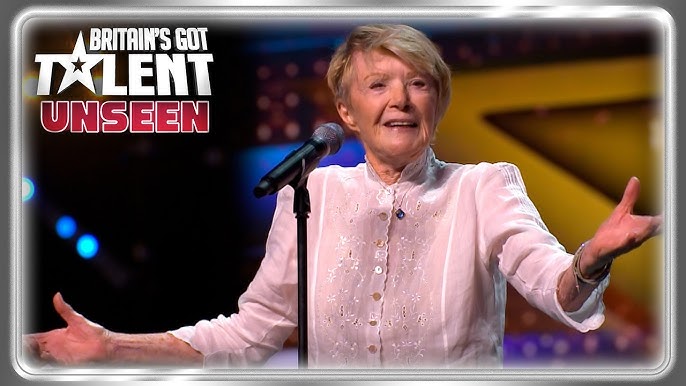
When the curtain lifted on Britain’s Got Talent and a familiar face stepped into the light, the auditorium released a collective intake of breath. It wasn’t a rising star or a viral sensation—this was Shani Wallis, the actress and singer who etched the role of Nancy into cinematic history with her haunting performance in the 1968 Oscar-winning film Oliver!. Seeing her again on that same stage, decades older yet unmistakably present, felt like a moment out of time: a bridge between the golden age of film and today’s youth-driven entertainment culture.
Wallis introduced herself not with the fanfare of a comeback announcement but with the quiet dignity of someone for whom the work has always come first. The program’s production team had apparently kept the audition under wraps, and the surprise only amplified the emotional charge in the room. Audience members who had watched Oliver! as children were suddenly transported back to the first time they heard that voice; younger viewers, familiar only from clips and trivia, were seeing a living piece of film history step into their reality. There was something thick and electric in the air—part nostalgia, part reverence, part sheer curiosity about what a performer in her nineties could still deliver.
Her song choice deepened that sense of history. When Wallis began “As Long As He Needs Me,” the signature ballad that made her name, the notes arrived like pages turned from an old, beloved book. But this was not a rote re-enactment. The years had softened and layered her sound, lending the melody an extra sheen of lived experience. Instead of relying on youthful power, she used phrasing, timing, and a remarkable level of control to wring new meaning from every line. Where once the song might have been dramatic and raw, Wallis’ interpretation now felt reflective and bittersweet, full of the texture that only decades of life can impart.
Small details in her delivery made the performance feel cinematic. She didn’t try to surprise with vocal acrobatics; instead she allowed silences to breathe, letting the orchestra swell around her and then easing back so a single phrase could land like a quiet revelation. Her face, too, told a story—lines that time had placed around her eyes and mouth became evidence of a career spent inhabiting characters and conveying emotion. The combination of restraint and inevitability in her voice made each lyric land differently than it did in her youth; what might once have been bravado became a confession of endurance and memory.
The judges’ reactions were immediate and unmistakable. For many who critique talent for a living, encountering someone who helped define an era can produce an unusual blend of professional appraisal and personal awe. Cameras lingered on faces that shifted from curiosity to rapture; a couple of judges closed their eyes, visibly moved, as if listening to a recording of their own musical memories come alive. When she reached the song’s most poignant moments, members of the audience could be seen dabbling at tears, while others sat with hands clasped, clearly taking in something rare and unrepeatable.
That emotional tide culminated in a standing ovation—genuine and sustained. It wasn’t just polite applause; people rose because they felt privileged to have watched a master at work. The judges, too, rose to their feet, their standing votes more than a procedural yes; they were acknowledging legacy, craft, and the simple human truth that some voices linger in the cultural imagination. Even those known for blunt critiques appeared humbled, offering praise that felt heartfelt rather than performative. Commentators afterward called her a “living legend” and a “hero” to performers of all ages, but the most telling reactions were the quiet ones: a judge wiping away a stray tear, an older viewer whispering to a companion, “I remember when.”
As clips of the audition flooded social media, the response was immediate and varied—vintage film buffs shared favorite Oliver! moments, young singers noted the masterclass in phrasing, and countless viewers commented on what it felt like to witness someone defy assumptions about aging and artistry. The episode sparked conversations not just about nostalgia but also about longevity in the arts: how a career can shift in tone and texture over time, and how experience can add layers of meaning to material audiences thought they knew by heart.
Beyond the applause and the headlines, the performance felt like a gentle rebuke to the industry’s obsession with youth. Shani Wallis’ audition showed that passion doesn’t retire on a timeline, and that performers carry their histories into every new moment onstage. It was a reminder that art is cumulative; every role, every rehearsal, every performance informs the ones that follow. Standing in a theater that once celebrated her as a young actress, she proved that the core of her artistry—the ability to interpret, to connect, to make an audience feel—remained intact.
When the judges delivered their unanimous “yes” votes and the crowd cheered again, the applause felt celebratory in more ways than one. It honored a remarkable career, yes, but it also celebrated the enduring human impulse to keep creating. Shani Wallis’ surprise audition became more than a viral moment; it was a tiny cultural event that affirmed something hopeful: talent ages, but it doesn’t necessarily fade. Instead, it accrues depth, and when called upon, it can still move people to tears.