Josh Curnow walked onto the Britain’s Got Talent stage with a casual, unassuming air that masked the emotional weight he carried with him. At twenty-six, the Cornwall-born singer-songwriter and guitarist had already lived through a story that could have easily closed the door on his musical ambitions. Early on he was diagnosed with dyslexia, and one teacher—supposedly offering “realistic” advice—told him to forget music and pursue something safer, something conventional. That moment could have broken him; instead, it became the kindling for a stubborn, creative fire. He brought that personal history with him to the audition room, and when he introduced himself and mentioned his girlfriend in the crowd, you could tell this was more than a performance. It was a chance to reclaim a dream.
Josh’s recounting of his past wasn’t framed as a plea for sympathy but as a simple, honest preface. He spoke of the diagnosis and the teacher’s comment with a calm that hinted at the years he’d spent processing it—late-night writing sessions, busking on corners, and the steady accumulation of small gigs that slowly formed a life in music. The little details—how he used to practice while everyone else was asleep, how he taught himself chords by ear because reading music felt like a fight—made the story tangible. Those fragments of his life set up the audition as a moment of quiet defiance: he wasn’t there to ask permission to be a musician; he was there to show what perseverance looks like.
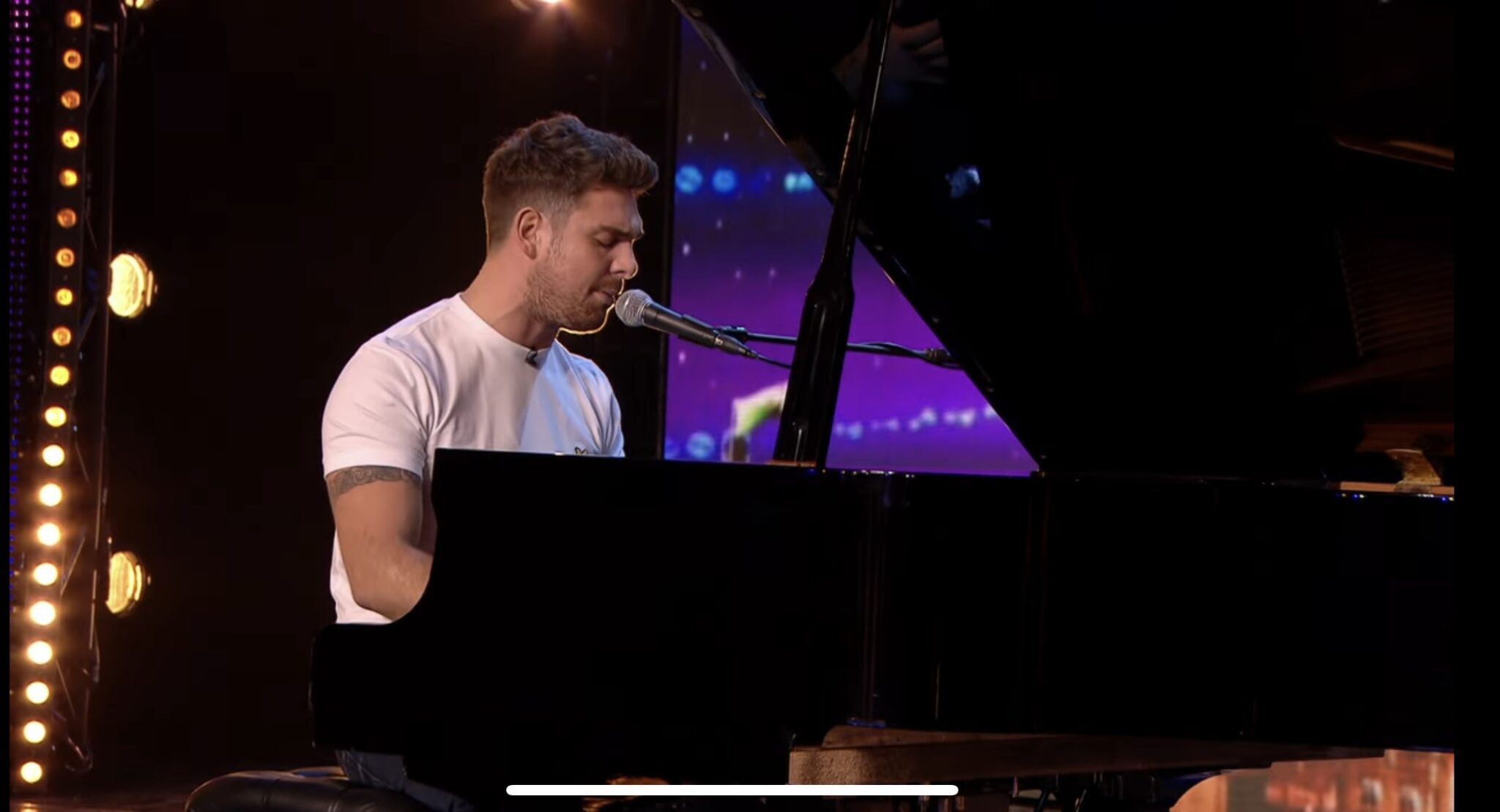
When Josh started to play, the music felt like a continuation of his narrative. He performed an original song that peeled back layers of vulnerability: lyrics about paranoia, about the mind turning on itself, and about the fragile line between confidence and fear. His voice—characteristically husky and textured—gave the words an intimate edge, as if he were sharing the song with one person in a small room rather than an entire studio audience. That intimacy worked in his favor. He didn’t aim for theatricality; he aimed for truth, and that approach made the performance land with emotional clarity.
Technically, his playing and songwriting were solid in a way that reflected both craft and lived experience. The melody was spare but purposeful, leaving space for his lyricism to shine. He used subtle variations—an unexpected minor chord here, a lingering suspension there—to underscore the song’s uneasy mood. In quieter passages his vocals were almost confessional, breathy and close, and in the more intense moments he let the rasp and grit carry the emotional weight rather than relying on sheer volume. Those choices made the song feel honest, not calculated. You could hear someone who’d wrestled with their demons and turned them into art.
Small, human moments made the audition resonate beyond the notes. At one point his fingers tightened on the guitar for a breath, a tiny physical sign of the stakes involved. He glanced briefly toward his girlfriend in the crowd, and the look that passed between them said more than a rehearsed anecdote ever could—gratitude, shared struggle, and relief at being seen. The judges, who hear countless stories of hardship and triumph, responded to the authenticity. Rather than a rehearsed sob story, Josh offered a lived-in testimony: dyslexia didn’t define him; it was part of a larger narrative in which music had been his anchor.
Reactions in the room followed a predictable arc but felt earned: polite attention first, then focused listening, then that soft shift into collective empathy. You could see the judges leaning in as the song went on, their faces smoothing into concentration as the lyrics landed. The crowd, too, seemed to recognize something familiar in the vulnerability—maybe a memory of being doubted or a recall of a small rebellion against expectations. When the final chord rang out, the applause was appreciative and warm, as if people were applauding not just for the music but for the courage behind it.
Beyond the applause, Josh’s audition served a larger purpose: it put a human face on the idea that success rarely follows a straight line. The teacher’s offhand dismissal—“give up on music”—was a moment of cruelty disguised as counsel, yet Josh’s presence on that stage reframed it as the opposite of destiny. He proved that diagnosis and discouragement can coexist with talent and tenacity, and that the path to the next level is often built from small, stubborn acts of belief. He didn’t merely perform a good song; he modeled resilience.
Walking offstage, Josh carried himself with a modest pride. He hadn’t arrived with a promise of stardom, but he left having offered something more durable: proof that a dream can survive discouragement and that creativity can be a response to doubt. For anyone who’s been told to give up, his audition was a quiet blueprint—persist, make the work, and let the music speak. In the end, his performance felt less like a moment of vindication and more like a continuation of a life lived in pursuit of a calling, one carefully sung chord at a time.