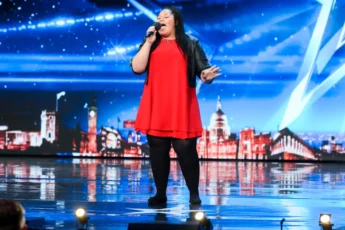
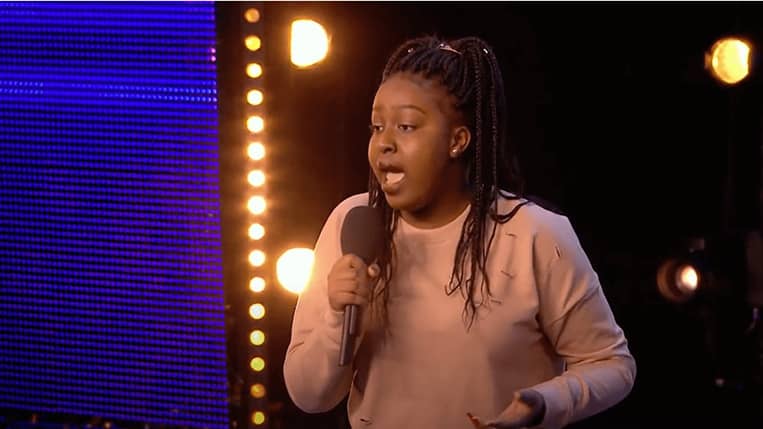
When 15-year-old Sarah Ikumu walked onto the Britain’s Got Talent stage, she looked every bit the nervous teenager—wide-eyed, a little reserved, clutching the microphone as if it were a lifeline. Her introduction was simple and earnest; she spoke quietly about her love for musical theater and her dream to perform on big stages. That modesty made her audacity all the more striking: she had chosen to sing “And I Am Telling You I’m Not Going,” the towering anthem from Dreamgirls known for its emotional intensity and brutal vocal demands. For a performer so young, the song is almost a dare, a public test of range, control, and dramatic conviction. The judges and audience could not have known whether she’d be crushed or crowned by the challenge.
The first bars of music gave the room exactly what it needed: a quiet pause, as if the audience collectively held its breath. Then Sarah opened her mouth, and the sound that came out seemed larger than the small figure on stage. Immediately, any skepticism evaporated. She didn’t merely hit the notes; she inhabited them. Her voice carried a maturity and power that felt far beyond her years, rolling through the verses with a controlled intensity that made even seasoned listeners sit up straighter. There was a rich, chesty depth to her lower register and a bright, ringing top that she accessed without strain—an impressive feat for anyone, let alone a teenager.
What set her performance apart wasn’t just technical prowess; it was the way she told the story. “And I Am Telling You I’m Not Going” is a song about raw emotion and fierce honesty, and Sarah delivered both. She leaned into the heartbreak and defiance with small, believable gestures: a trembling pause before a climactic note, a narrowing of her eyes as if replaying a painful memory, a softening on a phrase that invited the room in. Those choices made the song feel less like a vocal showcase and more like a confession shared directly with every listener. Moments that might have felt forced in another singer’s hands landed with quiet authenticity from her.
The judges’ reactions mirrored the audience’s astonishment. Expressions shifted from polite attentiveness to genuine surprise. You could see them recalibrating—one judge’s jaw dropped slightly, another covered her face with both hands in a reflexive response to the emotional pull. It’s rare to witness such a rapid collective acknowledgment that someone is not simply good for their age but genuinely exceptional. As Sarah moved through the bridge and into the song’s climactic high notes, applause began to swell even before the final phrase faded; people were compelled to respond in real time to what they were experiencing.
Perhaps the most dramatic moment came when the last note hung in the air and then dissipated into a stunned silence for a heartbeat—the kind of pause that separates ordinary applause from something more reverent. Then the studio erupted. The audience leapt to their feet, cheers and whistles punctuating the roar of approval. The judges, who sit behind a wall of professional skepticism, stood as well, faces beaming. Simon Cowell, known for his wearied candor and high bar for praise, did something he rarely does: he pressed the Golden Buzzer. The camera captured Sarah’s face in close-up at that instant—eyes wide, mouth trembling into a grin, tears beginning to form. It was a physical release of the tension she’d carried onto the stage, a moment when years of practice and a personal leap of faith converted into recognition.
Beyond the spectacle of the buzzer, the audition mattered because it reframed expectations about youth and artistry. Sarah’s performance suggested that technical skill and emotional intelligence can mature in parallel; that a young singer, given the right material and the courage to take risks, can deliver a performance that resonates with people of all ages. There was something reassuring about the way she balanced raw emotion and vocal discipline, never allowing one to crowd out the other. She honored the song’s theatrical lineage while making it unmistakably her own—a mark of interpretive insight that bodes well for any performer with star potential.
As she embraced family members in the crowd and smiled through tears, the sense of a milestone was palpable. The Golden Buzzer sent her directly to the live shows, yes, but it also served as a symbolic passing of the torch: a recognition from industry veterans that a new voice, brave and accomplished, had arrived. For viewers at home, it was a reminder of why talent shows still hold power—the chance to witness a single, transformative moment when talent, preparation, and courage converge on a public stage. Sarah Ikumu’s audition was one of those rare instances where a young performer didn’t just rise to meet a daunting challenge—she redefined it, leaving judges, audience, and viewers alike convinced that she was born to sing.