
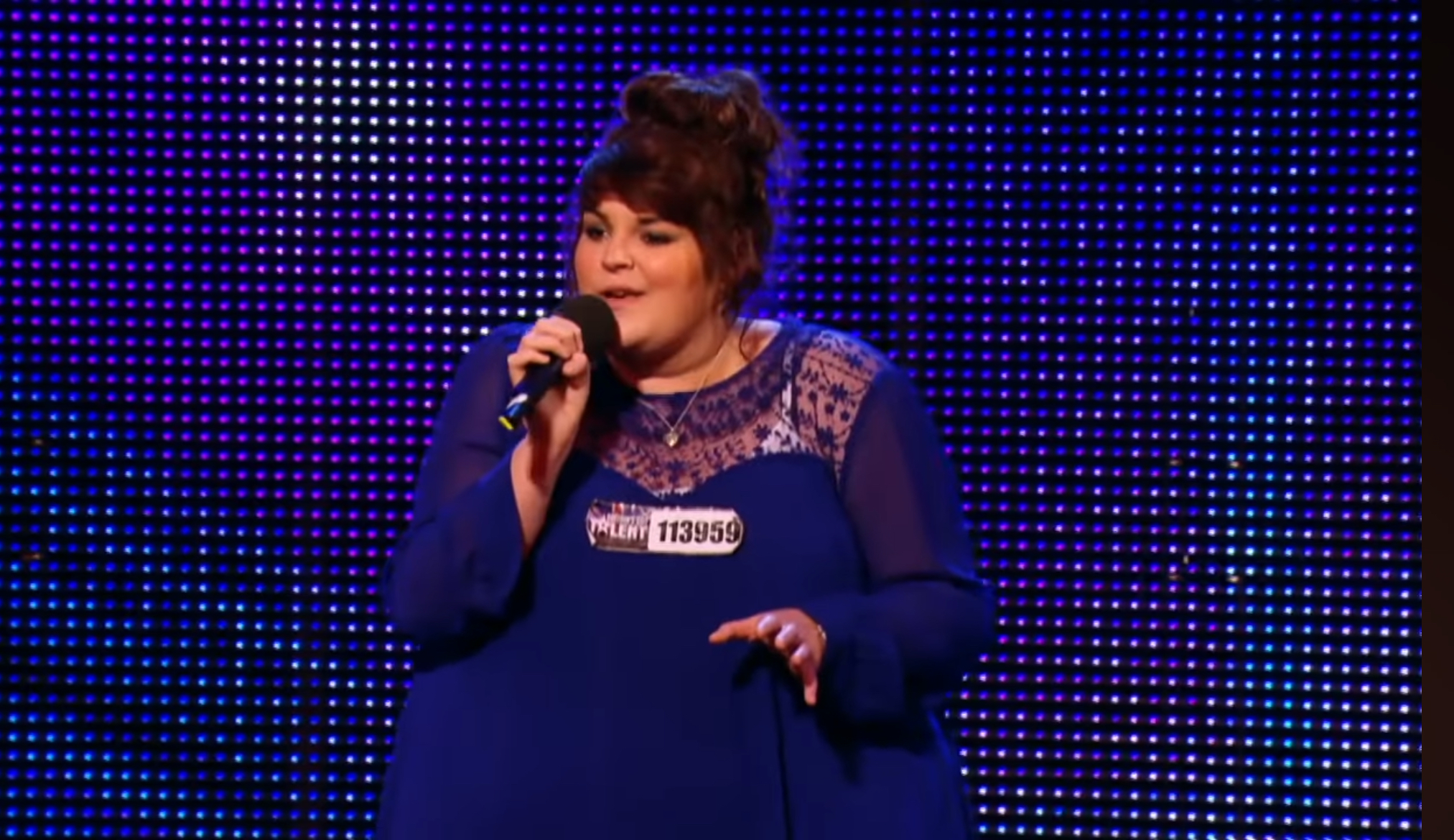
Nineteen-year-old Rosie O’Sullivan from Birmingham walked onto the Britain’s Got Talent stage carrying more than a suitcase of nerves — she brought years of self-doubt and a very human fear of being laughed at. Rosie admitted, with a frankness that made the judges lean in, that she had been singing since primary school but had always been terrified to show it. Growing up as “a big, big girl,” she said, had left her anxious about judgment and ridicule; the idea of thousands of strangers watching her felt like a test she’d long avoided. For her, a “yes” from the panel wasn’t just a ticket through to the next round. It would be proof — to herself as much as anyone else — that she was good at what she did and worthy of belief.
There was a fragile bravery to her introduction. She fidgeted, glanced toward the audience as if seeking an anchor, and told the story of how singing had been a constant but private companion. Behind that shy frame was a person ready to risk exposure in the hope of reclaiming confidence. The tension in the room was quietly palpable: viewers and judges both seemed to sense that whatever happened next would mean more than applause.
Rosie chose a bold song choice: James Brown’s “It’s a Man’s, Man’s, Man’s World.” It’s a piece soaked in grit and longing, a song that demands not just power but soul, nuance and emotional conviction. As she started, the opening lines surprised everyone — not because they were loud, but because they were honest. The first phrase carried an immediacy that suggested she had been carrying this music in her bones for a long time. Then, almost imperceptibly, the tentative young woman on stage began to change.
What followed felt like the shedding of an old skin. Rosie’s voice blossomed into a rich, authoritative soul tone that filled the auditorium and settled over the judges like a warm, unexpected force. There was control in the way she shaped each line, a maturity in her phrasing that made listeners forget her years and focus only on the feeling she conveyed. She navigated the song’s dramatic arcs with assurance — tender and raw where it needed to be, full-bodied and resonant at the peaks. The authenticity of her delivery made the lyrics feel personal, as if she were telling her own story rather than performing someone else’s.
The reaction was immediate and electric. The audience rose, not out of obligation but because they had been moved; the standing ovation felt like a collective declaration that Rosie’s fear had been met and transformed into something beautiful. The cameras captured the moment she realised the room had shifted — a flicker of astonishment, then wet, incredulous eyes — and the expression on her face said more than any judge’s comment could. For someone used to staying small, the scale of the response was both overwhelming and liberating.
When the judges spoke, their words carried both admiration and encouragement. Alesha Dixon told Rosie she had an “amazing” and “powerful voice,” and urged her to believe in herself as fiercely as they believed in her. There was tenderness in that nudge: the judges were not merely applauding technique, they were trying to hand her back some of the confidence she’d been missing. David Walliams praised her control as “fantastic,” admitting he could listen to her sing all night — a comment that underscored both the pleasure and the respect her voice commanded. And Simon Cowell, whose bar for praise is notoriously high, cut through with a plainspoken verdict: “absolutely bloody fantastic.” The unanimity felt like a rare moment of clarity: Rosie had proved to strangers and to herself that she belonged on that stage.
Leaving the arena with four resounding “yeses,” Rosie carried more than just a pass to the next round. She had been given validation that reached beyond the competition: evidence that the fears which had kept her quiet were not a measure of her talent. For a young woman who had long equated courage with silence, the experience seemed to open a new possibility — that vulnerability could be the path to being heard. Her success wasn’t only about vocal prowess; it was about what the performance allowed her to reclaim: confidence, dignity, and the belief that her voice matters.
The broader resonance of Rosie’s audition is easy to understand. It’s a story about turning embarrassment into empowerment and about the strange alchemy that happens when talent meets opportunity. In one powerful, soulful performance, she silenced the laughter she had feared and replaced it with applause — and in doing so, she reminded everyone watching that bravery sometimes sounds like a single note held long enough for the world to listen.