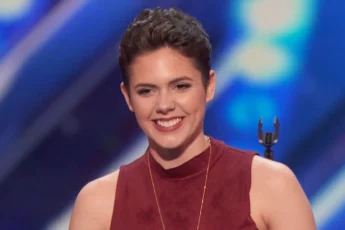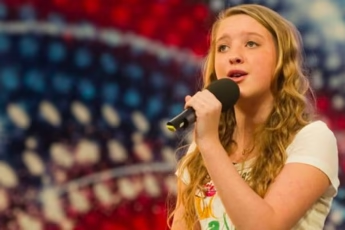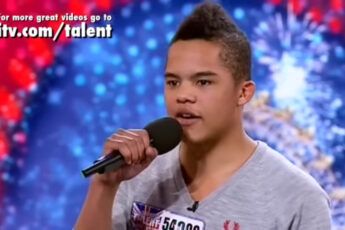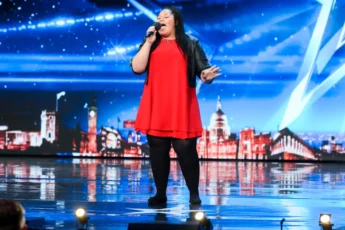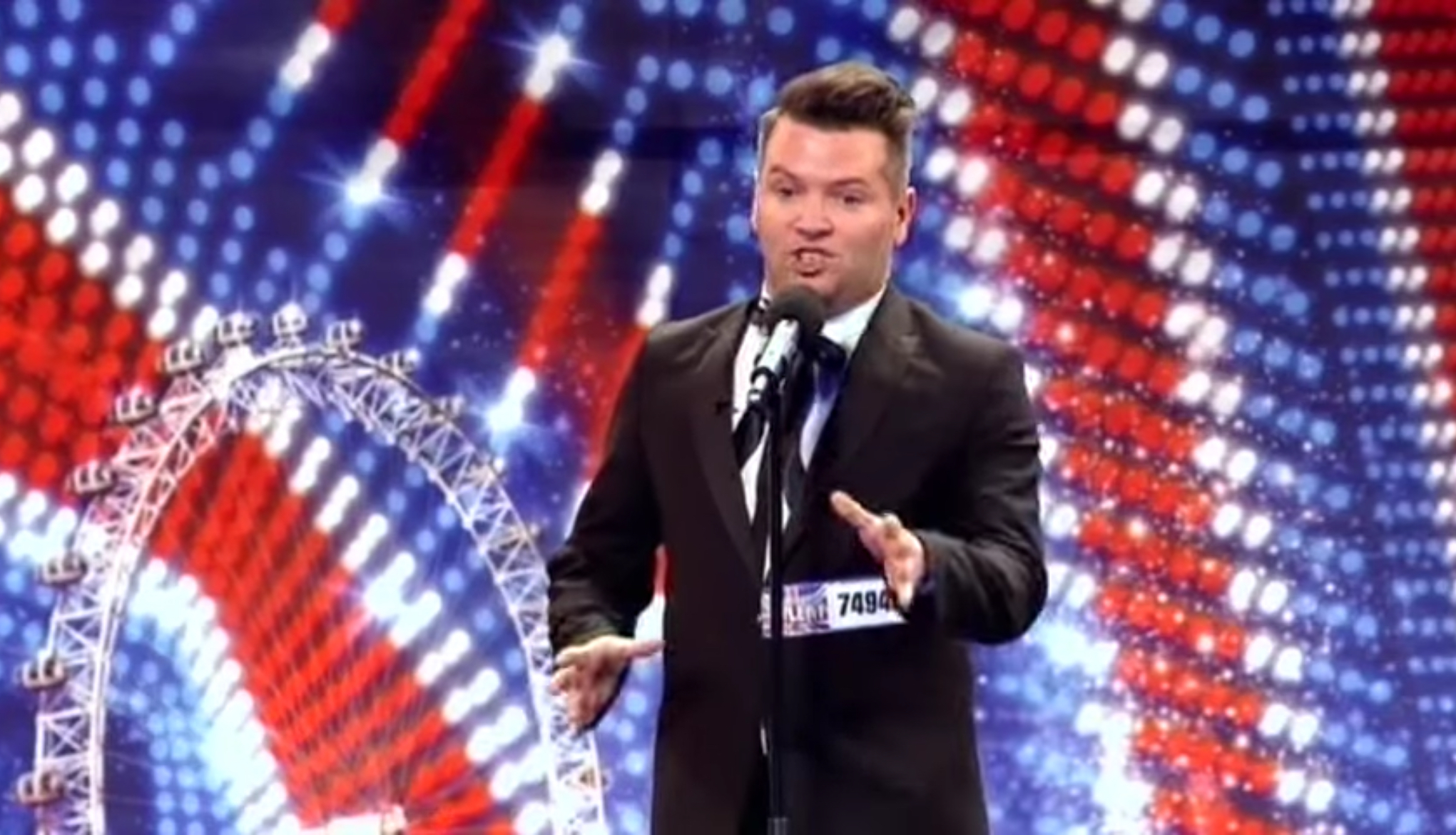
Thirty-five-year-old Edward Reid, a drama teacher and singer from Coatbridge, stepped onto the Britain’s Got Talent stage with an easy smile and a self-deprecating sense of humor that instantly put the room at ease. He introduced himself not with bravado but with warmth, explaining that he spent his days directing elderly drama groups — affectionately called the “Nifty 50” — and working with people with special needs. The way he spoke about his pupils made it obvious that this wasn’t just a job for him; it was a source of joy. He told a few small anecdotes about the rehearsals and the minor backstage disasters that only seasoned community theatre people would recognize, and the audience chuckled along, already charmed by his humility.
Edward admitted, with a grin and a touch of theatrical flair, that his ambition was a little cheesy: he wanted “an audience with Edward Reid” and harbored the not-so-secret dream of performing for the Queen. It was the kind of charmingly absurd aim that made people root for him rather than laugh at him, and there was a palpable empathy in the room. Standing under the bright lights, with thousands of eyes on him and the judges’ table looming ahead, he confessed to feeling nervous — who wouldn’t be — but also determined to make the most of this terrifying opportunity. You could see him take a breath, square his shoulders like a true drama teacher preparing his troupe for opening night, and then he surprised everyone.
Rather than launching into a predictable power ballad or an earnest show tune, Edward peeled back his sleeve and pulled out something entirely unexpected: a medley of nursery rhymes. He started with “Old MacDonald Had a Farm,” but not in the way anyone present had ever heard it. He transformed the familiar refrain into an operatic, emotionally charged performance, leaning into long, resonant notes and finely controlled vibrato. With a dramatic pause and an almost tragic intensity, he moved into “Humpty Dumpty,” turning the comical nursery tale into something that sounded heartbreakingly operatic — Humpty’s fall became a moment of genuine pathos rather than child’s play. The juxtaposition of simple, innocent lyrics with grand, theatrical delivery was so perfectly incongruous that the audience roared with laughter and delight.
As he continued, Edward didn’t merely sing; he inhabited each song like a seasoned actor. He shaped phrases with exaggerated gestures, used lighting and silence to build suspense, and even threw in a solemn aria-style lament about a missing cow. Little details made the performance gleefully specific: a sorrowful hand over his heart during “Baa Baa Black Sheep,” a Shakespearean sigh before a rowdy “Old MacDonald” chorus, and an appropriately operatic bow as if concluding a tragic scene. These theatrical choices elevated the routine into something unexpectedly brilliant — part parody, part heartfelt showcase of vocal skill — and they revealed both his comedy instincts and genuine musical ability.
The judges’ reactions were immediate and animated. Louis Walsh, always ready with a quip, admitted he “didn’t think nobody saw that coming,” and joked that Edward might be the go-to performer for Elton John’s child’s birthday party. The line landed perfectly; it was silly and affectionate, and the audience howled. Amanda Holden, who has a soft spot for performers who dare to be different, confessed she “would so buy your album,” a compliment that landed with the kind of sincerity that made Edward beam. Even David Hasselhoff, who can be famously blunt, praised Edward for being “really creative and very funny.” Their warmth wasn’t just about the laughs: it recognized the craft behind the comedy.
By the time the final note hung in the air, the atmosphere was electric. Judges and audience members were in stitches, applauding not only the humor but the skill that made the joke land so perfectly. Edward’s combination of theatrical training, vocal control, and genuine warmth had turned what could have been a novelty act into a memorable, standout audition. The culmination was a unanimous four “yeses,” and as the judges’ chairs lit up in agreement, Edward looked genuinely moved — equal parts relieved, surprised, and elated. For a man who had joked about wanting an audience with himself and dreamed of singing for the Queen, this was a moment of validation: the massive crowd may have been intimidating, but he made the most of it, turning a simple set of nursery rhymes into one of the most unexpectedly delightful auditions in the show’s history.