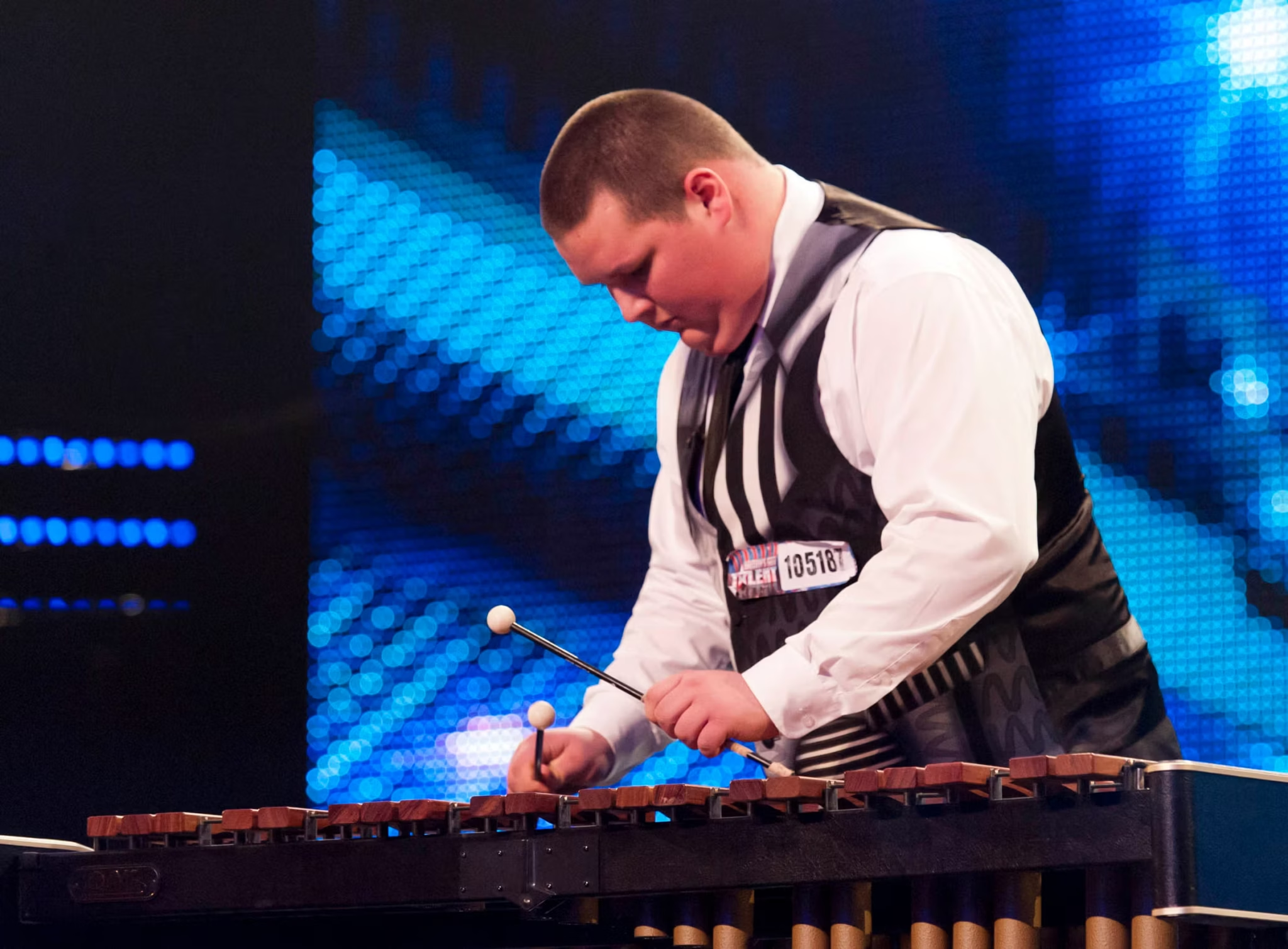
Ashley Elliott’s Britain’s Got Talent audition felt like a crossroads between two very different worlds: centuries of family farming on one side, and the bright, unpredictable life of a performer on the other. At sixteen, he walked onstage with the simple, earnest aim of changing the trajectory his family had known for generations. He introduced himself as a percussionist and revealed his instrument of choice—the xylophone—an unexpected pick in an arena usually dominated by singers and flashy pop acts. That unusualness sparked immediate skepticism, especially from Simon Cowell, whose raised eyebrow and bemused remarks set a tone of doubt that Ashley would have to overcome.
What made the moment especially poignant was the family context. Ashley explained that his relatives were supportive, despite the fact he was asking to step away from a long line of farmers. His father, who had worked the land for years, sat in the audience with a sort of quiet pride that suggested a lot more than words could say; the family’s wish that Ashley might one day perform at something as grand as the Royal Variety Show added a touch of old-fashioned aspiration. There was a tenderness in that dynamic—the farmer’s practicality meeting a teenager’s appetite for something different—and it made the audition feel less like a spectacle and more like a personal turning point.
Once the music began, Ashley had to answer the room’s doubt not with words but with craft. He launched into a high-energy, technically demanding piece that showcased not only speed and precision but a musical imagination that made the xylophone feel anything but quaint. His hands moved with both accuracy and flair, articulating complex rhythms and melodic phrases in a way that revealed serious study and innate musicality. It was easy to see why one judge called him a “brilliant player”: the sound was crisp, the timing immaculate, and the musical choices revealed someone who knew how to shape a performance for an audience.
Part of Ashley’s challenge was the xylophone’s unconventional place on a big talent show stage. Some viewers and judges initially struggled to see how the instrument fit in the modern pop landscape, and that tension influenced feedback. Simon’s skepticism—part theatrical, part genuine—aimed at testing whether the novelty could translate into broader appeal. That reaction wasn’t entirely unfounded; a solo xylophonist is an unusual proposition in a market hungry for vocal hooks and viral moments. Yet Ashley’s performance complicated that argument. He didn’t merely play notes; he infused them with energy and personality, making passages sing in a way that momentarily bridged the gap between percussion and melody.
The judges’ responses captured that ambivalence. David Walliams entertained the room with playful comparisons—calling Ashley a “one-man xylophone playing One Direction”—a comment that conveyed both amusement and affection. It suggested that Ashley’s charm could make something niche feel accessible. Alesha Dixon, however, raised practical concerns, suggesting he might thrive better as part of a larger ensemble. Her point was practical: in a band, his skill would be showcased alongside complementary sounds, making the overall act more commercially viable. That critique didn’t undermine Ashley’s talent; it simply pointed to the realities of showbiz packaging and how instruments are often contextualized for mass audiences.
Small, human moments made the audition linger. When Ashley glanced toward his family mid-performance, there was a visible exchange—a flicker of reassurance from home and a corresponding surge of calm in his playing. Those glances transformed the audition from a mere display of technique into an intimate story about risk, support, and the desire to belong to a different tradition. The audience’s reaction—ranging from surprised applause to delighted laughter at David’s quip—tracked the piece’s ups and downs, shifting from skepticism to warm appreciation as Ashley’s charisma and skill took hold.
Beyond the immediate feedback, Ashley’s audition raised interesting questions about how talent shows evaluate originality versus marketability. On the one hand, his mastery of a less-common instrument offered something fresh and memorable; on the other, industry reality often rewards acts that fit neat categories. The suggestion to join a band wasn’t a dismissal so much as a strategic note: keep the uniqueness, but find a way to package it for wider audiences. For a young musician still figuring out his path, that sort of guidance can be invaluable, offering options rather than shut doors.
When the judges delivered their verdicts, the episode felt less like a climactic resolution and more like the start of a conversation. Ashley had arrived to defy expectations and, in doing so, proved that talent doesn’t have to conform to contemporary norms to be compelling. Whether he steps into a band, refines a solo persona, or carves out a niche doing something wholly his own, the audition marked a decisive first act: a farmer’s son daring to choose music, an instrument often dismissed suddenly sounding like a serious vehicle for modern performance. In that sense, Ashley’s moment on the BGT stage was less about judgment and more about possibility—the first public note in a story that, for a sixteen-year-old, was only beginning.