
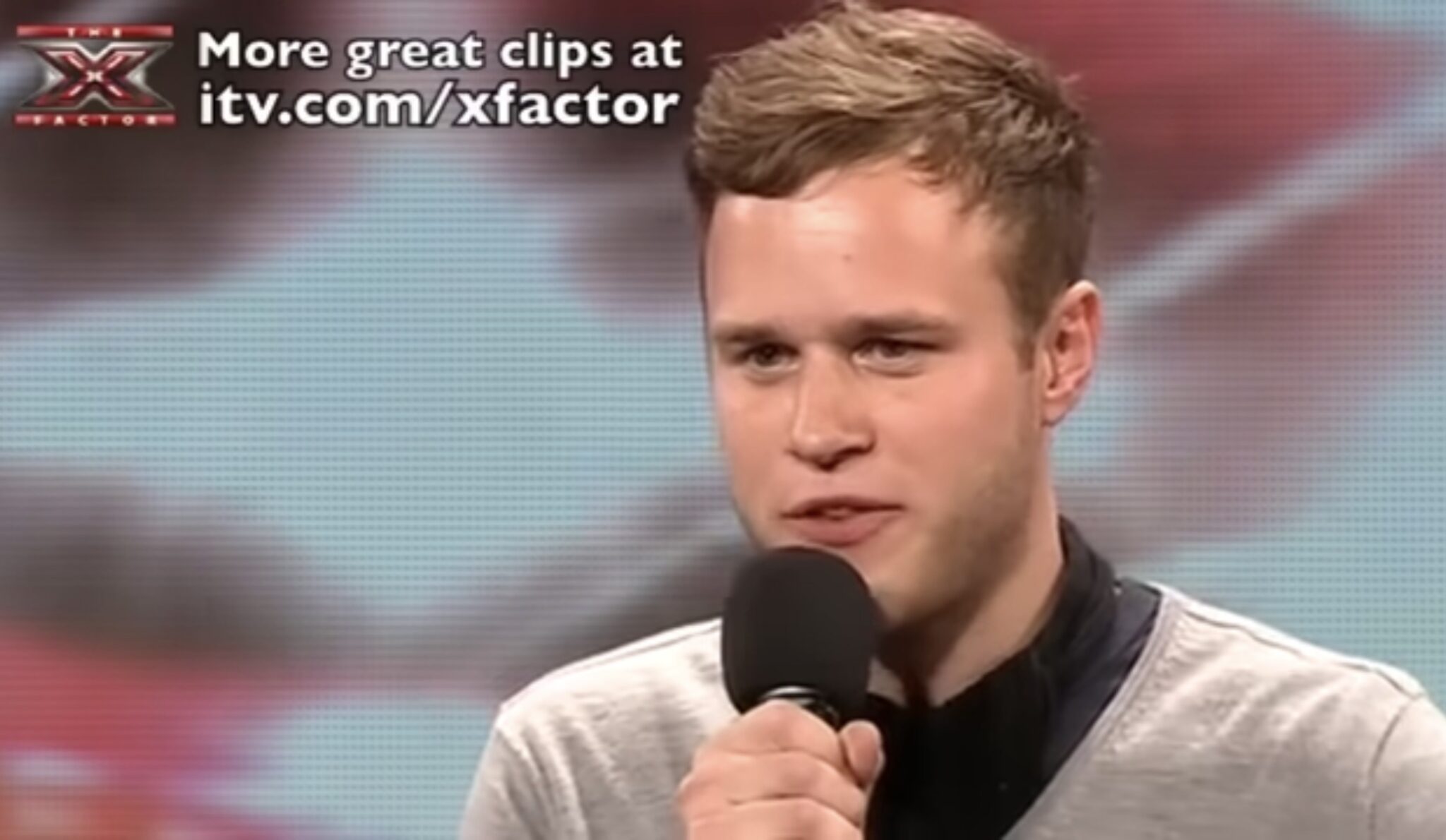
In 2009, Olly Murs, a 25-year-old energy adviser from Witham, Essex, walked into The X Factor audition room with a mixture of nerves and easy charm that made him feel instantly familiar to the camera. He gave off the kind of approachable, boy-next-door vibe that made it hard to imagine him as anything other than a regular guy with a day job and a dream. When the judges asked why he’d come, his answer was refreshingly plain: he wanted to be a performer. There was no grand backstory, no manufactured angle—just someone who loved music and was willing to put himself forward, despite having very little professional experience.
That candidness became part of his appeal. Olly didn’t arrive polished to the nines or cloaked in dramatic mystery; he arrived as himself, a little nervous but full of personality. He joked, he smiled, and he owned up to his lack of stage résumé. It was the sort of humility that made audiences root for him even before the first note. You could sense that he knew the stakes but wasn’t trying to overcompensate with bravado; instead, he let his natural confidence and likability do the talking.
Then he started to sing. Choosing Stevie Wonder’s “Superstition” was a bold move—an energetic, groove-driven classic that demands not only vocal skill but a sense of rhythm, timing, and showmanship. From the first beat, Olly’s whole demeanor shifted. The nervousness melted into performance energy; the tentative smile became a grin of genuine delight. He delivered the song with a soulful, smooth vocal tone that belied his relative inexperience, and he backed it up with a magnetic stage presence that few newcomers possess.
What made the audition memorable wasn’t just that he could sing; it was how he combined that voice with movement. Olly’s “snake hips” and cheeky, loose-limbed dance moves gave the number an infectious charm. He moved as if he’d always known where the groove lived, even if he’d never formally studied stagecraft. Those spontaneous, slightly goofy moments worked in his favor—they made him relatable and entertaining at the same time. Instead of trying to be a flawless vocal robot, he embraced the joy of performing, and that joy translated into the room.
The judges noticed immediately. Simon Cowell, who is famously hard to impress, didn’t hide his reaction. As the audition reached its end, he called it “the easiest ‘yes’ I’ve ever given.” That statement carried weight; Simon’s praise in that moment felt like a professional seal of approval. Other judges echoed the sentiment: they praised Olly’s likeability, his affable stage presence, and a kind of ineffable “star quality” that separated him from other hopefuls. The consensus was clear—Olly had something special, even if that something wasn’t textbook vocal perfection.
There were small details that made the audition feel genuine rather than manufactured. Between verses, Olly flashed sheepish smiles and glanced at his family in the audience, a gesture that reminded everyone he was still the same earnest young man who’d walked in earlier. His vocals weren’t about flashy runs; they were about timing, groove, and personality. When he hit a phrase with confidence, the reaction felt earned. When he laughed off a missed step in his choreography, it humanized him further and made the audience love him more.
The standing ovation that greeted the final chord felt less like the usual polite applause and more like a communal celebration of someone who had dared to be himself. Olly celebrated with his family—hugging them, beaming, and sharing a moment of pure joy that underscored why the show resonates with viewers. For people watching at home, his audition read like the perfect underdog moment: not the sob-story Cinderella arc, but a delightful reminder that charisma and heart can open doors.
From that point, Olly’s path accelerated. Four unanimous “Yes” votes sent him deeper into the competition and eventually into the public eye, where his blend of charm, humor, and accessible talent found a broad audience. His audition remains an oft-cited example of how personality can be as crucial as raw vocal ability in a televised talent contest. It’s not that he lacked skill—his voice had a pleasing, soulful edge—but what truly set him apart was the way he made the performative elements feel natural and unforced.
Looking back, the audition works as a compact lesson in stagecraft and magnetism. Olly Murs didn’t rely on a tragic past, perfect technique, or high-concept staging. He relied on authenticity, the willingness to be a little silly, and the kind of natural charisma that invites people to root for you. For many viewers, that moment in 2009 was the birth of a star who felt like someone they already knew—and that familiarity, combined with undeniable showmanship, was the very thing that launched his career.