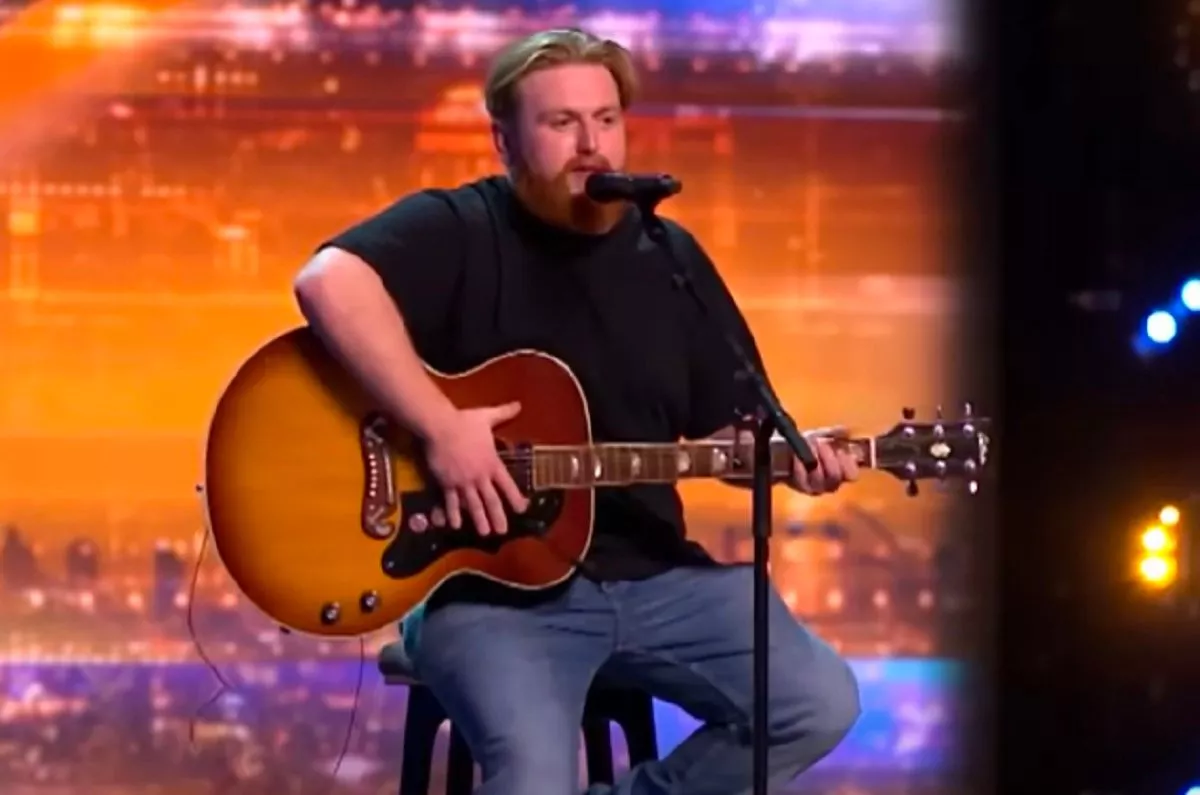
Andrew Hindson, a 30-year-old father of three from Doncaster, walked onto the Britain’s Got Talent stage with a kind of weary grin that immediately told the audience more than any rehearsed line could. He explained, plainly and without drama, that this was his first ever public gig and that he’d written the song he was about to perform for his children. The explanation was simple and familiar: he sang them to sleep every night, and now he wanted to give them — and his growing family — something more. It was hard not to feel for him when he mentioned his newborn son, only six weeks old at the time; the detail made the stakes feel real. This wasn’t a performer chasing fame so much as a dad trying to carve out a better life for his brood.
There was an instantly relatable quality to Andrew’s presence. He didn’t stride on stage like a seasoned entertainer but moved with the slightly awkward assurance of someone who’s used to negotiating toddler tantrums rather than spotlight moments. His clothes were everyday — a sensible shirt, jeans — the outfit of a man who spends equal parts time at the nursery, the kitchen sink, and the odd night shift. When he opened his mouth, though, the room tilted quickly from curiosity to full-blown laughter and nods of recognition. He had promised a song for his kids, but where the judges had apparently been bracing for a sentimental lullaby, Andrew had other plans.
Rather than reach for syrupy sentiments, he handed the audience a brutally honest, laugh-out-loud anthem about the chaotic realities of parenting small children. The lyrics were sharp and specific, the kind of details that make an instant connection: temper tantrums in toy aisles, the science-defying speed at which snot appears on a sleeve, and the endless negotiations over chicken nuggets at dinner. He sang about “soiled underpants” not as a throwaway gag but as a lived truth, and the room roared because every parent in the house — and beyond — had been there. His comedy came from the truth of the situation: parenting is exhausting, it’s messy, and it often feels like a full-time job that pays in hugs and unsolicited artwork.
Andrew’s delivery balanced self-deprecation with affection. He poked fun at himself for looking older than he felt, joking about how fatherhood had added years overnight — a bald punchline softened by his obvious love for his kids. There was a line about wanting to “push them back in” that drew gasps and then laughter, because it captured a fleeting, human thought many parents have in moments of total overwhelm but would never admit out loud. He followed that with an oddly sincere threat to get a vasectomy, an acknowledgement both of humor and of responsibility. The joke landed because it was rooted in a genuine desire to be practical after the chaos: he loved his children, but he also needed manageable sanity.
Small, candid flourishes made the performance feel personal rather than purely performative. Andrew referenced bedtime rituals — the drawn-out procession of teeth-brushing, the endless requests for “one more story,” the stuffed animals that needed precise placement — in a way that invited the audience into a living room rather than a stage. He described the absurd bargaining chips parents suddenly accept, like promising cartoons in exchange for a five-minute shower. Those tiny examples made his observations feel lived-in; you could practically smell the baby powder and hear the scrape of toy trains across a rug.
The judges’ reactions were a mirror of the audience’s amusement and affection. They laughed at the punchlines but also watched with something softer: a recognition that this was more than a comedy act. Andrew’s song was a love letter wrapped in exhausted humor. When he sang about getting up at ungodly hours to soothe a crying baby, or paying for baby supplies on a teacher’s salary, the humor cut with tenderness. It’s one thing to make a room laugh; it’s another to make them feel seen. His performance did both. Parents in the crowd exchanged knowing looks; single viewers likely called to mind nieces, nephews, or future plans. The universal theme — that family can be gloriously chaotic and painfully expensive, and yet deeply rewarding — landed.
By the end, the applause felt less like polite reaction and more like genuine appreciation. Andrew bowed with that same humble smile he’d had at the start, the expression of a man who’d exposed a private corner of his life and been met with warmth. Whether or not his comedic parenting anthem would carry him far in the competition, he’d already achieved something important: he’d made the experience of parenthood feel shareable, something to be celebrated and laughed about in equal measure. For a few minutes, the stage became a living room where someone else was saying aloud what many had felt in private — that raising kids is glorious, maddening, expensive, and ultimately a story worth telling.