
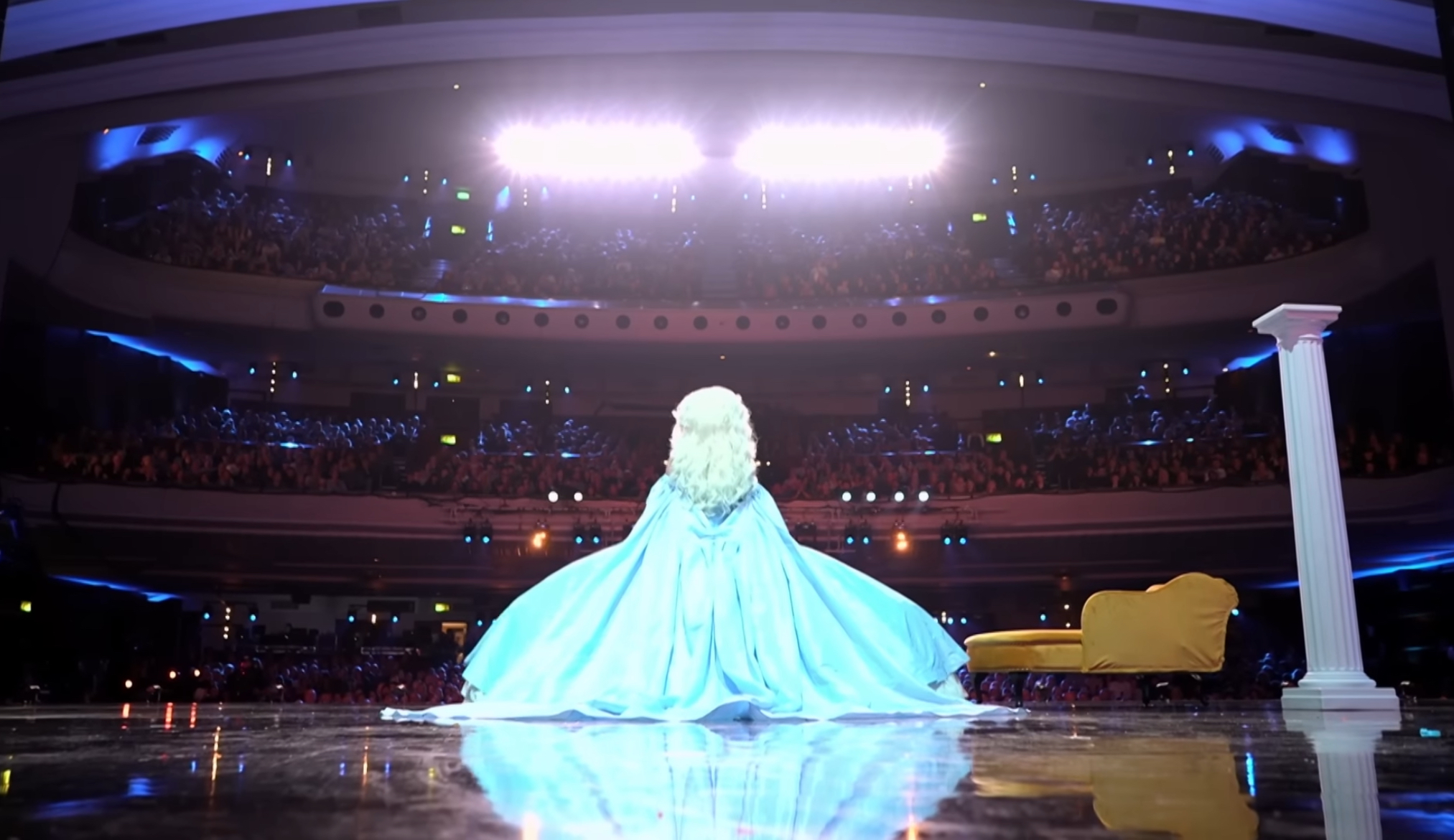
When Jasmine Rice stepped onto the Britain’s Got Talent stage, she did so like someone who already knew the script for commanding attention. Tall in heels, wrapped in a self-designed frock that seemed to be equal parts couture and costume, she announced herself as the show’s self-proclaimed “opera queen” and the audience responded the way a good entrance deserves: with curious applause and quick, appreciative gasps. But Jasmine’s look was never only about glamour; it was a deliberate statement. In a short pre-performance chat she explained that the traditional opera world had not always welcomed her brand of femininity and fierceness, and that revelation reframed everything that followed. What might have been dismissed as mere theatrics became the visible expression of a long-held frustration — and an act of reclamation.
There was a tension in the moment that felt important. Jasmine wasn’t just vying for votes; she was staking a claim. She’d encountered rejection for presenting herself in ways the classical world deemed “too much” or “too different,” and she’d come to BGT intent on finding a stage where being glamorous and powerful could be one and the same. That backstory made the performance feel personal before a single note was sung. The judges and audience were primed not only to hear a voice but to witness a statement about identity and access in the arts.
From the first phrase, Jasmine showed why she deserved that stage. Her vocal technique was impressive in the purest sense: secure breath support, rounded vowels, and a projection that could fill a cathedral, let alone a television studio. But what set her apart was how she married that classical foundation to a modern attitude. Each phrase was delivered with operatic heft, then tipped with a wink of theatricality that made the performance feel contemporary and immediate. Where many classically trained singers focus on restraint, Jasmine leaned into expressive risk — ornamental runs, dramatic dynamic swells, and an emotional intensity that read as both authentic and deliberately extravagant.
Concrete moments in the performance lingered in the memory. There was a passage where she held a high note so cleanly and for so long it seemed to hang in the air like a visible thing, and the audience inhaled as one. In another spot she softened to a near-whisper, shaping a phrase with delicate legato before exploding back into full voice on the next line. Those choices showed not only vocal control but an understanding of pacing: she knew when to make the sound grand and when to make it intimate. Her physicality matched the music — arm gestures that suggested drama without caricature, a tilt of the head that turned a cadence into a question, and a gaze that locked onto the judges as if she were telling them exactly who she was.
Bruno Tonioli’s reaction was one of the more affecting moments of the night. Known for his dramatic responses, he nonetheless seemed genuinely moved — tears forming as he absorbed the force and sincerity of Jasmine’s delivery. That won’t happen for every audition, and it signaled that the performance had crossed into something more than technical brilliance; it had struck an emotional nerve. Other judges echoed that sentiment. Alesha Dixon praised the voice as “stunning” and celebrated Jasmine’s courage in pursuing what she loves; Amanda Holden called her a “breath of fresh air,” noting that seeing someone so unapologetically themselves was invigorating on a show that can sometimes favor the safe and familiar.
Simon Cowell’s comments were particularly resonant. He acknowledged the snobbery that can exist in the opera world — the rigid expectations about looks, presentation, and demeanor — and told Jasmine she had “found your home” on the BGT stage. Coming from a critic renowned for blunt honesty, that statement was more than approval of one performance; it was a validation of Jasmine’s entire approach. The panel’s praise repeatedly circled back to the same idea: she had combined raw talent with personality in a way that felt honest rather than gimmicky, and the result was electrifying.
Audience reaction underscored what the judges were saying. By the time Jasmine reached the final, dramatic notes of her set, the studio was on its feet, and cheers rang like an affirmation. Family and fans in the wings wiped tears, and fellow contestants looked on with a mixture of admiration and envy. The standing ovation felt earned, the kind that arrives when technique, emotion, and presentation align to create a moment you remember long after the lights dim.
When the votes were cast, the result reflected the room’s energy: four unanimous “Yes”es. For Jasmine, the approval meant more than a pass to the next round. It represented vindication — a rebuttal to the gatekeepers who had told her to tone down her femininity or hide her flair. On a show that traffics in second chances and reinventions, Jasmine’s audition felt like one of the more empowering iterations: a reminder that classical talent doesn’t have to come packaged in a single, narrow way. She left the stage not merely as a vocalist who had impressed the judges, but as an artist who had reclaimed a space for herself and, in the process, made room for others who dare to be both feminine and fierce.