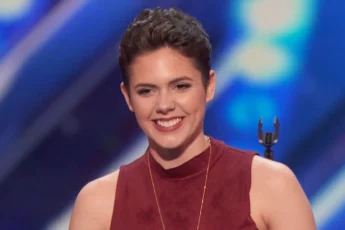
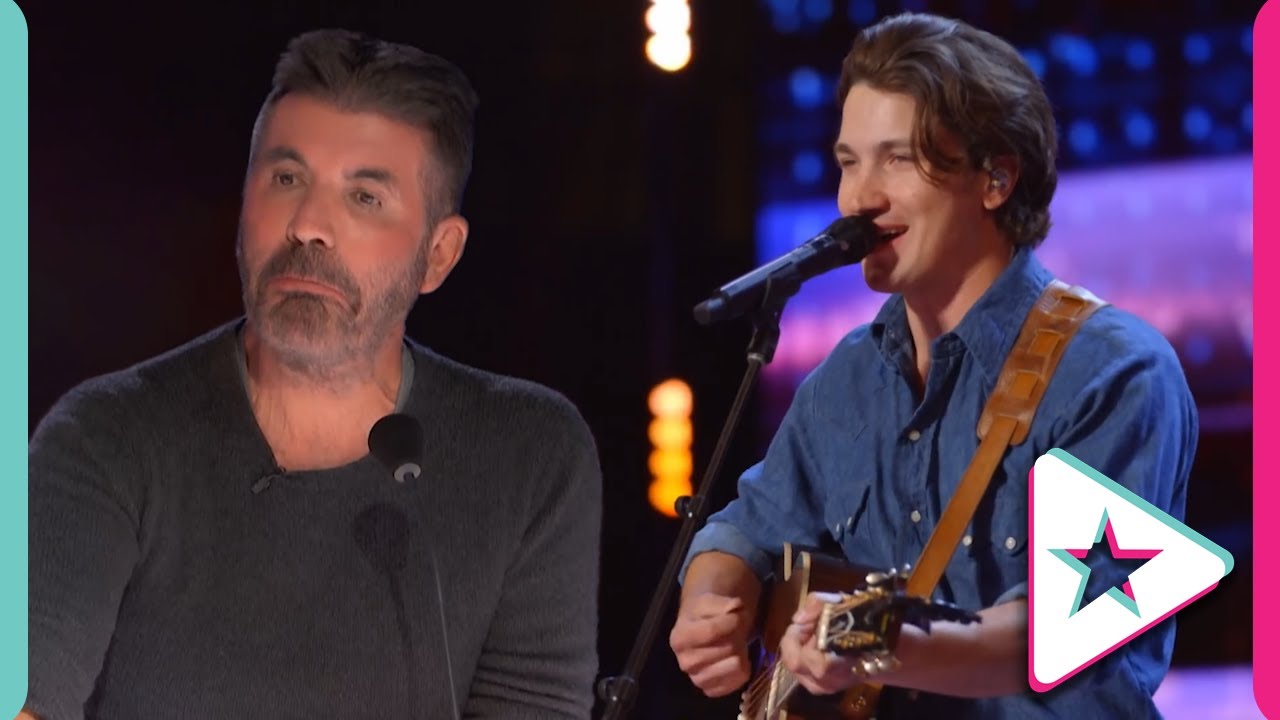
When Drake Milligan stepped onto the America’s Got Talent stage in 2022, he did something that immediately marked him as different: he didn’t choose a safe cover or rely on a crowd-pleasing classic. Instead, he walked on with his band and launched into his own song, “Sounds Like Something I’d Do.” It was a gutsy decision — originals in audition settings are always a risk, because the audience and judges don’t have the comfort of familiarity to grab onto. But from the very first chord, the gamble paid off. The performance landed with the confidence of someone who had already lived in the song and knew how to shape it for a room.
There were visual cues before he even sang that suggested this wasn’t a nervous first-timer. Drake’s look nodded to vintage country — a fitted jacket, neat hair, and a stage presence that felt practiced but never forced. He moved like someone who had spent more nights on small stages than most contestants admit to; his gestures were economical, his smile easy, and he had that particular kind of eye contact that reads as connection rather than showmanship. When the band kicked in, the sound was polished and purposeful: twangy guitar lines, a steady backbeat, and a lead vocal that sat perfectly in the mix, warm and slightly gritty. It wasn’t just a song being sung; it felt like a slice of a larger act already formed.
The song itself helped. “Sounds Like Something I’d Do” has a classic-country structure and melody that loops into your head, with lyrics that feel personal without being precious. Drake sang like the narrator of a story he’d lived: wry on the verses, full-throated in the choruses, and gently vulnerable on the bridges. There were small details that made the performance convincing — the way he leaned into certain words, a tasteful vocal slide here and there, the controlled rasp on a sustaining note that suggested late-night honky-tonk practice rather than manufactured grit. Those touches made the original feel familiar in an instant, which is exactly what you want when you’re asking an unfamiliar song to win over a national TV audience.
It didn’t play like an audition so much as a polished mini-concert. People in the seats stopped their sidebar chatter; the judges’ pens paused. Howie Mandel, known for his quick humor but also his blunt honesty, later dubbed him a “new Elvis of country” — an offhand line that captured the way Drake fused old-school swagger with a modern sensibility. NBC later pointed out that this song essentially introduced Drake to AGT viewers, and American Songwriter picked up on the immediacy of his impact: here was an artist whose sound and look coalesced so neatly that it was easy to imagine a record deal and a tour bus waiting in the wings.
There’s an emotional throughline to the performance that’s worth noting. He wasn’t merely projecting technique; he was inviting the audience into an emotional space. The chorus carried a singalong quality that invited participation, while the quieter moments felt intimate, as if he’d leaned across a bar and confided a secret. That dynamic — the push and pull between intimacy and bravado — made the audition compelling on multiple levels. You weren’t just impressed by the voice; you felt like you’d met someone with a story worth following.
The reaction the night of the audition reinforced that feeling. Applause swelled, judges exchanged surprised, approving looks, and the social media ripple began the moment the clip hit the web. People responded not just to the performance but to the narrative: a young Texan bringing a fully formed original to a arena-sized stage and making it feel like it had always belonged there. That narrative carried Drake all the way through the season; the audition didn’t just get him noticed — it became the cornerstone of his AGT storyline.
What’s notable, too, is how the audition seemed to give him permission to be himself. By presenting an original, Drake set the terms of his identity from the outset. He wasn’t trying to replicate a famous voice or shoehorn himself into a trending sound; he was saying, clearly and confidently, “This is my lane.” That clarity resonated with judges and viewers alike. It made his subsequent performances feel like chapters in an unfolding career rather than isolated TV moments.
Looking back, it’s easy to see why that first audition mattered so much. An original song that sounds both classic and immediate, performed with poise and a clear artistic identity, is exactly the kind of thing that transforms a TV audition into a launchpad. For Drake Milligan, “Sounds Like Something I’d Do” didn’t just introduce him to a national audience — it crystallized a persona and opened a path all the way to the AGT Season 17 finale. In a world where so many acts arrive as polished copies, his audition felt like proof that an original voice, well-delivered, can still cut through.