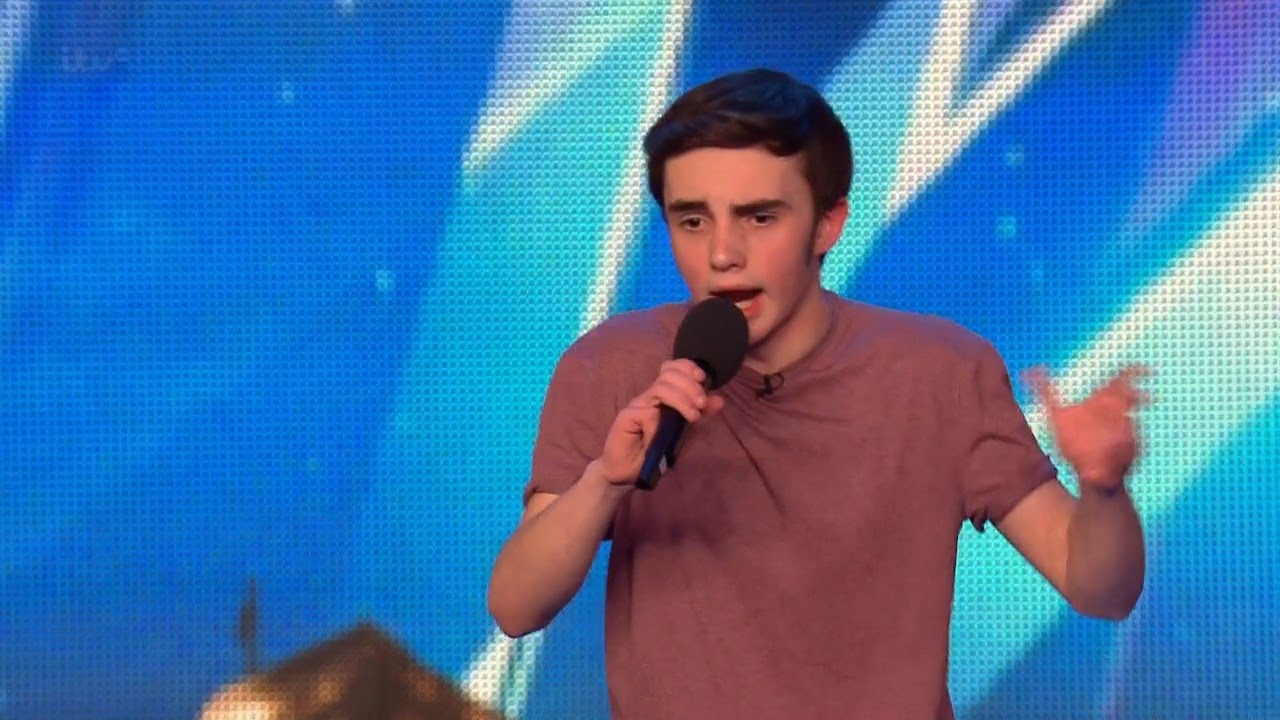
Fifteen-year-old Daniel Chettoe walked onto the Britain’s Got Talent stage with the kind of low-key nervousness that makes you root for someone before they even sing. He wore casual clothes—jeans and a simple jumper—and his hair was slightly mussed, the look of an ordinary teen who might spend his afternoons at school or with mates rather than under spotlights. There was nothing about his appearance to suggest the musical time machine that was about to open from his throat. The audience murmured politely, the judges exchanged the usual small-talk smiles, and the expectations in the room felt comfortably ordinary. That made what happened next all the more electrifying.
Daniel announced he would sing “Cry Me a River,” a song that carries the weight and nuance of the mid-20th-century jazz canon. It’s a piece associated with smoky lounges and late-night melancholy, made famous by voices that had years of life lived into them. Choosing such a classic was a risk for a teenager: the phrasing, the restraint, the emotional world the song requires are usually the domain of seasoned crooners. Even before he hit the first note, you could sense the gamble. Then he began, and the room fell utterly silent.
Out came a voice that nobody in that theatre had prepared for. It was smooth and deep, a mature baritone wrapped in a vintage warmth that seemed to belong to another era. Daniel’s opening line landed like a velvet curtain dropping—soft, rich, and disarmingly assured. Listeners immediately heard timbre and texture that suggested months, if not years, of attention to breath, vowel placement, and phrase shaping. He didn’t shout or force; instead, he leaned into a classic crooning style, placing each word with a thoughtful, old-school musicality. It was the kind of singing that makes people forget to breathe for a moment.
Small, telling details made the performance feel authentic rather than a mere imitation. Daniel used space masterfully—pausing just long enough at the end of a phrase to let the emotional residue settle before continuing. His diction was precise; consonants clicked into place in a way that clarified every line, allowing the storytelling within the song to come through. You could see in his eyes a quiet seriousness, the face of someone who understood that the song’s hurt was not theatrical but intimate. When he moved into the more dramatic lines of the chorus, his voice gained a subtle gravity, filling the auditorium without ever sounding strained. It was the kind of control many mature singers still work toward, yet Daniel carried it as if it were second nature.
The audience reacted the way an audience does when a surprise lands perfectly: initial curiosity shifted to stunned attention and then to an outpouring of enthusiasm. People who had been chatting or checking phones became fully present. Heads tilted, mouths dropped into half-smiles, and by the time he reached the song’s emotional peak, several members of the crowd were on their feet, clapping and cheering. The standing ovation that followed felt less like a reflex and more like a collective recognition—this was something special, the rare kind of performance that rewrites first impressions.
The judges’ faces told the story just as plainly. Expressions moved from polite interest to visible disbelief; eyes widened, eyebrows lifted, and some judges leaned forward as if trying to catch more of the sound coming from such an unlikely source. It’s one thing to sing well—it’s another to defy expectations so completely that industry veterans briefly lose their usual composure. For a moment, Simon, Amanda, and the rest of the panel looked like people who’d been given a window into someone else’s soul.
What made Daniel’s rendition so memorable wasn’t simply the unexpected depth of his voice but the way he inhabited the song emotionally. “Cry Me a River” requires more than technique; it needs a performer to convey regret, resignation, and a certain weary dignity. Daniel delivered all of that with a restraint that respected the song’s mood. He didn’t belt for effect; he let meaning emerge through subtle shifts in dynamics and phrasing. That emotional intelligence—so rare in someone still in the middle of their teens—gave the performance a timeless quality.
The clip ends with a glimpse of the standing ovation and the judges’ stunned faces, a brief but powerful testament to the performance’s impact. In those few seconds, viewers get the core of what made the moment resonate: the dramatic contrast between a young teenager’s unassuming look and the vintage, full-bodied croon pouring out of him. Daniel Chettoe’s audition was not just a showcase of vocal talent; it was a reminder that artistry can arrive unexpectedly, and that sometimes the most profound musical moments come from those who refuse to be defined by their age or appearance.
After he finished, the theatre buzzed with the kind of energy that lingers long after the lights dim—a mix of excitement, disbelief, and the pleasant realization that someone new had entered the realm of unforgettable performers. Whether Daniel’s voice leads him to jazz clubs, recording studios, or continued surprises on stages like this, that night made one thing clear: great talent often arrives from the least likely places, and when it does, it has the power to stop a room and stay with you.