
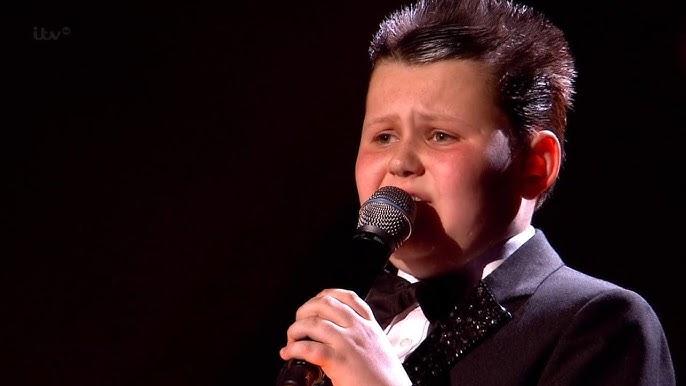
Twelve-year-old Ellis Chick walked onto the Britain’s Got Talent stage with the kind of grin that makes you instantly predisposed to like someone. He had the confident swagger of a kid who’d clearly spent more time performing in front of family and friends than practicing to be nervous under the lights. Before he sang, he announced his life motto—“#YOLO,” shorthand for You Only Live Once—and laughed as he told the judges he sings and dances “all the time.” That breezy, cheeky self-assurance landed perfectly with the audience and set an easy, playful tone. People in the crowd leaned forward, already charmed, not yet prepared for just how polished the whole package would be.
There was another immediate reaction that rippled through the panel: Ellis looked strikingly like David Walliams. The resemblance was funny, uncanny even—same broad smile, similar hair and cheeky expression—and it didn’t take long for the judges to pick up on it. That observation added a layer of lightheartedness to the moment; before Ellis even opened his mouth, viewers and panelists were primed for both a great performance and an entertaining exchange. It’s rare that an audition comes with such an amusing built-in narrative, but Ellis’s appearance created a playful chemistry onstage that the judges fed into without hesitation.
Ellis chose to perform “You Make Me Feel So Young,” a sprightly, jazzy standard associated more recently with Michael Bublé’s polished swing era revival. It’s a tricky choice for a child: the song demands phrasing, a sense of swing, and an ability to inhabit a slightly more mature persona without sounding affected. Ellis didn’t just navigate those requirements; he owned them. From his first note he demonstrated remarkable pitch control—clear, bright tones that sat confidently in tune—and a timing that made the song genuinely swing. He moved with an ease and theatricality that suggested he understood how to shape a moment onstage, whether that meant a playful wink during a lyric or a perfectly timed foot tap to land a phrase.
Beyond the technicalities, what made the audition feel special was Ellis’s total commitment to the performance. He didn’t just sing the melody; he played to the room, using body language and expression to sell each line. When the melody called for lightness, he softened his voice and smiled; when the arrangement swelled, he leaned in, projecting with more intensity. That balance between vocal skill and showmanship is rare in someone so young. Alesha Dixon noticed it instantly, calling him a “complete showman,” a phrase that signaled both approval of his vocal ability and his theatrical instincts. Amanda Holden echoed that sentiment on a more relaxed note—she praised Ellis’s song choice as “genius” and admitted she’d “never been so relaxed” watching someone so young perform. Those comments captured the dual nature of the audition: it was technically impressive, yes, but also the kind of joyful entertainment that makes audiences smile.
David Walliams couldn’t resist leaning into the comparison. With a grin, he embraced the doppelgänger moment, calling Ellis his “mini-me” and joking that the youngster was “a little version of me if I had any talent.” The joke landed with affectionate laughter and softened the typical judging atmosphere into something warmer. It’s telling that David’s teasing came from a place of genuine admiration; his banter underscored how complete Ellis’s package looked—there was the likeness, sure, but also the sense that this kid could genuinely hold his own under scrutiny.
Simon Cowell, as he often does, offered a mix of praise and practical advice. He complimented Ellis’s confidence and star quality but warned against adopting “corny habits” associated with pub singers—little performance tics or exaggerated affectations that can make songs feel less authentic. It was a gentle reminder that while Ellis had the charm and the technical skills, he should keep polishing his craft and watch for mannerisms that could detract from his natural appeal. The point resonated because it framed the audition as the first step of a journey: raw talent plus smart refinement equals longevity.
When the votes came, there was little suspense. The judges unanimously pressed their buttons and sent Ellis through with four enthusiastic “yeses.” Their decision cemented what the audience had already felt—a feeling that this was more than a novelty. Ellis Chick had shown he could command a room, marry vocal skill with performance savvy, and do so with a smile that loosened up even the sternest of panels. Walking offstage, he carried with him not just the glow of approval but the kind of easy confidence that promises a bright future if he continues to work and grow. For the viewers, the moment was a reminder that talent often arrives wrapped in charm, and when it does, it’s as delightful as it is surprising.