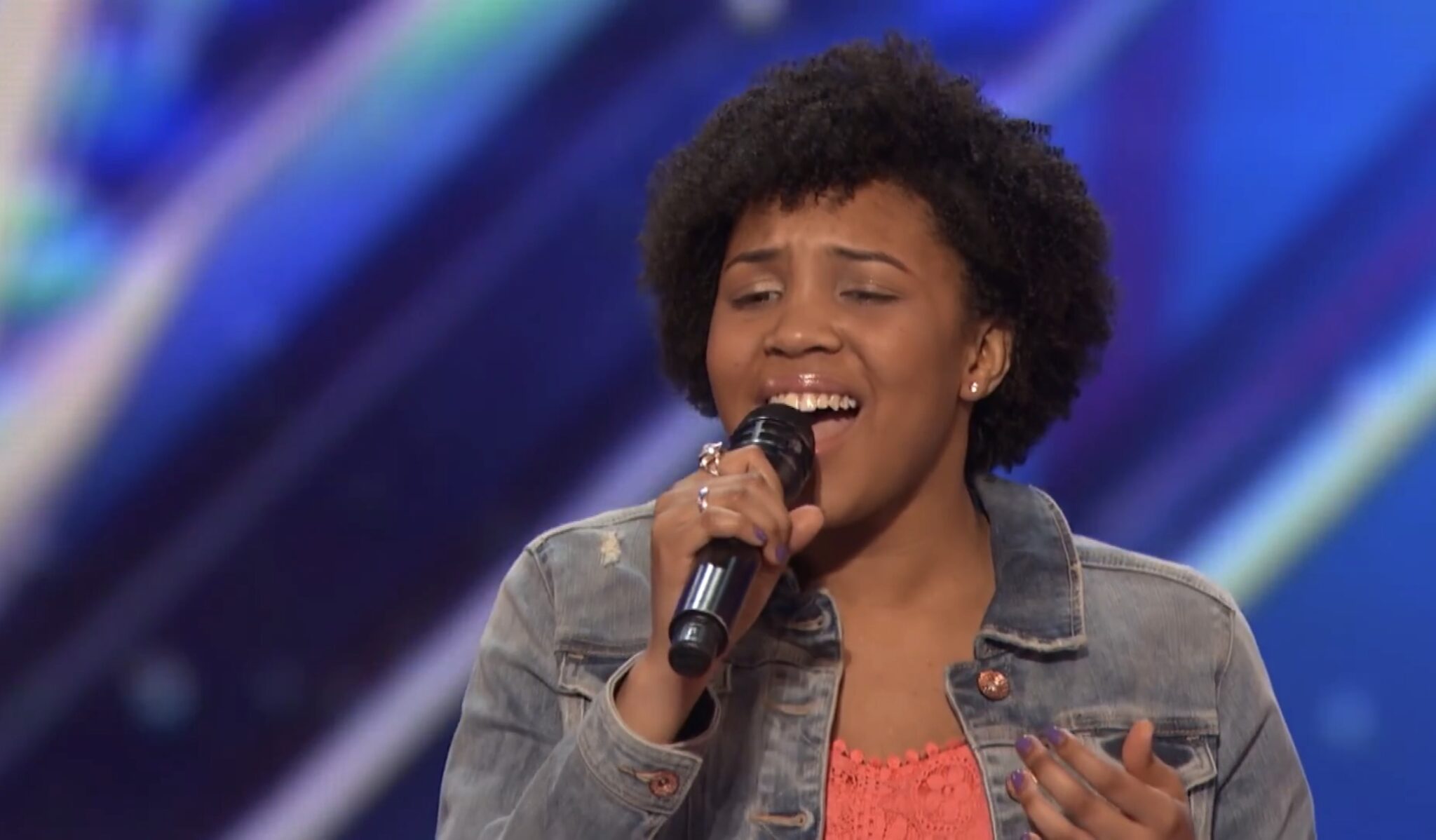
When Jayna Brown stepped onto the America’s Got Talent stage, you could feel a gentle buzz of anticipation ripple through the theater. She was just fourteen, small and bright-eyed, her smile wide enough to fill the first few rows. Dressed simply but neatly, she had that particular combination of polish and vulnerability that makes an audience lean forward — the look of someone who’s practiced endlessly but still feels the weight of the moment. When the host asked who inspired her most, she pointed toward the wings where her mother stood, shoulders tense with pride and hands clasped together. For Jayna, that nod toward home felt like a quiet grounding before she opened her mouth.
Choosing to sing “Summertime” was a brave move for someone so young. The Gershwin standard is deceptively tricky: it requires a singer to balance technical control with deep emotional understanding, to make a song that’s been covered countless times feel intimate and new. Jayna didn’t shy away from that challenge. From the first, breath-held note, it became clear she had a vocal maturity rare in someone her age. Her tone was warm and rounded, with a timbre that lent the opening line a gentle melancholy. It wasn’t a stagey show of technique; it was a thoughtful, considered entry into the song that already suggested she understood what the lyrics wanted to express.
As the verses unfolded, Jayna’s interpretation deepened. She found the space in each phrase, letting certain syllables hang just a fraction longer while leaning into others with soft, deliberate articulation. In the quieter moments she sounded almost like a storyteller, and in the climactic sweeps she revealed surprising power — a clean, expressive belt that surprised even the most seasoned audience members. The transitions between her delicate, jazz-inflected whispers and the more resonant, soulful swells were smooth, as if she were naturally attuned to the song’s shifting moods. You could tell she’d spent hours working on phrasing, experimenting with where to hold back and where to let the voice fly.
The audience’s reaction evolved in real time. Initially, there was a hush, that respectful silence reserved for someone about to do something special. Then, subtle signs of connection appeared: a hand over a heart, a head bobbing gently to the rhythm, the quiet admission of a smile spreading. By the time she reached the song’s more intense passages, people were on their feet. Strangers exchanged quick, delighted looks — the kind that says, “Can you believe this kid?” Phones were raised, not in a distracted way, but to catch a moment everyone felt they’d want to revisit. The applause that greeted her crescendos wasn’t just polite; it sounded like an audience recognizing a rare presence onstage.
The judges mirrored that shift. Simon Cowell, whose expression often hides thoughts until he’s ready to speak, watched with a look of genuine engagement, the sort that signals he’s being taken somewhere unexpected. Heidi Klum’s smile widened and she leaned forward, visibly moved by Jayna’s vocal storytelling. Mel B nodded along in rhythm, eyes bright, while Howie Mandel looked on with that mix of surprise and delight that has become his trademark. Their body language — the leaning in, the smiles, the quiet exclamations exchanged among them — told a story as clearly as any spoken praise: they were witnessing someone who might be small in stature but enormous in talent.
There were moments of subtle drama in the performance that made it especially memorable. Mid-song, Jayna closed her eyes for a beat, letting a note linger until the room seemed to inhale with her. When she opened them again, there was a kind of resolve in her face that hinted at more than vocal training; it showed emotional connection, the sort of authenticity that makes a standard feel lived-in rather than performed. Backstage, her mother watched with tears glistening, mouthing encouragements and clapping softly when the song reached particularly moving moments. That familial bond — the visible pride and love — added another layer to the audition, reminding everyone this was not just a technical display but the expression of a girl supported by someone who believed in her.
By the final bars, Jayna had coaxed every shade of feeling from the song: wistfulness, longing, brightness, and a quiet kind of hope. When the last note faded, it was as if the theater exhaled. The standing ovation that followed felt organic and unanimous, the kind of reception reserved for performances that genuinely touch people. The judges rose in solidarity, faces alight with approval and admiration. In their comments afterward, they praised not only her vocal ability but also her interpretive instincts and the heartfelt connection she shared with her mother — a reminder that talent often grows best in the warmth of encouragement.
Jayna’s “Summertime” audition was more than a display of technical prowess; it was a moment of emotional honesty. Watching her, you saw a young artist who understood that music is as much about telling a story as it is about hitting notes. For a fourteen-year-old to command a theater, to move judges and strangers alike, speaks to the rare and promising combination of skill, heart, and support. That standing ovation wasn’t just for the end of a song — it was for the beginning of a possible career and for the undeniable proof that age doesn’t limit the power of a voice when it’s given room to breathe.