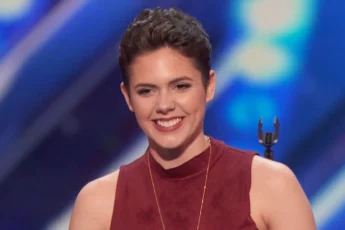

When 13-year-old Carly Rose Sonenclar walked onto The X Factor USA stage in 2012, she looked every bit like an ordinary kid from Westchester, New York — a little wide-eyed, hair tucked behind one ear, offering a shy smile that suggested she was as surprised to be there as anyone. There was nothing theatrical about her entrance: no dramatic strut, no over-the-top costume, just a girl in a simple dress clutching a microphone and trying to steady her breathing. For many young contestants, that first step onto a huge stage can be the hardest part; the lights, the cameras, and the hum of the crowd are enough to rattle anyone. The judges greeted her politely, a mixture of curiosity and routine professionalism, and Carly introduced herself with quiet confidence, talking briefly about how much she loved music and wanted to share her voice.
Then she launched into Nina Simone’s “Feeling Good,” and everything in the room changed. From the opening phrase, it was clear this was not a typical teenage pop audition. The song, with its smoky, soulful lines and demanding emotional range, can expose weaknesses as easily as it reveals strengths. But Carly didn’t stumble; instead, she presented the song as if she’d lived every lyric. Her tone was unexpectedly mature — a deep, warm timbre that seemed to come from much more lived-in lungs. Where many 13-year-olds might have aimed for bright, youthful clarity, she embraced a bluesy, soulful texture that carried both power and restraint.
Part of what made the moment so arresting was how naturally she owned the phrasing. She didn’t simply hit notes; she shaped them, letting each syllable breathe and resonate. There were tiny things that made the performance feel authentic: a slight, deliberate pause before a line that built tension; a controlled rasp on a crescendo that suggested she knew exactly how to color a phrase; the way she leaned into the final high notes but never allowed them to sound forced. Those small choices hinted at an instinctive musicality that can’t be taught in a short rehearsal — something the audience and judges picked up on immediately.
The judges’ faces told the story of the room in real time. Initially, their expressions were the routine neutral masks performers encounter: polite interest, clinical listening. But as Carly unfolded the song, those masks dropped. L.A. Reid, known for his seasoned ear, sat forward, visibly impressed. Simon Cowell, who is seldom moved and even less frequently surprised, looked genuinely startled — his usual poker face giving way to a raised brow and a rare, disbelieving smile. Britney Spears and Demi Lovato, both accomplished artists themselves, leaned in, their eyes tracking Carly’s phrasing as if they were studying a new lesson in vocal interpretation. You could see astonishment ripple through the panel; the judges weren’t just evaluating performance anymore, they were witnessing an emergence.
The audience reacted in kind. What began as polite applause swelled into a standing ovation well before the song’s conclusion. People in the crowd were on their feet, some with their hands over their mouths, others who couldn’t stop smiling, as though they had just been allowed a rare glimpse into someone’s private talent. It wasn’t manufactured excitement; it felt like a communal intake of breath, followed by the spontaneous recognition that they’d seen something exceptional. A few audience members whispered to their neighbors, trading quick, awed comments — “She’s only thirteen?” — as if comparing notes on a shared revelation.
When Carly finished, the applause didn’t peter out. The judges answered with four resounding “Yes” votes, and Simon reportedly admitted he couldn’t believe such a mature voice had come from a child. It was more than flattery; it was astonishment mixed with respect. That audition became a defining television moment, a reminder that true talent often defies expectations and neat categories. Carly would go on to finish the season as the runner-up, but in that first audition she had already won something perhaps more lasting: a place in viewers’ memories. Clips of the performance circulated widely online, drawing comments from people who said they had goosebumps or who felt moved to tears by the unexpected depth in her voice.
Beyond the immediate spectacle, there was something quietly uplifting about the moment. Here was a young person who could have been pigeonholed as “just a kid,” yet she chose material that challenged her and allowed her to reveal a surprising range of emotion. The audition served as a small but potent lesson: age is often an inaccurate measure of artistic truth. Carly’s performance didn’t rely on gimmicks or flashy tricks; it relied on honesty, technique, and a rare emotional clarity. Watching her sing “Feeling Good” that night, you saw not just a technically gifted vocalist but an artist beginning to understand the power of her instrument.
Years later, people still point to that audition as a benchmark for raw, unexpected talent. It endures not merely because the notes were hit, but because the performance felt like an unveiling — a shy girl stepping forward and, in the span of a few minutes, showing the world a voice that was impossible to ignore.