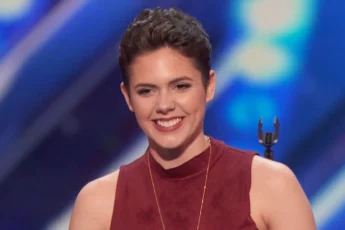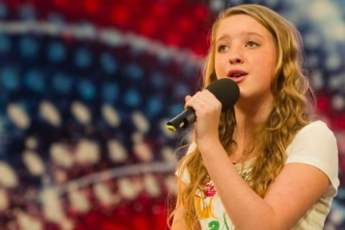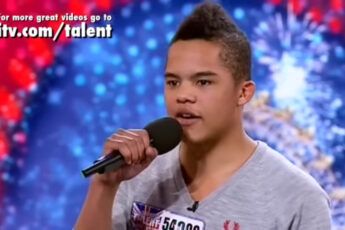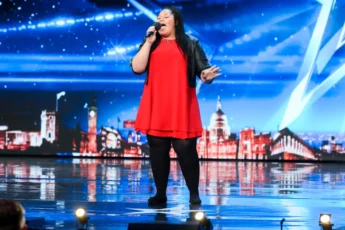

When 27-year-old Sephy Francisco walked onto The X Factor UK stage, she looked every bit the part of the nervous hopeful many of us have come to expect: simply dressed, hair neatly pulled back, hands folded as if to steady herself. The judges offered polite smiles, already braced for another emotional ballad from a talent trying to make her mark. Sephy told them she would be singing “The Prayer,” the famous duet internationally associated with Andrea Bocelli and Céline Dion. It’s a song that usually brings to mind two voices meeting in harmony, soaring crescendos and that cinematic swell that makes you feel like the world has momentarily paused. People assumed this would be a test of vocal control and sensitivity, the classic audition route for a contestant who could hit high notes and hold them.
But within seconds of the first chord, it became clear nobody in the room was prepared for the twist Sephy had in store. She began with the Céline Dion portion, her soprano emerging smooth and assured. The high notes were clean and luminous; there was a clarity to her tone that spoke of training and discipline rather than raw, unshaped talent. You could see faces in the audience relax from curiosity into genuine admiration — this was someone who could sing. Then, as the arrangement shifted, something remarkable happened: Sephy dropped into the Andrea Bocelli lines, and the sound that filled the theatre was utterly different.
Where her soprano had been bright and agile, the tenor she produced was rich and resonant, carrying that operatic breadth people associate with classically trained male singers. It wasn’t a falsetto or a gimmick; it had weight and authority. The room collectively inhaled as if the act had conjured a second person onto the stage. Judges’ eyebrows shot up, mouths fell open, and the murmurs rippling through the audience were audible — bewilderment mixed with delight. It was a moment where the impossible felt briefly possible: one singer effortlessly inhabiting two distinct vocal worlds.
The magic was not just in the switch itself but in how naturally she moved between them. There was no strain, no theatrical wink to suggest it was a novelty act. She transitioned with musical intelligence, shaping phrases appropriately for each part, giving the soprano lines a gentle, aching vibrato and letting the tenor grow with a darker, more expansive resonance. At times she overlapped the parts with clever timing, creating the illusion of harmonic conversation. The nuances mattered: a softened consonant here, a sustained vowel there, tiny dynamic shifts that made each voice believable as its own character. It was as if she had internalised two different performers and could cast either one on a whim.
Watching Sephy, you could sense layers of preparation and a deep love for the song. Her performance didn’t come across as a stunt; it felt like a sincere expression of something she’d worked on for years. There was a moment midway through when she closed her eyes and leaned into a phrase, and for a beat the stage became intimate — not a studio set for television but a small chapel or a quiet rehearsal room where an artist is alone with a melody. That honesty is what made the trick so affecting; we weren’t just impressed by technical wizardry, we were moved.
The reaction was immediate. The audience erupted into cheers before the song even reached its end, and by the final note the applause swelled into a standing ovation. Simon Cowell, often the least easily dazzled juror, summed it up succinctly: “I’ve never judged a duo who is one person.” His statement was half-joke and half-admiration, but it captured the essence of what made the audition special. The other judges were equally effusive, calling the performance “incredible,” “a huge surprise,” and praising the sheer vocal control and artistry on display. The unanimous reaction translated into four yeses, and Sephy walked off the stage with a place in the next round — a practical reward for a truly memorable moment.
For Sephy, the audition was more than a television spectacle. Growing up in the Philippines, she idolised powerhouse vocalists like Beyoncé, Mariah Carey and Whitney Houston, and those influences showed in her command of dynamics and stage presence. But she also absorbed classical inflections and a sense of theatricality that allowed her to navigate the operatic tenor lines convincingly. The audition felt like the convergence of those influences: pop-singer confidence, classical technique and the dramatic flair of a storyteller.
Beyond the immediate thrill, the performance resonated because it carried a human story — of a singer willing to take a risk and reveal an astonishing range, and of an audience reminded that artistry can surprise you in the best way. Sephy didn’t just sing “The Prayer”; she reimagined it as a canvas on which she could display both her technical skill and her interpretive heart. For viewers and judges alike, it became one of those rare television moments that linger: one person, two voices, and a duet that felt impossible until you saw it happen live.