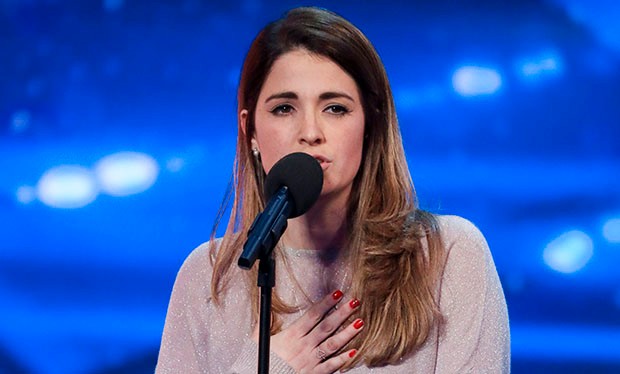
Sian Pattison, a humble 31-year-old accounts manager from Warwickshire, walked onto the Britain’s Got Talent stage with a story that instantly touched the audience’s hearts. She didn’t stride out like a seasoned performer; she almost seemed to drift, careful and composed, fingers laced together as if holding her courage in place. When she spoke, her voice was warm but hesitant, the kind of tone you hear from someone who isn’t used to being the center of the room. Then came the reveal that added an extra weight to every word: her daughter had secretly applied for her. It was sweet and a little mischievous, but it also told you everything about why Sian was there at all—because someone who loved her could see a light she kept tucked away. She admitted she’d spent years frozen by the fear of not being good enough. You could sense the audience lean in, many of them recognizing that private, familiar knot of doubt.
That emotional vulnerability set the stage for one of the season’s most dramatic transformations. Under the hot lights and the sharp focus of the cameras, Sian stood not just before the judges, but before her own history of second-guessing. The atmosphere thrummed with that peculiar blend of hope and dread—the knowledge that this could be the moment that changes everything or confirms every fear. You could see little tells: the way she adjusted the microphone, rolled her shoulders back, took a long, steadying breath as the first notes began.
The audition, however, took an unexpected and jarring turn. A few lines into her initial song, Simon Cowell lifted a hand and stopped her. The room seemed to glitch—a collective intake of breath, the uneasy shiver of silence that follows a needle-scratch moment. He critiqued the performance as “horrible” and, more pointedly, said it lacked real emotion. The word hung there, heavier than it sounded. For a second, you could read the thought on Sian’s face: This is exactly what I was afraid of. But Simon didn’t dismiss her. Instead, he nudged her toward a different path, asking her to switch to a more challenging and soulful piece, “With You.” It was a risk—no safety net, no time to regroup—just a raw invitation to tell the truth through a song that demands it.
The first attempt wasn’t tidy. Sian began the new piece and then halted, nerves tangling her timing. She looked down, drew in a breath, and asked to start again. That small, human reset mattered. It wasn’t perfection; it was persistence. The second time, something settled. Her shoulders lowered. Her gaze lifted—not in defiance, but in decision. When she sang again, her tone carried a new depth, a thread of vulnerability that made each line feel lived-in rather than performed.
“With You” opened a door inside her voice. The low notes came with a smoky tenderness, and as the melody rose, she didn’t lunge for the big moments; she let them arrive, expanding her sound with measured assurance. The vibrato on sustained phrases rang cleanly, and when she reached the chorus, her tone bloomed—controlled but powerful, the kind that fills a space without forcing it. There was nuance, too: tiny catches in her voice that hinted at the emotion beneath the words, a careful shaping of phrasing that suggested she wasn’t just singing; she was remembering, confessing, releasing.
The energy in the room changed with her. Audience members leaned forward, then stilled, the kind of quiet that feels like collective listening. A couple in the middle rows clasped hands. Someone dabbed at their eyes. On the judges’ panel, expressions softened; skeptical curiosity turned to a kind of quiet awe. This wasn’t a technical rescue—it was a personal turning point unfolding in real time.
By the final section, Sian’s voice had gathered a confident warmth, cresting into a note that seemed to hang in the air a fraction longer than expected, and then dissolve like a held breath finally exhaled. For a heartbeat, nothing moved. Then the applause crashed in—loud, grateful, undeniable. People rose to their feet almost in unison. Sian’s hand flew to her mouth; she laughed a little through what might have become tears if she’d let them. It was the look of someone who had surprised even herself.
The judges’ praise came not just in compliments, but in the texture of their voices: relief, admiration, a touch of pride that she had taken the risk and found something real. They spoke about her range and control, yes, but more about the honesty she unlocked—the way she turned fear into music that everyone could feel. The panel’s unanimous support felt like more than a verdict; it was a mirror reflecting back the version of Sian who had always been there, waiting for permission to step forward.
By the end of her performance, the entire auditorium was on its feet, witnessing a mother’s triumph over a lifetime of insecurity. She had walked onstage as someone bracing for judgment and walked off having reclaimed a part of herself she had long tucked away. The moment went viral because it hit a nerve that runs through so many lives: the chasm between who we fear we are and who we might be if we dared. Sian’s story reminds us it’s never too late to risk the shake in your voice, to try again after a stumble, to let the people who love you nudge you toward the light. Sometimes the bravest thing you can do is simply begin—and if you falter, begin again.